Taking A Break From The How

Sometimes I get so caught up in understanding the how of things that I lose the beauty of them. As Wordsworth says in his poem The Tables Turned, “We murder to dissect.”

In the classic rock and roll song, aptly titled Rock and Roll Music, Chuck Berry laments people trying to change the music, to make it better, to make it something other than what it is. To control it rather than to sing it, dance to it, just enjoy it.

Maybe I do that too much with life.

Lest you think this is a rant against science, knowledge, linguistics, etc., be assured that I have all the curiosity about the world that most people have. Maybe even a little more, seeing as how I tend to question most things. And I appreciate what others have done to make this world a better place.

But there comes a time to just enjoy what is around us, and I am really trying to do just that. To take in the sights, sounds, tastes, sensations, smells of this world. The old saying (and song by Mac Davis) says “You’ve got to stop and smell the roses.” Unfortunately, it turns out, most roses today don’t have the sweet smell, or any odor, they used to have. In order to make them more durable, we ended up genetically removing the things that made them put out that well-known aroma. Try stopping by the flower section in your local supermarket or flower shop and sniff those beauties. Might as well sniff a package of frozen corn kernels. People today would not understand Shakespeare’s Juliet opining “A rose by any other name would smell as sweet.” As sweet as what? A plastic plant from Walmart?

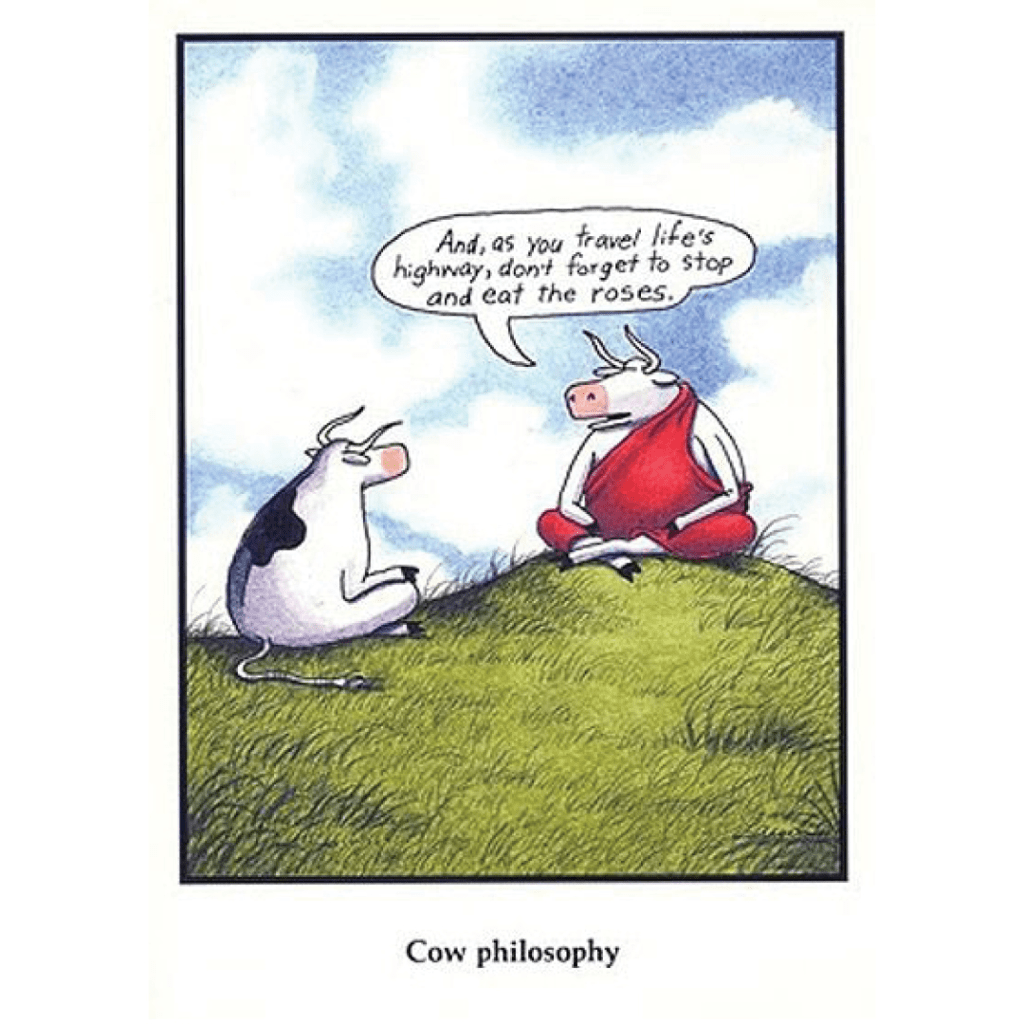
Gary Larson’s take on this was “Cow Philosophy”- “You’ve got to stop and eat the roses.” Wonder if they still taste the same?

The point of it is, every now and then we need to walk in the woods and just enjoy the experience. “Forest bathing” is what the Japanese call it. We need to hear music and let it move us rather than analyze it. We need to slow down and taste food that does not taste like the cardboard container it came out of. We need to jump in the puddle just because it’s there.

As Wordsworth wrote:

One impulse from a vernal wood

May teach you more of man,

Of moral evil and of good,

Than all the sages can.

Excuse me now. I think I’ll go take a walk through Lucas Park.

Ridin’ Along On A Carousel

Steve Vassey’s Watchin’ for Rainbows has a reflection on carousels. (He uses the alternate spelling carrousel, which is fine. He’s published; I’m not.) He compares it to life- some go through laughing with the wind in their hair, others with a grim determination to make it through this tough time, and still others scared, eyes closed, holding on for dear life.

While reading it, I kept hearing in my mind the song by The Hollies, On A Carousel. (Lyrics and a link to the song are below.) I decided to look up the lyrics and found at least twenty different songs with the title Carousel. There were dozens more that referred to carousels. Artists and groups like Melanie Martinez, Travis Scott, Miranda Lambert, Blink-182, and Abba all had songs titled Carousel. And then there was an entire Rodgers and Hammerstein musical Carousel. The American songbook songs If I Loved You, June Is Bustin’ Out All Over, and You’ll Never Walk Alone came from it.

Almost all the Carousel songs speak of heartbreak, frustration, and being unable to get off the carousel. Vassey says we can choose how we ride this thing.

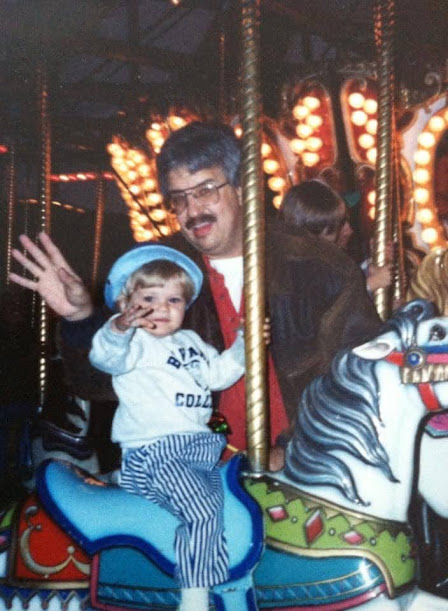
One of my favorite photographs of my niece Megan comes from when she was about 2. She’s riding the carousel at Columbiana Mall, in Columbia, SC. I am standing beside her, making sure she doesn’t fall of the horse she chose. She’s waving at the people standing around the carousel as she goes by because she thinks they are waving at her and cheering her on. In fact, they were. She was enjoying the ride, smiling, sometimes laughing, and not crying or screaming like some of the other small children. And people were cheering her on. Even though they did not know her, they were happy she was enjoying the ride.

There’s a lesson here somewhere.

PS- Thirty years later she has grown into a beautiful, responsible, intelligent, and compassionate woman. And though we do not get to see each other much, I can’t help but believe people are still waving and cheering her on.

On A Carousel– written by Graham Nash, Allan Clarke, Tony Hicks

Riding along on a carousel

Trying to catch up to you

Riding along on a carousel

Will I catch up to you

Horses chasing ’cause they’re racing

So near yet so far

On a carousel, on a carousel

Nearer, nearer by changing horses

Still so far away

People fighting for their places

Just get in my way

Soon you’ll leave and then I’ll lose you

Still we’re going round

On a carousel, on a carousel

Round and round and round and round and round

And round and round and round with you

Up, down, up, down, up, down too

As she leaves she drops the presents

That she won before

Pulling ducks out of the water

Got the highest score

Now’s my chance and I must take it

A case of do-or-die

On a carousel, on a carousel

Round and round and round and round and round

And round and round and round with you

Up, down, up, down, up, down too

Riding along on a carousel

Trying to catch up to you

Riding along on a carousel

Will I catch up to you

Now we take our ride together

No more chasing her

On a carousel, on a carousel

On a carousel, on a carousel

Noun or Adjective?

Is the word “Christian” a noun or an adjective? I know, it is used as both. Dictionary.com says it is both. But, as all-knowing as the internet is, I beg to differ.

As a word, it started in the town of Antioch, in what is today known as Turkey (in the first century C.E. it was part of Syria). Paul and Barnabas, two early followers of Jesus, had gone to that town to teach the new followers of Jesus. There they were first called Christians. And the word meant “little Christs.” That was because they acted like Christ. So I think the word is primarily a noun.

A noun is a name given to a person, place, or thing. (By the way, whenever I hear the term “person, place, or thing” I hear Linda Ronstadt and the Stone Poneys singing Different Drum.) An adjective is a descriptor attached to the noun. “A red car”- “red” is the adjective, “car” is the noun.

However, it seems that Christian is used more as an adjective today than a noun. We have Christian music, Christian books, Christian movies, Christian license tags, Christian jewelry, Christian t-shirts, and even use the term “Christian nation”. But it seems hard for me to think of music, books, movies, t-shirts, etc. being “little Christs.” Jesus said that those who followed him would need to take up a cross every day (a cross is something that not only kills the bearer, but it redeems the world), and I just don’t see a movie doing that. Nor a song. Nor a roll of peppermints. And especially I don’t see any nation doing that.

The term has been co-opted in our society today and come to mean politically conservative. This is strange because the conservatives of Jesus’ day were the ones who crucified him. They were the ones who stood for law and order, who wanted the ways of the Empire to rule, and wanted “that old time religion.” Out among the general public, the term Christian has come to be associated with judgmentalism, condemnation, and greed.

There are lots of examples of other things. Hospitals, colleges, children’s homes, homeless shelters, places protecting abused people have all been started in the name of Christ. There are a lot of St. Joseph, St. Mary, St. Jude hospitals. Haven’t seen a Friedrich Nietzche Clinic for the Indigent yet. But these seem to be overlooked by most of society today.

I have found that when I use the term Christian for myself, most people make some pretty strong false assumptions about me. Without going into all the details, let’s just say they don’t fit me.

Instead, I use the term “follower of Jesus.” Which is an older term used to describe the disciples of Jesus. Before they were called Christians, they were called Followers of the Way. This was based on Jesus’ statement that he was the way, the truth, and the life. So I use that term. I follow Jesus. I go where he goes, I do what he does. Or, at least I try.

And follow is not a noun or adjective. It is a verb.

Names

I found an old copy of The Virginian. For those of you who may only know it by the old TV western, The Virginian was written by Owen Wister and published in 1902. It had the iconic line in it, “When you call me that, smile.” Later it was adapted to “Smile when you say that.” It was not meant to be a funny line. It was a threatening line based on calling someone a name.

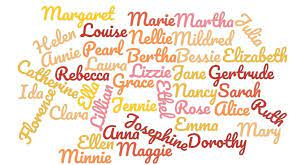
Names mean something. Parents will spend a lot of time deciding what to name their child. That name often gives an image to other people of who you are. Some of those images are true, others are far from it.

After my parents divorce, when my mother finally decided to trust men again, at least a little, she dated a man named Dex. Dex is a cool name. When she told me she was dating someone named Dex, I couldn’t wait to meet him. (I was off at college.) I imagined he was a trendy, modern type of guy. The kind who drove a pony car, never wore a tie, and was always ready with a great remark. I was home one weekend and ready to meet him. IM told mom I thought it was a cool name, Dex. She said, “Yeah, it is. It’s short for Poindexter.”

Poindexter! That changed  my image immediately. I now thought of someone with a pointed nose, oversized glasses, and a pocket-protector. He drove a four-door sedan that was 8 years old, and had no idea about rock ‘n roll music.

Turned out he was neither of the images I had. He was a good guy, treated my mother well, wasn’t super-cool but wasn’t a complete nerd. I know today people would think of Dexter, the TV show serial-killer-of-serial-killers.

Names mean something.

I’ve met a lot of Methodist ministers named John Wesley _____. Did those first two names lead them into ministry? Martin Luther King, Jr., named for his father, named for the great reformer. And what did Jr. become? The great societal reformer.

I’ve met lots of Joshuas, Davids, Matthews, Lukes, and Johns. I’ve yet to meet a person named Judas. Lots of Marys. No Rahabs.

Several times names were changed in the Bible. Abram, “Exalted Father”, became Abraham, “Father of Multitudes.” Hoshea, “Savior”, became Joshua, “God saves.” By the way, in Hebrew, the name Joshua and Jesus are the same. Simon, “One who listens,” was christened by Jesus with a new name, Peter, “Rock,” as in foundation.

My parents named me Michael Bernard. At first I thought I might have been named after an older cousin, but found that was not the case. It was just a popular name. As a matter of fact, for the first 45 years of my life Michael was the most popular boys name in America. That was more of a curse than a blessing. When I would be in a crowded place and someone would call out “Mike!” I would turn to see who it was. Usually it was someone calling another Mike. Michael means “Lover of God” and Bernard means “Bold as a bear.”

Frederick Buechner wrote that Moses asked voice at the burning bush, “Who are you?” and the voice gave the answer YHWH (Yahweh, or The Lord), thus giving a name to the One who was above all names. Buechner said God hasn’t had a quiet moment since.

The apostle John wrote in the Revelation that God will give us a new name. (Revelation 2:17) I wonder what mine will be. It really doesn’t matter though, as long as God smiles, a good smile,  when he says it.

Holy Ground

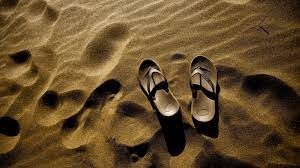
I’ve been wondering why God told Moses to take off his shoes because he was standing on holy ground there at the burning bush. Why would you need to take off your shoes?

I’ve studied the commentaries and read what others have written and haven’t found anything that rings true.

But I have an idea.

All of creation- the earth, sky, seas, etc.- were made by God and belong to God. The psalmist says this in Psalm 24. (By the way, it includes ALL the people.) I was raised by teachers who told me that the earth basically belonged to Satan, which was why he could offer it and all the kingdoms of the earth to Jesus. They did not remember, it seems, that Satan was also called “The Prince of Liars.” They also taught me, along with many preachers, that one day God would destroy all of creation and create a new, revised one. Creation 2.0.

But I also heard something in a song that we sang in church, and it was what I really believed. Still do. I would sing with all my heart and voice, “This is my Father’s world…” And I swear that at times “in the rustling grass I hear him pass, he speaks to me everywhere.”

But we ten to separate humankind from the rest of creation. We are somehow above it, which is why we can use it, abuse it, even destroy it with little or no remorse.

We have lost touch with the rest of creation. We think of Francis of Assisi as being cute when he referred to nature as his brother and sister, mother and father. But he wasn’t being cute. He knew we are all one family. We are made of the same thing that the earth is made of. We are made of what makes the ground below us and the stars above. Joni Mitchell, a modern troubadour of truth, sang it well- “We are stardust, we are golden. We are billion-year-old carbon. And we’ve got to get ourselves back to the garden.” There’s a reason why, even in our biggest cities, especially in our biggest cities, we put in lots of parks.

Taking your shoes off puts you directly in touch the the rest of creation. I heard a Native American speaker (Cherokee, I think) say that before Europeans came to this continent, when the people would pray they would stand in a circle and not hold hands, because they knew they were already connected through the earth they stood on.

I’m not thinking we have to take off our shoes when we want to pray or when we want to be in God’s presence. But whenever we want to pray, want to be in God’s presence, want to hear God’s word to us today, maybe we should dive deeply into this world. Get back in touch with our brothers and sisters in creation. Walk through the forest, wade in the ocean, live in the city with the poor, stand in the muck of the battlefield and pray for peace.

Because when we do, we are standing on holy ground.

50

some reflections on my college homecoming

I just returned from my fifty-year college reunion at Brevard College. (Note: At the time I was there, Brevard was a two-year school. It is now a four-year school and is beginning to include some masters level degrees.) I was in the class of 1973. Yep, I am old. But I don’t feel that way.

While I have been to the college, town, and area many times over the last half-century, I have not gone but to one reunion. So, this was a big one for me.

In some ways, it was disappointing. Out of a class of around 170, about 25 showed up for one part or another. I spent time with my friend Rick and his wife, and saw my first ever college roommate, Thurman, for the first time in fifty years. I had hoped to see some of my other friends- Jean, Tom, Hal, Bob, Eric, Rick, Connie, Debra- but alas, they were not there. I knew a few of the people who did show up, though none were friends back in the day, nor now. A few came up and spoke to me and we told the major details of life- where we are living (Florence), what we did for a living (clergy), if we were retired (yes), and how many grandchildren we have (none). The school had made nametags for us with our photos from the yearbook, to help us remember who each person was. People would go up and look at your nametag, then your face, and say something. For me, the thing I heard the most was, “You still have a lot of hair!” My claim to fame. I would start to say, “Yeah, and I can occasionally drive at night, too!” But I usually just said something like, “Your smile has not changed. Life must have been good to you.”

One of the many reasons I went to Brevard College was that I was the only person I knew going there. I was ready to try to be someone other than who I had been in high school, and this would be my canvas.  Brevard- the faculty, staff, administration, students, and community- encouraged it. So, I began to travel my own path. That almost didn’t work out for me when “traveling my own path” meant coming home at Christmas and getting my grades with a 1.8 GPR. A lot lower than it was when I entered. I also had a letter from the Dean of Students saying if I did this again. I didn’t get to come back.

By the way, my mother was incredibly good about it. She looked at the grades and letter and said, “Mike if you want to go off for a year and waste a year of your life and all the money you have worked so hard to save for college, then come back here and be a lint-head, that’s okay with me. But you need to know, you’re not coming back HERE.” I got the message.

I returned to Brevard, made appointments with each of my professors, told them I didn’t know how to be a student, and every one of them helped me to learn how. Not just how to pass the courses, which I did, but how to be a lifelong learner. It was one of many second-chances I was given at Brevard.

As I said, we were all encouraged to travel our own paths. Mine did not include many people. I just seemed to walk a path that was less crowded. I don’t believe that everyone else was just following along with each other, but they did seem to have more companions along the way. Nevertheless, those in attendance, for the most part, tried to make conversation with me. One woman just could not place me. She really tried, asking if I were in music, or sports, or arts, etc. She really wanted to remember who I was. I told her not to feel bad, I was mostly in the background of things back then. However, a few people came up, looked at my name tag, then looked at my face, and walked away. They probably didn’t know me back then. Or maybe they did.

I fell in love a few times during those two years. I fell in love with the mountains- the views from the crests, the quietness of the wooded paths, the always-changing but always-the same light on them. I wanted to walk every path in that part of the Pisgahs, and I managed most of them. I fell in love with words- their power to move, to recall, to bring both tears and laughter, to give a vision of what could be. I fell in love with ideas- how the world might be better, how much good there was already in it, and what was important in life. And being 18 and 19, I fell in love with a beautiful woman. And being 18 and 19, proved I was a real jerk at it.

I noticed a few other things this time up there. Cathy and I walked through some of the stores in Brevard. Some of the art stores and outdoor outfitter stores. There were things that years ago I used to wish I could have but could not afford. Today, I could buy just about anything I wanted, but there was not much that I wanted. I noticed that in times past, when I would go up to the mountains I would want to do and see as much as possible. My thought was, I may never pass this way again. Now I do not feel that way. Instead, I wanted to do a few things and enjoy them deeply. William Least Heat Moon’s first book was Blue Highways, which he called a “wide map” of America (he traveled over the country on the smaller roads). His second book was PrairyErth, in which he walked over all the roads and lanes in Chase County, Kansas. He called the second one a “deep map.” I have moved to the deep map time of my life.

I noticed that I really missed the smell of fall in the mountains, the hopefulness of new college students (the ones working the alumni weekend were great ambassadors for BC), and the gratitude for all the things Brevard offered me.

Over the last fifty years I have sent maybe a dozen students to BC. They were students who, like me, had some potential but needed a place to travel their own paths. I hope they found theirs, and that when their time comes to go back, they, too, will be grateful.

Windows

I love listening to Rudy Mancke. Not only does he have a great voice, very calming, but he has tremendous knowledge and love for this world. The former award-winning host of NatureScene and the current host of the daily SCEPR daily one-minute broadcast NatureNotes gives us insight into this world around us that we might not know if it weren’t for him. He answers questions, identifies plants and animals, makes observations about the change of seasons, and occasionally reads poems that make us see the natural world with new eyes. Sometimes I think his NatureNotes is just stream-of-consciousness. He just seems to go where his mind wants to go. He’ll say something like “I walking by the Congaree River and I thought about the tendency for rivers to eventually have their way….” And from there he’s off for the next 60 seconds. I would not be surprised to hear him say one day “I was looking out the window the other day and I thought “Windows! What a great way to see what’s on the other side of the wall without actually having to go to the other side of the wall. Before windows, you had to go around the wall or through a door to see the other side. But now, all you have to do is look through the window!”

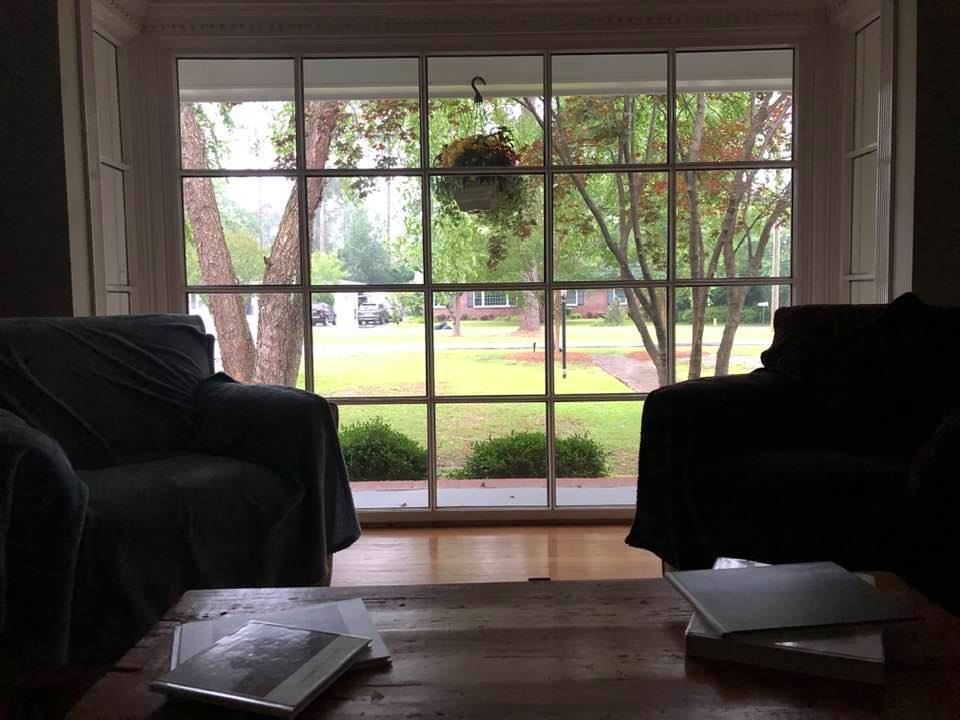
Which actually is the point of this wanton rambling of mine. Windows not only help us see what’s on the other side, they shape what we see. I have a lovely bay-style window in the front of my house. It gives me a view of the front yard with its trees, lamppost, walkway, shrubbery, and cats. I can see the people walking down the streets early in the morning and the kids in the neighborhood playing after school. Parts of my world pass by that window every day and I see it framed by the panes of glass.

The window in my study looks out at the wall of my neighbor’s home. That view never changes. There is a brick wall, a window, an electric meter, and some vines that never lose their leaves. If I were to view the world through that window alone, I would think it never changes.

Years ago I was in the hospital in Garmisch-Partenkirchen, Germany. From the window there I could see the Alps that surrounded the town. There was the Alpspitze, a very dramatic, pyramid-shaped mountain, and the Zugspitze behind it, the highest peak in the area. You could just make out the ski runs, and the cogwheel train, along with the beautiful alpine village at the base. I believe the view helped me to recover faster.

Compare that to the time I spent in isolation at McLeod Hospital in Florence, SC during a bout with COVID. The room, which was barely larger than the bed I was in, had a window that looked out at a blank wall. Nothing else. That view, along with my isolation, did not make me a very congenial patient. To be fair to McLeod, the hospital was full and every available space had to be used. Later I was placed in a spacious room, with a window that viewed the expanse of the Pee Dee region. I became a better patient and began to heal faster.

There are all kinds of windows in our lives. Some are physical, like the ones I just described. Others help us to see in other ways. All of them shape our lives more than we know. If we watch lots of news shows that tell us about conspiracy theories as if they were real, we begin to see the world with suspicious eyes (to paraphrase Elvis Presley). If we watch crime, war, and violence, we see the world as a harsh place. If we see acts of compassion and kindness, if we look at the advances in medical science and the increased lifespan of most people, if we see the work toward peace and justice, we view the world quite differently. A friend in one of my churches says, “Every day is a good day.” He sees the world that way, and it is for him.

Some folks like to pray and see the world through religious icons. I have not been able to do that very well, but I know some for whom an icon is a window through which to see the world. Those who know me very well know that for the last few years, I have been studying the lives of the saints. Through their lives, I see God and the world in new ways. Francis of Assisi helps me see God in all of nature around me. Teresa of Avilla lets me see God as a Divine Lover, and Brendan gives me a view of the world as a place to venture into the unknown.

Rudy Mancke helps me see the wonder and intricacy of my own backyard. I wonder what people see when they look through the window of my life?

Long Nights – A Meditation on Psalm 131

I read a psalm every morning as part of my morning prayers. I go through them starting at 1 and ending at 150 and then starting at 1 again. I was up early this morning (December 20, 2022), before the sun came up, reading Psalm 131. Here’s the text:

O Lord, my heart is not lifted up;
    my eyes are not raised too high;
I do not occupy myself with things
    too great and too marvelous for me.
But I have calmed and quieted my soul,
    like a weaned child with its mother;
    my soul is like the weaned child that is with me.

O Israel, hope in the Lord
    from this time on and forevermore.

This psalm may be perfect for today and tomorrow- the longest nights of the year. There is a sadness in this psalm. The author does not raise their eyes too high.; they do not think about things ‘too great and too marvelous.’

Instead, they sit in quietness and calm. The author uses the metaphor “like a child weaned from its mother” and goes on to say that their soul is like a “weaned child that is with me.”

When a child is weaned, when they no longer feed on their mother’s milk, something of the intimate bond between the mother and child is broken. The love and need each have for the other is there, but the nourishment for the child comes from somewhere else. While it is necessary, it can be a disquieting time.

For many, these long nights can be hard. Missing loved ones who have died, seeing dreams you had for this past year not come to be, watching your body become less responsive to health, feeling the pain of broken relationships, and often acknowledging your own culpability in hurting yourself and others. All the while the rest of the world seems to be lifting their eyes high, gazing on things great and marvelous. Our soul seems disconnected from us. It sits beside us, on the couch, not saying anything, just looking ahead.

The psalmist does not abandon us there. “O Israel” the psalm continues. ‘Israel’ literally means ‘one who struggles with God.’ That’s us. From time to time we all struggle with God. We want to know why things are the way they are, and if they will always be that way. The psalmist says, “You who struggle with God, hope in the Lord…” Hope is not wishful thinking. It is not fanciful desires. It is not shaking the small box under the Christmas tree and saying “I hope it’s a bicycle.” Hoping in the Lord is placing your trust in something….someone….you cannot see, and moving forward as best you can.

Are you struggling this season? Does your soul seem to be separated from you? Are you struggling with God? That’s okay. Do not despair. Hope in the Lord from this time on. And forevermore.

Mary’s Story

It was early Saturday morning when I went looking for Mary. Yesterday, Friday, had been the worst day of both of our lives. The past few days had been more than horrible. She had seen her first-born son die, and I had watched as my best friend, and the man I thought was God incarnate, give his life away uselessly on a cross. We had seen it all, some up close, other parts from a distance, but we had been there, side by side, watching it, thinking it would all change in a minute, knowing that something different, something wonderful, would happen.

But it didn’t. He died.

On Thursday night he had been taken away by the soldiers and brought before this mock trial in front of Pilot and Herod, since they were both in town. Now he’ll show them, I thought. After all, he had done that with the authorities before. We watched as he was beaten, and I held Mary as the tears ran down her face, seeing her son wear a crown of thorns, and people who he had fed and healed yell ‘crucify him.’ Crowds can turn so quickly. We had seen it before. We knew he would turn the crowds back to him. We followed behind as he was taken out to the hill to be crucified. Mary kept whispering, not to me but to herself, “I know he’ll come to save him. The Lord won’t let him down. God will come any minute now.” I felt it, too, but my hope died with each step he took. When they nailed his hands and feet to the cross, I heard Mary scream as if it were her hands that the spikes were piercing. She called out to God to come and save her son, and for a moment we thought he would. The skies got dark, the wind blew, and the earth shook. “Now God will come to us and save him,” Mary screamed through her tears.

But he didn’t.

You could tell the moment he died. His spirit had left his body. It just hung there empty, a shell of what used to be great, high on the cross for all to see. The wind stopped blowing, the clouds grew lighter, the earth stopped moving. Everything was back to normal. And we just stood there, looking at the body hanging on the cross. When a soldier rammed his spear into the side to make sure he was dead, when that spear entered his heart, Mary was leaning against me and I felt her heart break, too.

A few minutes earlier, before he had died, he had looked at his mother and said, “Mom, John will take care of you.” Then he looked over at me and said, “John, watch after Mom.”

So, while friends took the body off the cross, I held her close to me. Then, when the body was lying on the ground, she walked over to it, held it close to her, as only a mother can, and brushed the hair out of his eyes. Our friends wrapped his body and took him away to be buried before we had time to prepare him with the oils used for burial. It was getting dark, the Sabbath was about to begin. I took Mary back to Bethany to stay at home of Mary, Martha and Lazarus. She didn’t go to the temple or the synagogue that night. She just sat there, numb. I left the house to stay with others.

This morning I found her in the courtyard, sitting on a bench, leaning against the wall of the house. I looked at her and she looked old beyond her years. For the first time, I could not see the young girl in her anymore. She must not have been more than 48, but she looked like she was 90, older than Sarah, Abraham’s wife. She was gaunt and wrinkled and hunched over and frail. You could tell she had not slept at all.

“How are you?” I asked.

“It seems like it was only yesterday,” she said, answering a question that I did not ask.

“Mary….it was yesterday,” I said. “He died yesterday.”

“No….not that…..it seems like it was only yesterday when the angel appeared to me.”

“What angel?”

“The one that told me I would have this boy if I wanted. That I could bear him into the world, but the choice was mine.” This was a story I had not heard, so I asked her to tell me about it. Maybe it would help her deal with her grief. I had said I would care for her.

“I was just a young girl, barely past the age of becoming a woman,” she said, “when I met Joseph. He was a few years older than me, and was learning his father’s trade as a carpenter. We used to steal glances at each other in the synagogue in Nazareth. We were almost immediately attracted to each other. We would ‘accidentally’ bump into each other in the market, and our hands would touch and I could feel a spark fly between us. This went on for months, and I thought I would die if I didn’t get to be with this handsome young man. I don’t know why, but something was happening between us. Finally….and I don’t know how he did it…..his father talked with my father and a marriage was arranged between us. We were engaged! We were promised to each other!” Mary’s face brightened as she recalled that time, her back straightened up, and it looked like some of the wrinkles left her face.

“The marriage ceremony was planned for 6 months later, so family would be able to save and take the time to get there. And each day just drug on forever. I thought they would never end! I could hardly wait for the day to come when I would be his wife. What could be more wonderful than marrying the person you love, spending the rest of your days with them!”

I know, I thought. I had never married, but I had felt that way before, wanting to spend every day with a certain person. But that didn’t work out. He was dead, now.

“Then it happened,” Mary said. “One evening, about 4 months before the wedding, I was behind our house in Nazareth. It was a bright, clear, star-filled night, when suddenly there was a brilliant light that flashed, almost blinding me. I thought at first it was some sort of lightning, but when my eyes could focus again, there was a giant of a man standing before me. I couldn’t tell if he was 7 feet tall, or if he just seemed that way because everything else seemed small in his presence, including me. There seemed to be some light that shone from within him, some sort of reflection of the light that had just flashed before me. He was dressed in a robe that reached the ground, but didn’t seem to be dirty anywhere. He had dark brown eyes that didn’t so much look at you as look INTO you. He stood there for a moment, and I began to back away, not looking back up at his face. “

“Then he spoke. His voice was deep. He had no question in his voice, no wavering. He said, ‘Don’t be afraid, Mary. I am Gabriel and I come from the throne of God. God has seen you and chosen you. You will have a child, a boy, and you are to give him the name Jesus. He will be great and will be called the Son of the Most High. The Lord God will give him the throne of his father David, and he will reign over the house of Jacob forever; his kingdom will never end.’”

“ ‘How can this be?’ I asked. ‘I’ve never….been…with a man.’ He told me that the Holy Spirit would do something wonderful, something miraculous in me, and that way I would know it was God’s son. Then he just stood there, like he was waiting for me to say something, those dark eyes looking into my soul. It was as if he had to have my permission for this to happen.”

“What did you think?” I asked.

“Everything went through me,” she said. “What would my family think? Would they believe me? What about Joseph? Would he still marry me? How can this happen? In a just a second, I thought of all the things that might happen because of this. Then I thought, say yes! Because who knows what tomorrow may hold! So I looked at the man…the angel….and said….yes. As a matter of fact, that’s what I taught my son for all those years growing up- always say yes, because who knows what tomorrow may hold.”

I had heard Jesus say something like it several times, and now I knew where it came from, He had put it this way, “Why do you worry about tomorrow, what you shall eat and drink and wear…. God loves you so don’t worry about tomorrow….who knows what tomorrow may hold. So that’s where he got it from, his mother.

“So what happened next?” I asked, trying for a moment to get her mind away from yesterday and the terrible things we saw. “Was Joseph excited?”

“No,” Mary said, laughing at the memory. “It wasn’t funny then, but it seems so now. He was furious, just knowing that I had…been…with another man. All this stuff of flashing light and angels seemed like a lie to cover up my sin to him. Even my parents agreed and were ashamed of me. But he loved me, and though he was hurt, didn’t want to shame me in public. He was going to break the engagement privately and send me away. But then that same man, the angel, showed up at his house and helped him to…uh…see the light. And though he didn’t understand it he decided to go ahead and marry me, but not until after the child was born.”

“What about your parents?” I asked.

“When I got to where I began to show,” she said, looking down at her stomach, “they sent me away to see my cousin Elizabeth. She was old, but somehow she was pregnant, too. And my parents knew that if I was around folks would talk. So I went off to stay with her for a while.”

“While I was there Caesar Augustus decided to have a census and a taxation of the whole empire. And to make it harder for everyone, he said everyone had to go back to their ancestral homes to be registered. So Joseph came and got me and took me to Bethlehem, because that’s where his family was from. His great, great, great, great, great granddaddy was King David, you know.” I had heard this from Jesus, that he was the ‘son of David.’ As a matter of fact, that’s what the people had yelled just six days earlier as we rode into Jerusalem, “Hail the One who Comes in the Name of David!”

“You ever been to Bethlehem?” Mary asked me. “I’ve been through it,” I said, “not much there. A Podunk of a town.” 

“You’re right,” she said. And when you fill it with people who are descendants, there’s no place to stay. When we got there I was about ’12 months pregnant’ and about to pop. Joseph couldn’t find a room at the only inn in town. The only shelter was a cave used as a barn for the animals. There I had Jesus, and Joseph put fresh hay in the feeding trough, and that’s where my son slept for the first time. It wouldn’t be the last time he would not have a place to lay his head.”

“Yeah, he told us who followed him to be prepared to have no place to stay,” I said.

“Shepherds showed up and told us what seemed like incredible stories of the angels appearing to them, but we both knew what that was all about. Jerusalem’s only 6 miles from Bethlehem, so when the time came a week later, we were able to go to the Temple and present him there, something we could not have done if we were back in Nazareth.  As we were coming out of the temple, an old priest named Simeon came over, looked at my baby, and said ‘this child will be a light for the Gentiles and glory for Israel. Then he looked at me, and a strange look came on his face, and he said ‘and a sword will pierce your heart, too.’ …. How did he know?” Mary said, looking down at her feet, tears coming again.

“Tell me more. I’ve not heard these stories,” I said.

“We went back to Bethlehem, and stayed there for a while. Then came the time of the massacre…” She did not have to tell me more. I had heard stories about Mad King Herod and his ordering of the execution of male children. “…so we escaped to Egypt. After a few years we heard that Herod had died, so we went back to Nazareth. Jesus was your typical boy growing up, obeying us most of the time, but occasionally going his own way. He got lost in Jerusalem one year when we went there for the Passover,” she said, a smile coming over her face. 

“Yeah, I heard about that,” I said.

“But I gave him a talking to that he never forgot,” Mary said, “and was no trouble at all after that. As a matter of fact, he was an incredible son. Joseph died young…” Mary said, a shadow coming over her face. Jesus had never spoken to me about his earthly father, only about what he called his ‘heavenly father,’ a term he used with great familiarity. I wanted to know, but didn’t push Mary about how Joseph had died. She was already in enough pain. “….and even though Jesus knew he didn’t want to be a carpenter, that didn’t seem to be what he was born for, he took over the family business until one of his younger brothers could do it and provide for us. We were all very poor, but we worked together. Then the day came when he took me outside the home, and said ‘Mom, it’s time for me to do what I was called to do.’ I remembered what the angel had told me, and I gave him my blessings. You know the rest of the story.”

Yeah, I knew it. As a matter of fact I had lived most of it. The healings, the feedings, the miracles, the teachings, the crowds. It was so exciting. We never thought it would end this way.

I looked over at the old woman sitting on the bench. Finally I asked the question that had been building up in my heart and mind. “Mary, if you had the chance to do it again, would you say yes? You know, knowing the joys, but also the heartache and the pain, knowing what would happen, knowing about….yesterday…..would you have born Jesus into this world?” I wasn’t really asking for her. I was asking for me. You see, Jesus had told me something strange one day, something I didn’t quite understand, not sure that I really do now. He told me that I…that all of us who followed him…had to ‘bear’ him into the world, to carry him within us, sort of like having a life within that is part of you but is still not yours alone. Almost like having a baby inside, but a grown up one. I know it doesn’t make much sense, but it seems like he was saying that somehow he could live in us and in this world through us. But I saw what happened yesterday. I’m not sure I could handle it. So I had to know. “Mary, would you say yes again?”

She looked up at me and nodded. “Yes,” she said, “because who knows what tomorrow may hold.”

We just sat there for a few minutes, not saying a word. Finally I said, “Get some rest today. I’ll get the ointments so that tomorrow morning we can go and properly prepare his body.” “Okay,” she said, and leaned back against the wall and closed her eyes. 

I walked away, leaving her in the courtyard. I thought, “Would I say yes? Then I thought, “Who knows what tomorrow may hold?”

The Lost Art of Lagniappe

I don’t remember how or when I came across this term. As a child, for a short while, I lived not far from New Orleans, which is where this word is used generously. But that was for a short while in second grade, and if I learned it there, it receded into my memory for several decades. I have lately grown to appreciate it and have been trying to practice it myself.

For those of you who may not be a coonass (don’t get upset- that is a very respectable term down in the bayou), lagniappe is a Cajun-French word for “something extra.” Usually, a little gift given at the end of a business transaction. You may buy a dozen beignets at the Café du Monde and the generous baker throws in a packet of coffee without asking or mentioning it. Or you purchase a necklace for your partner and the jeweler gives you a small key chain. Sometimes you ask for a lagniappe, hoping to get something more, but beware! If you do this greedily expecting something, you’ll probably not get anything but some unknown (to you) Cajun cuss words. But if you are light-hearted in asking, most likely you’ll receive.

Like most people these days, I buy lots of things online. Anything that’s standard and I don’t really need to make sure everything is okay- ink for my printer, toiletries, books, sometimes clothes and shoes. Amazon, Better World Books, Etsy all know me by name. Two companies that I love to buy from are Field Notes (they make small, pocket-sized notebooks based on the ones that were used by farmers and agricultural agents in the mid-1900s) and Penzeys (a spice retailer based out of Minneapolis). Invariably they practice the art of lagniappe. There is always something extra in the package when it arrives. Field Notes may include a pencil or old-fashioned tinted postcard or a small number of “general purpose bands of rubber”. Penzeys will throw in a packet or two of sample-sized spices along with your order. I know when the box arrives from either one of those there is something extra waiting for me.

In the same vein, the French fry guy (and so far, it has been a guy, but I bet a gal would do this too) at Five Guys burgers always throws in an extra cup of fries into the bag. Always. I know if I order a small, I will get a medium, a medium will bring me a large, and a large gets enough for me and my hunny-bunny to munch on through a movie at home.

In all of these, I feel like I am special. I am getting more than what I paid for, more than what I asked for, and more than what I deserve.

So I have been trying to figure out how I might practice that myself. I am a preacher. Technically, I am a retired preacher, but I still serve a couple of small, wonderful congregations. I’m not sure how to give them more than what they are expecting. “Here’s my sermon for today, and as an added gift, here’s some coffee to keep you awake. The Ambien rating today is pretty high.” I live in a nice neighborhood, with friendly people on each side of me. And my community is a good place to live. How can I give back a little more? How can I practice lagniappe?

I’ve been thinking about my life, too. Looking back over the years, I see that God, or the universe, or whatever this life force is has given me so much more than I could have ever deserved. Radio host and author Dave Ramsey popularized a phrase that many of us use. How are you doing? “Better than I deserve.” I have been the recipient of divine lagniappe.

And I am going to do my best to figure out a way to give that something extra to everyone else.

PS- If you click on the links to Field Notes or Penzeys, it will take you to their sites. If you buy anything from them, I do not get anything from them. Other than the hidden knowledge I passed on a couple of good things.