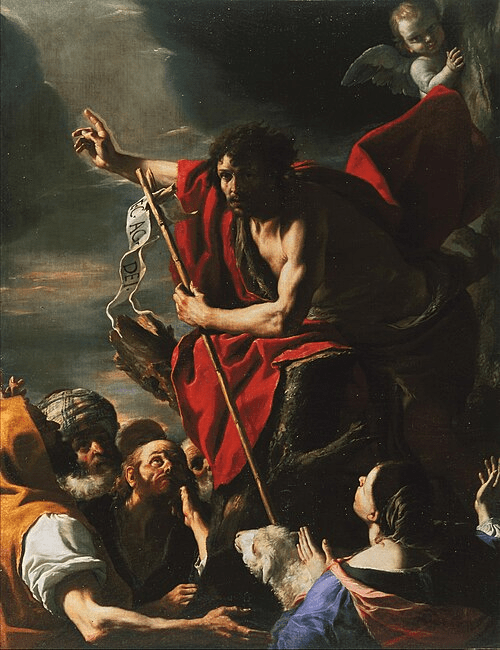
St. John the Baptizer Eve

Today, June 23, is the feast day of St. John the Baptizer—or rather, the eve of the feast. Technically, the celebration does not begin until sunset, which is 8:34 p.m. where I am. It is one of only two major saint days in the Christian calendar that commemorate a saint’s birth rather than death. The other celebrates the birth of Mary, the mother of Jesus, on September 8. According to the Gospel of Luke, John was born six months before Jesus, which explains the date.

People observe this day in different ways. In many places, bonfires are lit. Some communities hold parades. Others celebrate baptisms or services for the renewal of baptismal vows. I prefer a quieter observance: reflecting on the saint, considering what I can learn from his life, and finding one practical way to put that lesson into action. Since it is far too hot to build a bonfire here, I took a short walk along nearby Jefferies Creek instead.

John, as you may know, was a fiery prophetic preacher who spoke boldly against the corruption of both the Roman Empire and the religious establishment of his day. He called people away from lives centered on themselves and toward lives centered on God and neighbor. His message can be summarized in five themes.

1. Repent — because the kingdom of heaven is near.

“Repent, for the kingdom of heaven has come near.” (Matthew 3:2)

Repentance does not simply mean feeling sorry for something. It literally means to turn around and head in a different direction. For John, genuine repentance required a changed life. Which leads naturally to his second theme.

2. Bear fruit — live a changed life.

“Bear fruits worthy of repentance.” (Luke 3:8)

A changed heart should produce a changed life. Jesus later echoed this teaching when he said that people are known by their fruits (Matthew 7:15–20). John insisted that faithfulness could not be inherited. He challenged those who trusted in their ancestry:

“Do not begin to say to yourselves, ‘We have Abraham as our father.'” (Luke 3:8)

Faith requires a personal response. No one can believe for us. Which brings us to theme three.

3. Practice justice and generosity — treat people rightly.

John’s preaching was remarkably practical.

“Whoever has two coats must share with anyone who has none.” (Luke 3:11)

Compassion and generosity are marks of genuine repentance.

To tax collectors he said:

“Collect no more than the amount prescribed for you.” (Luke 3:13)

Repentance affects how we conduct our work and handle our finances.

To soldiers he said:

“Do not extort money from anyone by threats or false accusation, and be satisfied with your wages.” (Luke 3:14)

Reject abuse of power. Reject greed. Treat people fairly.

4. Prepare for God’s judgment — take God seriously.

John preached both grace and judgment.

“His winnowing fork is in his hand.” (Luke 3:17)

God cares about how we live. John warned that a day of accountability would come when righteousness and wickedness would be separated. His message was urgent because he believed that what we do matters.

5. Look to Jesus — the Messiah, the Lamb of God, the Son of God.

Above all else, John pointed beyond himself.

“One who is more powerful than I is coming.” (Luke 3:16)

True ministry points people to Christ rather than to oneself.

“He will baptize you with the Holy Spirit and fire.”

“Behold, the Lamb of God, who takes away the sin of the world!” (John 1:29)

“I have seen and have testified that this is the Son of God.” (John 1:34)

“Look, here is the Lamb of God!” (John 1:36)

John taught that Jesus is God’s answer to our separation from God, from one another, and from creation itself. He willingly directed his own disciples away from himself and toward Christ.

Perhaps John’s greatest statement was simply this:

“He must increase, but I must decrease.” (John 3:30)

The faithful servant seeks Christ’s glory rather than personal recognition.

John’s final recorded testimony centers on faith:

“Whoever believes in the Son has eternal life.” (John 3:36)

In many ways, John stands as the bridge between the Hebrew prophets and the ministry of Jesus, fulfilling Isaiah’s vision of “a voice crying out in the wilderness: Prepare the way of the Lord” (Isaiah 40:3; Matthew 3:3).

There is no evidence that John continued baptizing after he baptized Jesus. But he never stopped preaching. He continued to speak the truth, refusing to back down, until it ultimately cost him his life.

Mussorgsky’s Night on Bald Mountain was originally titled St. John’s Eve on Bald Mountain. Inspired by a story by Nikolai Gogol, the music captures something of John’s spirit: the fire, intensity, urgency, and thunder of prophetic judgment. Yet the piece concludes with church bells and a sense of peace. The storm passes. A new day dawns.

Perhaps that is fitting. John’s ministry was never the destination. He was preparing the way for One who would bring a new way of living, a new kingdom, and a new hope.

As for me, I think I will spend this St. John’s Eve looking for something worth standing for. Maybe even something worth losing my head over.

Going To War- 2. McDowell County

WARNING: This blog post has lots of facts and figures.

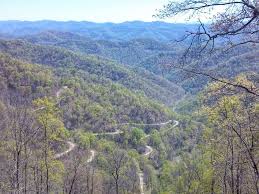
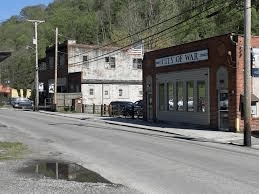
McDowell County is on the southernmost tip of West Virginia, covering an area of 534.899 square miles, all but 1,441 of them mountains. The rest is water. It has a population of 16,900 (2025 est.), down from 19,111 in the 2020 census. It has a population density of about 32 people per square mile (land), compared with 78 for the rest of West Virginia. There are 10 cities and towns-

Welch (County Seat) population 3,413; Gary 687; War 546; Kimball 248; Iaeger 243; Northfork 205; Davy  185; Bradshaw 182; Keystone 153; Anawalt 148.

Additionally, there are unincorporated historic coal camps still in existence (though the coal mining has pretty much disappeared). Among them are

  • Crumpler: ~351 residents
  • Bartley: ~327 residents
  • Maybeury: ~88 residents
  • Cucumber: ~87 residents
  • Vivian: ~79 residents

The average household income is $31,559, and the per capita income is $17,253. The poverty rate is above 30%.

Seventy-five percent of the adults have a high school diploma as their highest degree, while 6 percent have a bachelor’s degree. There are two high schools in the county (Mountain View in Welch and River View in Bradshaw), 3 middle schools, and 6 elementary schools. There are no higher education schools, though there is an adult learning center in Welch.

Major employers in McDowell County are the public schools and the few healthcare facilities. Retail employment is mostly at Walmart, Family Dollar, Dollar Stores, and a few fast-food restaurants. The coal industry, formerly the area’s economic base, still has a few contract jobs available. The unemployment rate is 10.2%, compared with 4.5% for the rest of the state.

Many think that the poverty and terrible conditions are relatively new, that the demise of the coal industry has occurred within the last couple of decades. That is not true. Coal mining in McDowell County peaked in 1942, producing about 29 million tons of coal per year. The population was almost 100,000 at that time. Mechanization and the decline in coal demand began, and by 1959, John Kennedy visited Welch to see the effects of poverty in America. It was while he was there that he saw the need for the Food Stamp program, and when he became president, and the program became law, the first Food Stamps were given two years later. On May 29, 1961, Alderson Muncy, an unemployed coal miner in Welch with a wife and 15 children, purchased $95 worth of food stamps for his family’s first trip to a local grocery store.

JFK & West Virginia” Road to The White House | The Pop History Dig

Kennedy in Welch in 1959.

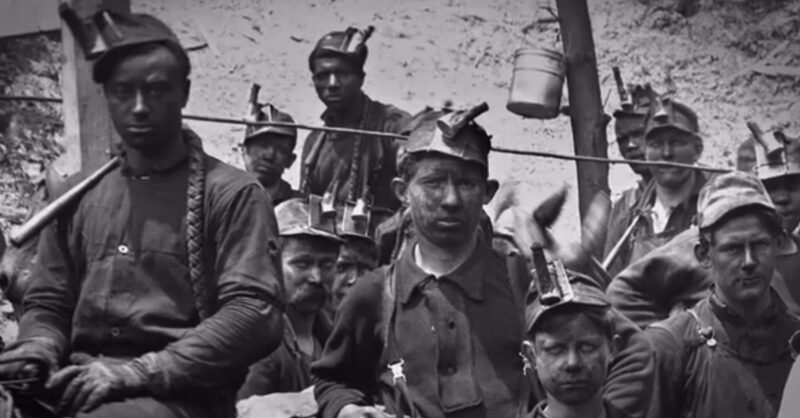
While there was more money in McDowell County during the coal-mining days, most of it went to the mine owners and supervisors. The majority of the workforce, the miners, lived in just above-poverty conditions. When the mines began to close, those with the money left, while the poorest were basically abandoned.

The county’s infrastructure was never improved. Today, it is not unusual for a person’s tap water to be black with coal dust. Septic systems empty waste into the mountain streams. Things we basically take for granted- clean water, septic systems, trash removal- are few and far between.

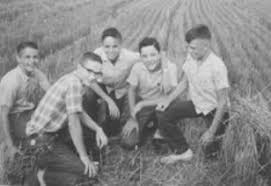
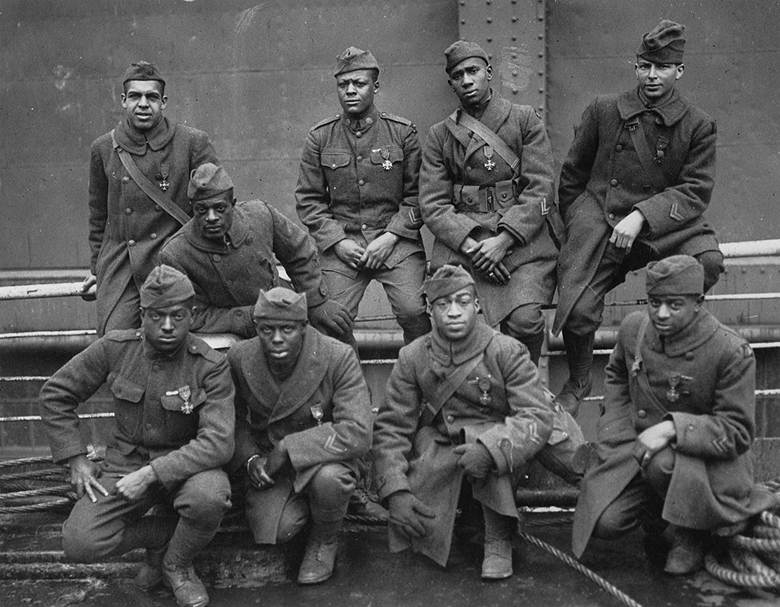
Despite it all, there are some bright spots in their history. The first (and so far only) memorial to African-American soldiers from World War 1 is Kimball. It was completed in 1928 when Black soldiers were denied entry into the local American Legion Post. Homer Hickman, a retired NASA engineer and Vietnam War veteran, attended Big Creek High School. He and some fellow students were known as the “Rocket Boys,” and their stories, along with those of Frieda Riley, their teacher, were told in the movie October Sky. Recently, there has been movement making the Hatfield-McCoy Trail, which runs through the county, a popular spot for hikers, mountain bikers, and ATV riders. And, of course, the mountains that are not scarred from the coal mining are beautiful.

African-American World War I Veterans
Rocket Boys
Frieda J. Riley
Hatfield-McCoy Trail
McDowell County

The youth pastor from Northbrook Church, in his Bible studies and devotions for the team getting ready to go, has said that we cannot save them. But, he said, we can bring them hope. I will examine that in my next reflection.

Below are some links to videos that show some of the conditions of McDowell County.

War, What The Hell Happened?

From coal mines to hard times: A West Virginia county braces for new public assistance cuts


McDowell County, WV – Those Who Stayed 

Going To War*

jordannichphoto- Instagram

Why am I going on this mission trip? That question has stayed with me as I have thought about McDowell County and what it means to say yes to this invitation.

I have been on a number of mission trips, some local—South Carolina, North Carolina, Mississippi, Alabama, Florida, Georgia—and some international—Guatemala, South Africa, Zimbabwe, Zambia, and Namibia. Every one of them has taught me something, and the people there, without exception, did more for me than I did for them. My view of God’s world and the grace of Christ has expanded because of them. Those experiences have also made me ask what it means not just to visit a place, but to belong to people over time.

PBS- The Mine Wars

Over time, I have found myself wanting more than a brief encounter with some other place or some other group of people who were not like me. The best of these trips, it seems to me, have been reciprocal. We begin to see ourselves as belonging to a community not defined by geographical, political, economic, or even religious boundaries. Instead, we live together in a mutual love of God and this world. That is why this particular trip has drawn me in a deeper way.

My sister, Paula, and her husband, David, have been joining their church in developing that kind of long-term friendship with the people of McDowell County in West Virginia. She has been going there for the last five years during their summer mission trip, and David has also gone in the fall to help people winterize their homes. It has made a real difference in Paula’s life. Paula and I have become fairly close over the last few years, and I have discovered that I would like to spend time with her and see what this friendship and service have formed in her life. So when the opportunity came to go to McDowell County this year with her and her church, I volunteered.

So, why am I doing this? I am going to be with my sister, to witness what God is doing among the people of that part of West Virginia, and to offer whatever small skills I have in service. But more than that, I am going because I want to make new friends and to be changed by them. If grace allows it, I hope this is not simply a trip, but the beginning of a friendship that lasts for the long run.