Searching for the Spirit of the Great Heart

(Warning: this one is long and boring. Do not operate heavy equipment after reading.)

One of my favorite musicians is the late Johnny Clegg. You may never have heard of him. He was South African, and his music helped bring people together across the racial divisions of apartheid. His songs were filled with hope, courage, and a stubborn belief in our common humanity. And whenever I listen to him, I feel a little better about the world.

One of his music videos begins with the old parable of the starfish. You probably know it.
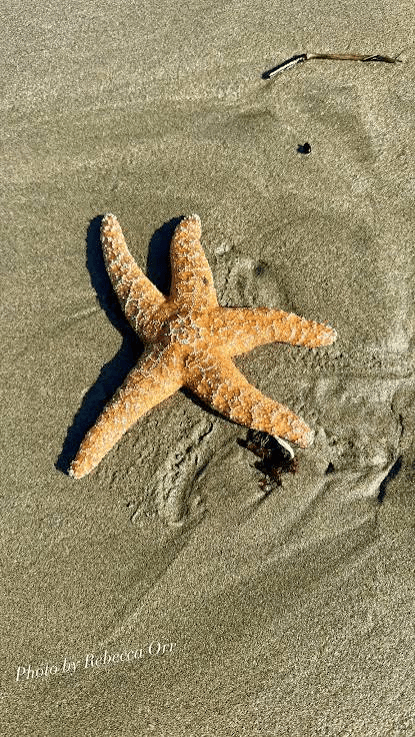
A young woman is walking along a beach, picking up stranded starfish and throwing them back into the ocean. An old man watches her for a while and finally asks what she thinks she’s accomplishing. Millions of starfish are stranded along thousands of miles of beach. Surely she can’t imagine that what she’s doing will make any difference.

The young woman bends down, picks up another starfish, and tosses it into the waves.

“It made a difference to that one,” she says.

The song is called Great Heart, and its chorus contains these words:

“I’m searching for the Spirit of the Great Heart, to hold and stand me by…”

(There’s a link at the end of this column.)

Hold on to that thought.

This past Sunday, November 22, was Christ the King Sunday in the Christian calendar. It’s the last Sunday of the Christian year, when we celebrate Christ’s reign and look forward to his return.

It’s not a particularly big holiday in most American churches. For one thing, it falls right around Thanksgiving, when we’re busy thinking about turkey, dressing, football, and Christmas shopping. But I suspect there’s another reason we don’t make much of Christ the King Sunday.

We Americans don’t particularly like kings.

I recently watched the old movie The Last of the Mohicans. It takes place during the French and Indian War, when Britain and France were fighting for control of North America. A British officer is attempting to recruit settlers on the frontier to join the militia and fight the French. Hawkeye, the hero of the story, isn’t particularly interested in fighting for Britain, or for anyone.

The officer challenges him about his loyalty to the Crown. “You call yourself a patriot and a subject of the Crown?!”

Hawkeye replies, “Don’t call myself subject to much at all.”

(There’s a link to this scene at the end of the column.)

I love that!

That’s us Americans. We don’t consider ourselves subject to much of anything. Or anyone.

I remember when the late Queen Elizabeth II came to America for a visit. The president and seemingly everyone else in the country went out of their way to honor her. There was all this fuss about protocol, proper greetings, and how one should behave in the presence of royalty.

I remember thinking, Didn’t we fight a war so we wouldn’t have to pay attention to these people?

(Forgive me, my British friends.)

We don’t want a king. If we want anyone in charge at all, and for some of us that’s a pretty big IF, we want a president.

Why?

Because we elect a president to do our will. The will of the people. Presidents take an oath to preserve, protect, and defend the Constitution, of course, but they also constantly remind us they were elected to represent the people.

They work for us. At least that’s the idea.

A king, on the other hand, is a different matter altogether.

Presidents are supposed to do our will. Kings expect us to do theirs.

And if there’s one thing Americans don’t like, it’s someone telling us what to do.

“Oh, yeah? Watch this!”

Maybe that’s why we aren’t particularly comfortable with the idea of Christ the King.

Jesus as Savior? Absolutely.

Jesus as friend? Wonderful.

Jesus as comforter, companion, and source of strength? Sign me up.

Jesus as King, whose will we are expected to obey?

Well, now. Let’s not get carried away.

“I’m searching for the Spirit of the Great Heart, to hold and stand me by…”

The Gospels contain a number of places where Jesus speaks about his return. Often he describes himself coming in glory, exercising authority, and judging the world.

And there’s something remarkable about what he says.

Or, perhaps more importantly, what he doesn’t say.

Take Matthew 25, for example.

Jesus tells a story about the Son of Man returning in glory, sitting upon his throne, and gathering all the nations before him. He separates the people as a shepherd separates sheep from goats.

Notice what he doesn’t say.

“You believed the right things about me. Come on in!”

“You belonged to the right church, memorized the Apostles’ Creed, and never missed Sunday school. Well done!”

No. He doesn’t ask them what they believed. He asks, in effect, how they treated people.

When I was hungry, you fed me.

When I was thirsty, you gave me something to drink.

When I was a stranger, you welcomed me.

When I was naked, you clothed me.

When I was sick, you cared for me.

When I was in prison, you visited me.

And when the righteous ask when they ever did these things for him, he tells them that whenever they did them for one of the least of his brothers and sisters, they did them for him.

That’s quite a list.

So we try to do those things. We donate to food banks, give clothes to charities, visit hospitals, and support ministries that help people in need.

And those are good things. Very good things.

But let’s not get too cocky. (Sorry, USC fans.)

Because I think Jesus is talking about something deeper than checking off a list of good deeds.

He’s talking about our hearts.

“I’m searching for the Spirit of the Great Heart, to hold and stand me by…”

I believe this story is about having eyes that see, ears that hear, and hearts that reach out.

It’s about what happens when the heart of Christ begins to grow within our own hearts.

We start noticing things.

We start noticing people.

The list Jesus gives isn’t an exhaustive list of everything we’re supposed to do. It’s a picture of what a heart shaped by love looks like.

A person with that kind of heart notices when someone is hungry. Notices when someone is lonely. Notices when someone is frightened, forgotten, or hurting.

And then does something about it.

The first step, though, is noticing.

Really noticing.

A beautiful expression is associated with the Zulu people of southern Africa. The greeting Sawubona is often explained as meaning “I see you,” with the response sometimes expressed as Sikhona, “I am here.”

What a wonderful thought.

Not simply that my eyes have registered your presence, but that I see you. I acknowledge you. You matter to me. You are not invisible.

And because you see me, I am here.

That reminds me of something that happened years ago with my niece Megan.

She was about five years old, and we were drying the dinner dishes together. Well, she was drying the dishes. I was mostly pretending to listen.

She was chattering away about her day at preschool, telling me all the things that were terribly important in the life of a five-year-old.

Meanwhile, my mind was somewhere else. I had a church meeting that evening, and I was thinking about what I needed to do.

“Uh-huh,” I said.

“And then we…”

“Uh-huh.”

“And you know what happened?”

“Uh-huh.”

Finally, she’d had enough.

She plunged her hands into the dishwater, reached up, put one wet hand on each side of my face, turned my head toward hers, and said:

“LOOK AT ME!”

Well, that got my attention.

She wasn’t asking me to solve a problem or do anything for her.

She just wanted me to see her.

And I hadn’t.

My body was standing there in the kitchen, but my heart was somewhere else.

I did not have a Great Heart at that moment.

I wonder how often we do that to one another.

We pass people on the street without seeing them. We exchange pleasantries without hearing the answers. We ask, “How are you?” and keep walking before anyone has a chance to tell us.

We see people as categories rather than individuals. The homeless. The poor. The elderly. The immigrant. The addict. The stranger.

As someone once observed, until we really know our neighbor, our neighbor is just an idea, not a person.

And it’s much easier to have opinions about ideas than to love actual people.

Which brings me back to this time of year.

Thanksgiving is upon us. Christmas is just around the corner. There will be parties, dinners, decorations, presents, church services, and all the wonderful chaos that comes with the season.

And there will be people.

People we might not notice unless we’re looking.

The teenager working the counter at a fast-food restaurant while friends are out having fun.

The person who seems perfectly happy on the outside but is quietly wondering how to get through another holiday season without someone they loved.

The addict who has tried a thousand times to quit, failed a thousand times, and wonders whether anyone will ever understand.

The person who has everything they ever wanted under the Christmas tree, or parked in the driveway, but still feels something missing deep in the soul.

And the person who has become so good at pretending everything is fine that nobody thinks to ask.

They’re all around us.

The question is whether we see them.

They’re all around us.

The question is whether we see them.

And I believe that’s what Jesus is getting at in Matthew 25.

Not simply that we should feed the hungry, welcome the stranger, and care for the sick, important as those things are.

But that we should become the kind of people who notice the hungry, the stranger, and the sick.

People whose hearts have become so shaped by the heart of Christ that we can no longer look away.

And here’s the thing.

I don’t believe we develop that kind of heart simply by trying harder to be nice.

We develop it by drawing closer to Jesus.

The more we love Jesus, the more we begin to love the people Jesus loves.

And who does Jesus love?

Well, that’s a pretty long list.

In fact, I can’t think of anyone who isn’t on it.

Every person. Every single person.

Even the people we don’t particularly like.

Even the people who don’t look like us, vote like us, worship like us, or live like us.

Even the people we secretly wish Jesus had left off the list.

They’re all there.

And if we claim to love Jesus while refusing to love the people he loves, perhaps we need to take another look at what we mean by loving Jesus.

That’s the challenge of Christ the King Sunday.

We can sing about Jesus being King. We can put crowns on the altar, preach sermons about his glory, and proclaim that one day every knee shall bow.

But if we aren’t willing to let his love rule our hearts, what does any of that mean?

The King doesn’t simply want our admiration.

He wants our hearts.

And when we give him our hearts, something wonderful begins to happen.

His Great Heart begins to shape our little hearts.

We begin to see what he sees.

We begin to notice whom he notices.

We begin to love whom he loves.

And sometimes, without even realizing it, we find ourselves doing something that makes a difference.

Which brings me back to Johnny Clegg.

And the starfish.

That young woman on the beach wasn’t trying to save every starfish in the ocean. She couldn’t. The old man was right.

But she could save one.

And then another.

And another.

Maybe that’s what having a Great Heart looks like.

We can’t feed every hungry person. We can’t comfort every grieving soul or heal every broken heart.

But we can notice the person standing in front of us.

And perhaps that’s what Jesus will ask when the King returns. Not whether we had all the right answers, but whether we noticed him when he was standing right in front of us.

“Lord, when did we see you?”

I wonder how many times I’ve walked right past him.

The King we celebrate returning is the same King who once knelt to wash his friends’ feet.

That’s the kind of King I want.

And that’s the kind of heart I want.

Until then, I’ll keep listening to Johnny Clegg.

And I’ll keep searching.

“I’m searching for the Spirit of the Great Heart, to hold and stand me by…”

And maybe, just maybe, I’ll make a difference to one starfish.

—

Addendum- If you’ve made it this far, dear reader, here are a few bonuses for you.

First, a video of Johnny Clegg and friends referred to above (with the starfish). I like this video because several other singers join in with their version of the song. Johnny Clegg is in the video, but he is not the focus. That’s the kind of person he was. However, the visual quality is not the best. Here’s the link.

Second, here’s a better version, from the album Third World Child, where it first appeared. Here’s the link. If I published a hymnal, this song would be in it.

Finally, here’s a link to the scene from The Last of the Mohicans.
What Do I Want to Be?

First, credit where credit is due.

Diana Butler Bass is a writer I love to read. If you haven’t discovered her yet, she’s worth looking up. On October 29, she posted a wonderful Halloween reflection titled A Halloween Treat.

In it, she recalled that when she was a little girl, her mother, an excellent seamstress, would ask her a question every year as Halloween approached: “What do you want to be this year?”

And then her mother would make the costume. Diana remembered that whatever she chose, it was always something sparkly and beautiful.

Since reading her reflection, I’ve been thinking about her mother’s question.

What do I want to be this year?

It’s a surprisingly difficult question.

My life has changed considerably over the past few years, and I’ve reached a place where I find myself a little confused. Out of place. Restless. Not exactly lost, but not exactly found, either.

A little history might help explain why.

After college, I worked for several years at a textile research firm, partly to pay off my college debts. It was a great job. Good pay, interesting work, and plenty of challenges. I’m grateful for those years.

Then I spent some time living and working in Europe, thanks to my mother and stepfather, who helped me find a job in a ski resort town in the Bavarian Alps. It was a cheap way to see Europe, and I loved every minute of it. New places, new people, new experiences. The world seemed wonderfully large, and I wanted to see as much of it as possible.

Eventually, I came home, went to seminary, and began serving churches as a pastor.

As a United Methodist, I was appointed to churches across South Carolina. I served tiny churches and large ones. Urban, suburban, and rural congregations. Churches with plenty of resources and churches where we had to be creative with what little we had.

I loved them all.

Everywhere I went, I found something worthwhile to do, both in the church and in the community. There were people to love, problems to solve, sermons to preach, and opportunities to make a difference. I always knew, more or less, what I was supposed to be doing.

And I am deeply grateful for those years.

But about six years ago, I knew it was time to retire. My health, both physical and mental, was beginning to affect my ability to do the work the way I believed it needed to be done. So I retired.

Or so I thought.

I hadn’t planned to do any more pastoring, but an opportunity came along to serve two very small country churches. I became what United Methodists call a “retired supply pastor.” Not exactly a glamorous title, but it suited me.

I loved those churches, too. They were small in membership and enormous in spirit. For four years, they gave me a place to belong and something meaningful to do.

Eventually, physical health issues made it difficult to continue, and I retired again. This time, completely.

For the next year, I did little more than read, write, pray, think, sleep, and eat.

And that was fine.

For a while.

But lately, something has been stirring.

I feel as though I’m being called to something else. The trouble is, I haven’t the slightest idea what it is.

And so the question keeps coming back.

What do I want to be?

People around town who have known me for years still call me “Pastor Mike.” I understand why, and I appreciate the affection behind it. But I don’t call myself that anymore. I’m no longer serving as a pastor, and the church I attend has a couple of wonderful pastors whom I do my best to support. I don’t want there to be any confusion about whose job it is to be the pastor.

When someone asks what I do, I usually don’t tell them I’m a retired minister.

I tell them I’m a writer.

Not an author, mind you. In my peculiar understanding of things, an author is someone whose work has been published and who is known, at least to some degree, for having written it.

But a writer? A writer is someone who writes.

And I do write, as you well know, dear reader.

I sometimes refer to my years in church leadership as “a past life.” That’s not because I regret them. Quite the opposite. They were wonderful years, and I wouldn’t trade them for anything. But they belong to a chapter of my life that has ended.

I meet regularly with a group of other retired clergy. We pray, talk, eat, drink, laugh, and occasionally try to answer a question that hangs over many of our conversations:

“Who are we now that our names are no longer on the sign?”

That’s a bigger question than it might seem.

For most of our adult lives, we had a title, a role, a place to go, and people who expected something of us. There were responsibilities and deadlines, meetings and emergencies, weddings and funerals. There was always something that needed doing.

And then, one day, there wasn’t.

A good friend at the church I attend retired recently. After a while, he went back to work part-time.

“I was sitting around doing nothing but rotting away,” he told me.

I understand what he means.

But I don’t feel called to return to church leadership. That chapter is finished, and I’m at peace with that.

Still, I feel a call.

Somewhere deep in my spirit, something is stirring. Something is asking for my attention. I just can’t quite make out what it’s saying.

Maybe my spiritual hearing isn’t what it used to be.

Or maybe I’m listening for the wrong thing.

Diana Butler Bass’s mother didn’t ask, “What do you want to do this year?”

She asked, “What do you want to be this year?”

There’s a difference.

My calendar and planner are already asking me to set goals for the coming year. What do I want to accomplish? What projects do I want to complete? What habits do I want to develop?

Those are good questions, I suppose.

I just wish I had some answers.

But lately I’ve begun to wonder whether I’ve been asking myself the wrong question.

Maybe I don’t need to know what I want to be.

Maybe I need to think about how I want to be.

My wife says that, above all else, I am generous.

I hope she’s right. I try to live up to what she sees in me. It’s a wonderful thing when someone who knows you better than almost anyone else sees something good in you that you hope is really there.

But generosity isn’t the only thing I want to cultivate.

I want to be kind.

I want to be courageous.

I want to be curious.

I want to be empathetic.

I want to be hopeful.

I could say that I want to be Christlike, but I’ve always thought that was something other people should be able to say about us, rather than something we ought to claim for ourselves.

And how will I know when I’ve become all those things?

There isn’t a measuring stick for kindness. No certificate of completion for courage. No little notification on my phone announcing, “Congratulations! You have achieved empathy!”

And hope? Well, some days hope is harder to come by than others.

Maybe these aren’t things we ever finish becoming.

Maybe they’re things we practice.

I’m not sure I can spend an entire year concentrating on becoming kinder, braver, more curious, more empathetic, and more hopeful. That’s a pretty ambitious New Year’s resolution, especially for someone who has trouble remembering what he went into the kitchen to get.

But I can work on them one day at a time.

Maybe Mondays can be my days to practice a little more kindness. Tuesdays, courage. Wednesdays, curiosity. Thursdays, empathy. Fridays, hope.

And on the weekends, perhaps I can work on all five. Or take a nap. There’s something to be said for a good nap.

I also want to keep learning. I want to discover new places, new ideas, new books, new people, and perhaps even a few new things about myself.

My word for 2026 has been RESIST.

Everybody has a word for the year these days, don’t they?

I’ve had mine plastered in various places as a reminder. I even wear it on a chain around my neck, alongside another word, GENEROUS, which reminds me of what Cathy sees in me and what I hope to become.

But I’ve decided that my word for 2027 will be DISCOVER.

I like that word.

It doesn’t require me to have all the answers before I begin. It doesn’t demand a five-year plan, a job description, or a new title. It simply asks me to keep my eyes open, my mind curious, and my heart willing.

Maybe I’ll discover something new to do.

Maybe I’ll discover something new to learn.

Maybe I’ll discover that the call I’ve been struggling to hear isn’t a call to another job or another position, but a call to become more fully the person God has been shaping all along.

Or maybe I’ll discover something I haven’t even thought to look for.

I don’t know.

And perhaps, for now, that’s all right.

When Diana Butler Bass’s mother asked what she wanted to be, she wasn’t asking her daughter to make a lifelong commitment. She was asking about one night, one costume, one opportunity to imagine herself as something different.

And whatever Diana chose, her mother helped her become something sparkly and beautiful.

I rather like that.

At this stage of my life, I don’t need another costume. I’ve worn enough of those, figuratively speaking. And I don’t particularly need another title.

But I wouldn’t mind discovering something beautiful in the years that remain.

Maybe even something that sparkles a little.

After all, it’s a big ol’ world out there.

And it appears I’m not through yet.

Route 66: The Road That Took America Somewhere

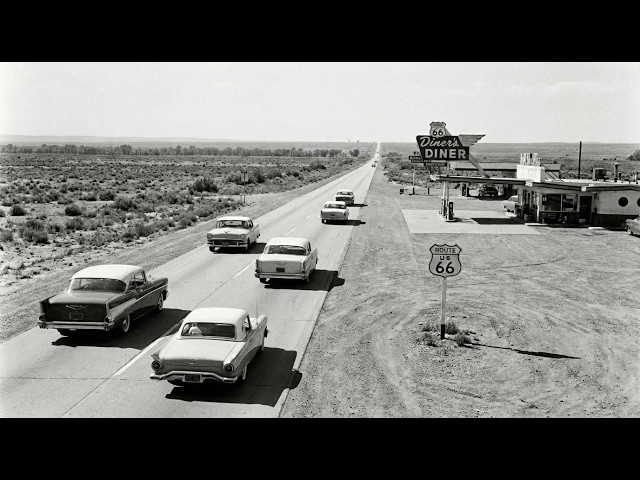
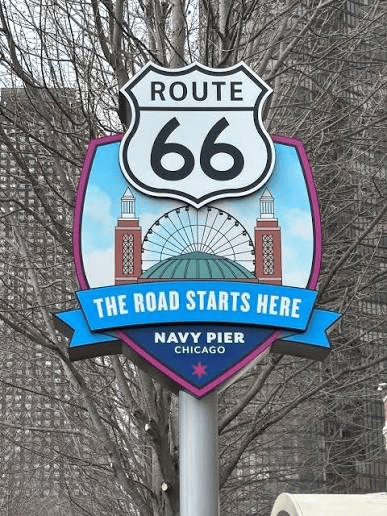
On November 11, 1926, exactly one hundred years ago today, a highway was officially established that would become one of the most famous roads in America. It was called U.S. Highway 66, but over the years it took on other names, including the Main Street of America, the Mother Road, the Will Rogers Highway, and, perhaps most fittingly, the Highway of Dreams.

Route 66 stretched about 2,448 miles from Chicago, Illinois, to Santa Monica, California, passing through Missouri, Kansas, Oklahoma, Texas, New Mexico, and Arizona. Eight states, three time zones, and enough small towns, roadside diners, gas stations, motels, and tourist traps to keep a traveler entertained for weeks. It was more than a road. It was a ribbon of asphalt connecting people, places, and possibilities. It may have inspired Woody Guthrie’s This Land Is Your Land. “As I went walking that ribbon of highway…”

Before our modern highway system, traveling across America was not particularly easy. Roads were often little more than dirt paths, and rain could turn a pleasant drive into an adventure that nobody wanted. Route 66 was not the first transcontinental highway, nor was it entirely paved when it opened. In fact, it would take another twelve years for the entire route to be paved. But it became one of the country’s most important roads, linking the industrial Midwest with the rapidly growing Southwest and California.

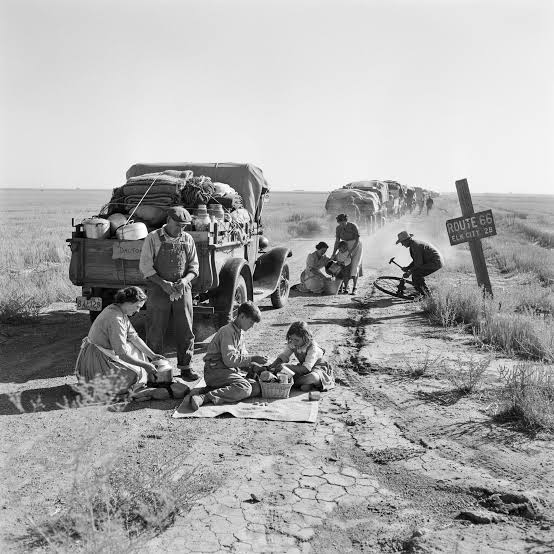
During the Great Depression, Route 66 became a road of desperation and hope. Thousands of families, particularly from Oklahoma, Arkansas, and Texas, loaded everything they owned into battered automobiles and headed west, hoping to find work and a better life. Drought, dust storms, and economic collapse had driven them from their homes. John Steinbeck immortalized their journey in his 1939 novel The Grapes of Wrath. Steinbeck gave Route 66 its most enduring nickname: the Mother Road.

For those families, the Mother Road was not a vacation. It was a road of hardship, hunger, uncertainty, and sometimes disappointment. California did not always turn out to be the promised land they had imagined. Yet the road represented something deeply American: the belief that somewhere beyond the horizon there might be a better life.

Following World War II, Route 66 took on a different character. Americans had money in their pockets, automobiles in their driveways, and a growing desire to see the country. The highway became a vacation destination in itself. Families piled into their Chevrolets, Fords, and Plymouths, packed suitcases, picnic baskets, and restless children, and headed west.

Along the way, a whole new American culture developed. Motor courts, which eventually became motels, restaurants with enormous neon signs, souvenir shops selling everything imaginable, and roadside attractions designed to separate tourists from their money appeared. Giant dinosaurs, concrete teepees, trading posts, and enough signs advertising the next attraction made sure nobody missed it.

In Missouri, travelers could explore Meramec Caverns, advertised for miles as Jesse James’s hideout. In Texas, they could stop at the Big Texan Steak Ranch, where anyone who could eat a seventy-two-ounce steak and all the accompanying food within an hour got the meal free. In Arizona, travelers could sleep at the Wigwam Motel, where they stayed in concrete structures shaped like teepees. In New Mexico, trading posts offered genuine Indian souvenirs, though some were undoubtedly more genuine than others.

Route 66 was also an important part of American music. In 1946, songwriter Bobby Troup wrote “(Get Your Kicks on) Route 66,” which became a hit for Nat King Cole and was later recorded by Chuck Berry, the Rolling Stones, and numerous other performers. The song named many of the towns along the highway and made them familiar to people who had never traveled farther west than their own county line.

Then, in 1960, CBS introduced a television series called Route 66, starring Martin Milner and George Maharis as two young men traveling around America in a Chevrolet Corvette. The show ran for four seasons. Interestingly, although the program was named for the highway, much of it was filmed in places nowhere near Route 66. But that really did not matter. The road had become a symbol of freedom, adventure, and the possibility of finding something new around the next bend. Rather than pay Bobby Troup a royalty for using his song, the producers hired Nelson Riddle to write a unique song for the show. I like both songs, but the Nelson Riddle one seems to have that call of the open road that Troup’s does not.

I was seven years old when that television show premiered. For those of us growing up in the 1950s and 1960s, the automobile represented a kind of freedom that earlier generations had never known. We could go places our grandparents might never have imagined visiting. My grandfather, who helped to raise me, was born in 1892. He used to complain that people only saw America through a car window. The interstate highway system was beginning to connect the country in ways that would have seemed miraculous only a few decades earlier.

Ironically, that very interstate system eventually brought about the demise of Route 66.

In 1956, President Dwight Eisenhower signed legislation creating the Interstate Highway System. The new roads were wider, straighter, faster, and safer. They bypassed towns rather than passing through them. Travelers could cover hundreds of miles without stopping at a traffic light, slowing down for a courthouse square, or being tempted by a roadside sign promising the world’s largest whatever.

Progress is wonderful, but it often comes at a price. That same grandfather said, of the interstate system, “Now you can travel from the Atlantic to the Pacific and not see anything.”

As the interstates replaced Route 66, the little businesses that depended on passing motorists began to disappear. Gas stations closed. Motels stood empty. Diners that had served generations of travelers shut their doors. Some towns that had once thrived along the highway became little more than forgotten places on an old map.

On June 27, 1985, the U.S. Highway System officially removed Route 66. The road that had carried millions of Americans westward was no longer an official U.S. highway.

But something interesting happened. People refused to forget it.

Preservation groups began restoring old buildings, saving neon signs, and marking surviving sections of the highway as Historic Route 66. Travelers who could get from Chicago to California much faster on the interstate began deliberately taking the slower road. They wanted to see the old diners, drive across the narrow bridges, visit the abandoned gas stations, and experience a little of the America that had existed before everything became standardized.

Today, portions of Route 66 remain open, and travelers can still follow much of the original journey, although it requires some careful planning. On our honeymoon, Cathy and I drove part of 66 through Winslow, Arizona. If it weren’t for that song the Eagles sang, that town would not be there today. Some sections of the Mother Road have disappeared entirely. Others are little more than frontage roads running beside the interstates. But hundreds of miles still let you travel through small towns, stop at independent restaurants, and see remnants of an America that has largely vanished.

This year marks the centennial of Route 66, and communities along the old highway are celebrating its history. There is something fitting about celebrating a road that officially ceased to exist more than forty years ago.

I think part of our fascination with Route 66 comes down to nostalgia. We remember, or imagine, a time when traveling was not simply about getting somewhere as quickly as possible. The journey itself was part of the adventure. We stopped to look at unusual things. We ate in restaurants where the owner might also be the cook and the waitress. We stayed in motels where the room key was attached to a large plastic tag, and the sign outside proudly advertised COLOR TV and AIR CONDITIONING.

Of course, we tend to romanticize the past. Those old roads were often dangerous, the cars were not nearly as reliable as we remember, and not everyone was equally welcome at the roadside establishments. For Black Americans traveling during segregation, a cross-country automobile trip required careful planning to find safe places to eat, sleep, and purchase gasoline. The Negro Motorist Green Book was not a collection of interesting tourist attractions. It was often a necessity.

The history of Route 66 is, in many ways, the history of twentieth-century America, complete with its hopes, achievements, contradictions, and failures.

I have always enjoyed traveling the back roads, stopping in small towns, visiting historic places, and discovering things that never make it into the tourist brochures. I would rather spend an hour exploring an old courthouse square than drive past it at seventy-five miles an hour. There is something to be said for taking the road that goes through a town instead of the one that goes around it.

Perhaps that is why Route 66 continues to capture our imagination.

A hundred years ago, America built a highway to connect Chicago with California. Along the way, it connected generations of people through their dreams, disappointments, adventures, and one another.

The road may have disappeared from official maps, but it has never left the American imagination.

And perhaps there is a lesson in that. We spend so much of our lives trying to get somewhere that we sometimes forget to enjoy the trip. We are always looking for a faster road, a shorter route, or a way to avoid the inconvenience of stopping.

But sometimes the most interesting things in life are found along the old roads, in the little towns, and at the unexpected stops we would have missed if we had been in too much of a hurry.

After a hundred years, Route 66 still has something to teach us.

Sometimes the journey is just as important as the destination.

And sometimes, to get your kicks, you have to get off the interstate.

Fahrenheit 451

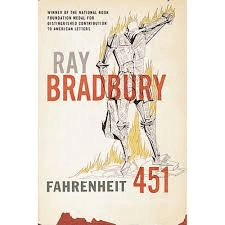
On this day, October 19, in 1953—the year I was born—Ray Bradbury’s Fahrenheit 451 was published.

I wonder if Bradbury had any idea how profoundly his writing would influence generations of readers. He was an insightful, imaginative, often humorous, and remarkably prolific writer. My shelves hold much-worn copies of The Illustrated Man, The Martian Chronicles, Dandelion Wine, Something Wicked This Way Comes, and Green Shadows, White Whale. And I have several copies of Fahrenheit 451.

Original cover, October 1953

I probably first read Fahrenheit 451 around its tenth anniversary, when I was about ten years old, and again a few years later. The book made an impression on me that has lasted a lifetime.

On the occasion of its fortieth anniversary in 1993, I wrote Bradbury a letter telling him how much his book had inspired me and how I was beginning to see some of his predictions coming true.

More than thirty years later, I wish I could say those concerns were unfounded.

We are not yet living in a society where firemen burn books rather than extinguish fires, but there is a growing movement in our country to remove certain books from libraries and schools. Some people have even called for books to be burned. Perhaps even more troubling is a culture increasingly uncomfortable with reading anything longer than what fits on a smartphone screen.

Consider a few statistics.

In 2004, on an average day, 28% of Americans read for pleasure. Twenty years later, that number had fallen to 16%. That includes reading books, magazines, newspapers, online articles, and even listening to audiobooks.

The decline among children is particularly disturbing. In 2012, 53% of nine-year-olds reported reading for pleasure every day. By 2022, that number had dropped to 39%. The numbers become even more discouraging as children grow older. In 2012, only 27% of thirteen-year-olds read daily for pleasure. By 2023, the figure had fallen to just 14%.

A Pew survey in 2025 found that a quarter of Americans had not read a single book in the previous year. Another 38% had read between one and five books, including audiobooks.

There is an old saying, frequently attributed to Mark Twain, although no one seems able to prove he said it: “The person who does not read has no advantage over the one who cannot read.”

Whoever said it had a point.

Oddly enough, while recreational reading has declined, book sales have remained relatively strong. Apparently, people are still buying books. Reading them is another matter.

I have a friend with bookshelves filled with beautifully bound editions of classic literature. They are impressive volumes, the sort of books that make a room look distinguished and intellectual.

He hasn’t read a single one.

They’re decorations.

I suppose there are worse things to decorate a room with, but I can’t help thinking that books deserve better than that.

But back to Fahrenheit 451.

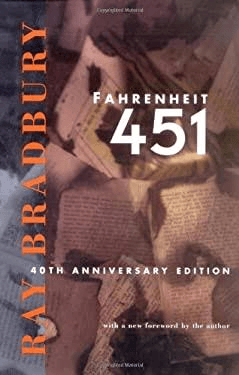
Somehow, my letter reached Ray Bradbury. To my surprise and delight, he autographed a fortieth-anniversary edition of the novel and sent it to me. It remains one of my treasured possessions. It is now in the possession of my nephew.

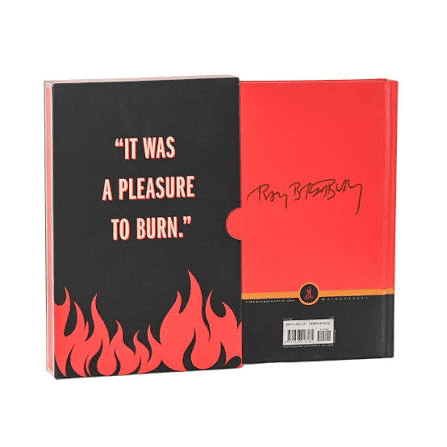
40th Anniversary Edition

Recently, I bought another edition, a boxed version released by Simon & Schuster in November 2025. It features one of the cleverest bits of book packaging I’ve ever seen.

Instead of displaying the title on the spine of the box, the publisher made it a striking surface. You can actually strike a match on it.

The front of the box doesn’t even have the book’s title. It simply carries the novel’s chilling opening words:

“It was a pleasure to burn.”

November 2025 edition

The back displays only the number 451—the temperature at which book paper supposedly catches fire.

I love the irony of a publisher selling a book about burning books in a box designed to strike matches.

All of this prompted me to pull out my oldest copy of Fahrenheit 451, a battered paperback that has been highlighted, underlined, dog-eared, tagged, and thoroughly worn.

Most of my books, including my Bibles, look as though I’ve been wrestling with them. In a sense, I have. I don’t believe books are meant simply to be admired on shelves. They are meant to be opened, questioned, argued with, and occasionally wrestled to the ground.

As I leafed through that old paperback, I came across passages that captured my imagination as a young teenager and still haunt me more than sixty years later.

Bradbury urged his readers to fill their eyes with wonder, to see the world, and to recognize that reality can be more astonishing than anything manufactured for our entertainment.

He wrote about the importance of leaving something behind when we die—a child, a book, a painting, a garden, something touched by our hands and changed by our presence. I especially love his distinction between someone who merely cuts grass and a gardener whose work leaves something of himself behind. The gardener, Bradbury suggests, will be remembered long after the work is done.

Then there is the haunting question of what could possibly be so valuable in a book that a woman would choose to remain with her books in a burning house rather than abandon them.

And I still smile at the seventeen-year-old who announces that he is crazy because, according to his uncle, being seventeen and being insane naturally go together.

These days, I would amend that to seventy-three and insane.

But perhaps the passage that most closely connects Bradbury’s fictional world to our own is his description of a book as a loaded gun in the house next door. What makes a well-read person so dangerous?

Perhaps it is the possibility that such a person might begin to think independently, ask uncomfortable questions, challenge accepted opinions, or imagine a world different from the one being handed to us.

That, after all, is what books do.

They take us places we have never been. They introduce us to people we would otherwise never meet. They challenge our assumptions, expand our sympathies, sharpen our minds, and sometimes change our lives.

A good book doesn’t simply give us something to think about. It teaches us how to think.

And that may be precisely why some people find books so threatening.

Bradbury understood something important: You don’t have to burn books to destroy a culture of reading. You simply have to persuade people that reading is no longer worth their time.

If you’ve made it this far, congratulations. And thank you for reading.

Now, please, put down your phone, close your computer, and pick up a book.

Preferably one that someone doesn’t want you to read.

Happy Birthday, Pooh!

October 26, 2026

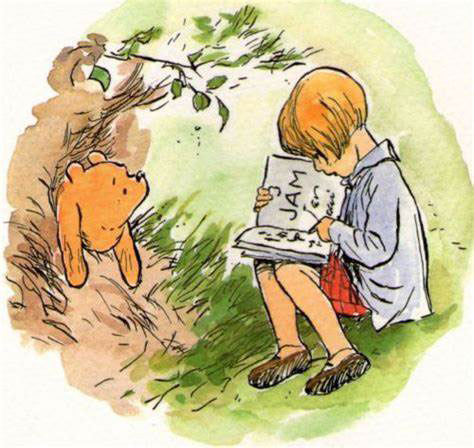
One hundred years ago today the world was introduced to the Hundred Acre Wood, Winnie the Pooh, Christopher Robin, and all their friends. They have been faithful friends ever since. The writing of A.A. Milne and the drawings of E.H. Shepard came together to form a world we all wanted to live in.

Here are a few quotes from Pooh- 

  • “A day without a friend is like a pot without a single drop of honey left inside.” 
  • “The things that make me different are the things that make me, me.” 
  • “Some people care too much. I think it’s called love.” 
  • “Nobody can be uncheered with a balloon.” 
  • “Poetry and Hums aren’t things which you get, they’re things which get you.” 
  • “It is more fun to talk with someone who doesn’t use long, difficult words.” (I need to be reminded of that!)

And the ever present one that should replace most of our four-letter expletives- “Oh, bother!” 

Here’s a song for the day.

Happy birthday, Pooh! You haven’t aged a bit.

Pooh and Christopher Robin by E.H. Shepard

I’m With The Banned

October 4–10 marks Banned Books Week, an event sponsored by the American Library Association and 15 other organizations, including Amnesty International, Little Free Library, and the National Council of Teachers of English. Established in 1982 in response to a sudden surge in challenged and banned books nationwide, the initiative highlights the essential freedom to access diverse literature and read without censorship. Unfortunately, the history of book banning is neither new nor brief.

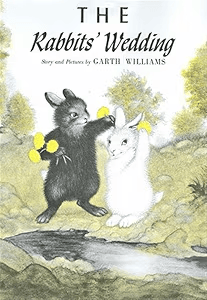
In 1959, Alabama challenged Garth Williams’s children’s book The Rabbits’ Wedding. The story simply depicts two bunnies getting married—one black and one white. State officials and the White Citizens Council argued the book went too far, prompting State Senator E. O. Eddins to demand that libraries remove it and burn it. Emily Wheelcock Reed, Director of the Alabama Public Service, refused to destroy or pull the book, though she ultimately moved it to a reserved section to protect it. It was not until June 1967 that the U.S. Supreme Court struck down all state laws prohibiting interracial marriage, and Alabama’s state constitution was not updated until November 2000. Eventually, The Rabbits’ Wedding returned to the children’s section where it belonged.

While most states restrict books on a district-by-district or county-by-county basis, my home state of South Carolina is among the few that have enacted statewide bans. In May 2025, South Carolina led the nation in statewide book bans—a disheartening distinction. This censorship coincides with broader educational challenges: South Carolina ranks roughly 13th highest in functional illiteracy nationwide, with nearly 57.6% of adults reading below an 8th-grade level and only 54% to 56% of 3rd-grade students reading at grade level.

Despite these challenges, many books eventually find their way back. Acclaimed works like Toni Morrison’s The Bluest Eye, Margaret Atwood’s The Handmaid’s Tale, and Khaled Hosseini’s The Kite Runner have all overcome local challenges in South Carolina. In Beaufort County alone, people challenged 97 books in 2022, though libraries ultimately returned all but five to the shelves.

Resistance to censorship has historical roots here, too. In 1987, a student at Baptist College of Charleston (now Charleston Southern University) asked to remove F. Scott Fitzgerald’s The Great Gatsby from the undergraduate reading list. The college president, Jairy Hunter, refused. Years later, when a member of a local church tried to remove the first Harry Potter book from a school district because of its themes of magic, a parishioner asked what I thought. My response was simple: “The only real magic in Harry Potter was that it was able to get kids to read.”

When this week rolls around each year, I look up the list of challenged and banned books in South Carolina. This year, there are 21. They remain available in bookstores and select public libraries by request, but they’ve been removed from school shelves—though I’m told a few manage to sneak back in.

I usually pick one up out of curiosity. Of the 21 titles, six are by Sarah J. Maas, a fantasy author who has sold over 75 million copies worldwide; I read one recently and found it genuinely intriguing. Ellen Hopkins has three books on the list, tackling heavy, real-world themes like addiction, abuse, mental health, and trauma—topics that deeply resonate with young readers.

Which brings me to my point: if you want your pre-teen or teen to read, tell them they can’t. But if you do, be prepared. It might just spark a change—or convince them that bunnies who love each other deserve to get married.

Feast Day of St. Francis of Assisi

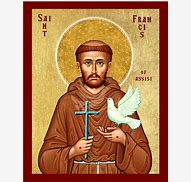
Today, October 4, is the Feast Day of St. Francis of Assisi (born around 1181, died October 3, 1226, at 44 or 45 years old). One of the most beloved and recognizable saints, Francis is remembered for his deep love of nature, his famous prayer (“Lord, make me an instrument of thy peace…”), and for founding a new order in the Catholic Church. His followers became known as the Friars Minor (“Lesser Brothers”), a name he chose to reflect humility and service. Francis wanted his community to live simply, caring for the poor and embracing poverty as a way to imitate Christ. Over time, they came to be called Franciscans, honoring their founder’s vision of joy, compassion, and reverence for all creation. He may rightly be considered a reformer, calling the Church back to its roots.

Francis, whose birth name was Giovanni di Pietro di Bernardone, was born into a wealthy family whose business was cloth. He spent much of his youth enjoying a lavish lifestyle, then joined the army and was sent into war. Captured and held prisoner for a year, he became seriously ill and began to reevaluate his life. Upon returning home, he resumed his old ways for a time but soon experienced a vision that changed him forever. He lost interest in worldly pleasures and wealth. When asked if he was considering marriage, he replied, “Yes, a fairer bride than any you have ever seen.” That “bride” came to symbolize Lady Poverty, his lifelong companion.

While praying in the ruins of a dilapidated church, Francis had a vision of Christ speaking to him from an icon. The crucified Christ said, “Francis, Francis, go and repair my church, which, as you can see, is falling into ruins.” At first, Francis thought this meant rebuilding the physical structure, but he later understood it as a call to renew the spiritual and moral life of the Church itself.

From that moment, Francis devoted himself to serving the poor and living the Gospel in its purest form. His humility, joy, and love for all creation continue to inspire people across centuries and faiths. His legacy reminds us that peace, simplicity, and compassion are not just ideals — they are ways of life.

He took up a life of poverty, chastity, and obedience, which forms the Rule of the Franciscans today. To celebrate his day, I read the Rule and reflected on it. (Here’s a site with the Rule and some interpretation of it.) There are 12 sections. They are worth reading and reflecting upon today. Those of us who are or have been preachers should pay special attention to Rule IX.

Franco Zeffirelli made a beautiful movie about Francis and Clare in 1972 titled Brother Sun, Sister Moon. A song from the movie, Little Church, by Donovan, has these lyrics-

If you want your dream to be Take your time, go slowly

Do few things but do them well Heartfelt work grows purely

If you want to live life free Take your time, go slowly

Do few things but do them well Heartfelt work grows purely

Day by day, stone by stone Build your secret slowly

Day by day, you’ll grow too You’ll know heaven’s glory

Here’s a link to the song in the movie. It has one of the best altars I have seen anywhere.

Francis had 11 brothers join him in Assisi, and they worked there, focusing on calling the church to its mission. The movement began to grow organically. It was not planned to be a worldwide movement, but it became one. Francis simply wanted to start where he was.

And I think that’s his message to me today. Start where you are. Do good work. Go slowly. But go.

And remember, in the words of Francis himself, “All the darkness in the world cannot extinguish the light of a single candle.” 

With Apologies

To: Carl Sandburg, Robert Frost, Maya Angelou, Mary Oliver, William Shakespeare, King David, Emily Dickinson, Walt Whitman, Langston Hughes, T.S. Eliot, Rumi, Edgar Alen Poe, William Wordsworth, Homer, Pablo Neruda, Dante Aligheri, William Blake, John Keats, Rainer Maria Rilke, Phyllis Wheatley, W.B. Yeats, Billy Collins, Dr. Seuss, Shel Silverstein, Anne Bradstreet, and just about every other poet I have read.

Except Brian Bilston. I refuse to apologize to him. I admire him, and love his poetry, but I simply refuse to apologize.

Having some time today,and being overtaken by an evil muse while the earth slowly tipped on its axis, I wrote two poems for the occasion.

An Answer To The Eternal Poetic Question Of Spring, Written On The Occasion Of The Autumnal Equinox

Fall has fallen
The grass may die
To the South
The birdies fly
Wing on bird? Bird on wing?
It doesn’t matter,
It’s fall, not spring.

A Poem On The Occasion Of 8:05 pm Eastern Standard Time, September 22, 2026 (0:05 GMT, September 23, 2026).

Do not put me in a box
on this autumnal equinox.
I think I’ll put on some shoes and socks
and go and sit among the rocks,
down by the river, where the locks
move the water…oh, look! A fox!
And his ears are pointed like Mr. Spock’s.

Now, where was I, my mind’s a pox.
I should be locked up in the stocks.
But this season’s quite a paradox
and this poem rather unorthodox
like the writings of Harvey Cox.
(Not forgetting Courtney, Brian, and Wally, who mocks
my shoes, they’re ugly crocs.)

For years I watched after flocks
(some brought me candy made by Brock’s!)
and most were nerds, though some were jocks,
a few wore hats called pillbox,
while some grew flowers called hollyhocks.
Though others preferred to grow some phlox,
I loved them all, which gave them shocks.

I tried and tried but cannot recall
a rhyme for this season known as…..
Autumn.

God is Sad

(Note: I wrote this back in 2008. It still captures how I feel on September 11.)

Barry attended the church I served in Cayce. He wandered in one day looking for food and company.

On a Sunday afternoon, a child from Noah’s Klubhouse, our children’s ministry, came running into my office.

“Pastor Mike! There’s a strange man sitting in Noah’s Klubhouse eating macaroni!”

I rushed down the hall to see what was going on. There, sitting in a kiddie chair, was a man who looked to be in his mid-twenties, eating a plate of macaroni and cheese. He looked up at me and smiled.

“Hi,” I said. “I’m Pastor Mike.”

“I’m Barry,” he said.

It was immediately apparent that Barry was developmentally disabled.

“Glad to meet you, Barry,” I said. “Why don’t you bring your supper with you and join me in my office?”

I grabbed a plate of mac and cheese, and the two of us walked back to my office.

It turned out that Barry had been walking down the road, saw people going into the church, and simply followed them inside. He lived about a mile away and attended a “school” nearby. I told him he was welcome anytime the church doors were open, but when the little people were meeting, he needed to come see me first.

And Barry started coming to church.

Every time the doors were open.

Worship? Barry walked in and made himself at home. Covered-dish supper? Barry was there. Youth or children meeting? He came to see me first, just as I had asked. Trustees meeting? Barry sat quietly in the back, never bothering anyone.

Eventually, he asked if he could join the choir. The choir director and members said, “Of course.”

Barry couldn’t read music or carry a tune. Mostly, he sang whatever the choir sang, only about half a beat later.

The choir was wonderful about it. No one complained. In fact, they began looking after Barry—helping him with clothes, food, transportation, and medical needs.

Eventually, I gave him another job. I asked him to carry our church banner into the sanctuary each Sunday with the acolyte. Barry would put on his robe, take hold of that banner, and carry it proudly down the aisle.

Then came September 11, 2007, the sixth anniversary of the terrorist attacks. It fell on a Tuesday, the same day of the week as September 11, 2001.

I had announced that our sanctuary would be open from 7 a.m. until 1 p.m. for anyone who wanted to stop by and pray. I arranged for quiet, meditative music to play throughout the morning. On the altar were four candles: two tall ones representing the Twin Towers, a shorter one for the Pentagon, and an even shorter one for the field in Pennsylvania. Prayer guides were available at the sanctuary door.

After getting everything ready, I spent some time there praying. Then I went back to my office to work.

A while later, I stepped outside for a breath of fresh air and noticed Barry’s “car” lying beside the sanctuary door.

Barry’s car was a long stick with a two-liter soda bottle attached to the end. He carried it with him everywhere and called it his car.

I knew Barry was inside.

I stepped into the sanctuary and saw him sitting there alone. No one else was there.

When he saw me, a big smile spread across his face.

“Passa Mike!”

Barry always had trouble pronouncing his t’s.

“Hey, Barry. What are you doing here?”

“I’m here for the 9-11.”

“Mind if I join you?” I asked.

He slid over, and I sat down beside him.

We sat there for a while, listening to the music and looking at the candles.

After a few minutes, Barry asked me a question.

“Passa Mike, is God sad?”

“Yes, Barry,” I said. “I think God is sad whenever we do things that hurt each other.”

“Oh,” he said.

We sat quietly for another minute.

“Barry, would you like to pray?”

“Sure.”

We bowed our heads. After a moment, I began praying aloud.

“Father God, on this day we remember—”

Barry began patting my leg.

“Passa Mike. Passa Mike. Passa Mike.”

I stopped.

“What is it, Barry?”

“Let’s be quiet. God is sad.”

So we were quiet.

Barry was my teacher that day.

Every year since, when September 11 comes around, I think about that morning in 2007 and about Barry sitting beside me in the sanctuary. Sometimes I listen to Bruce Springsteen’s “Into the Fire.”

But mostly, I sit in silence.

God is sad.

The Spaces Between the Pictures

I have gone back to school.

Our local university, Francis Marion University, is offering non-credit evening classes for the community, taught by its faculty, for the incredibly inexpensive price of $10 per course. I signed up for two: Photography: Make Not Take Better Photos, taught by Professor Julie Mixon, and Revolutionary War Battles in South Carolina, taught by Dr. Will Bolt.

I have a nice mirrorless digital camera that I know embarrassingly little about, and lately I have been traveling around South Carolina looking for lesser-known Revolutionary War battle sites. So both classes were right up my alley.

Professor Mixon’s first class introduced photography and what she believes makes a good photograph. A good photograph tells us something. It invites us into a part of the world we may not have noticed before. It often raises more questions than it answers. And, at its best, it gives us a new way of seeing the world around us.

She showed us photographs from her travels—landscapes, flowers, and some incredible close-ups of insects. She loves bugs. For our homework, she asked us to think about what makes a good photograph.

I’ve been doing just that.

Ansel Adams famously distinguished between taking a photograph and making one. Even when the shutter is open for only a thousandth of a second, the photographer has decisions to make. What am I photographing? Why? What belongs inside the frame? What should be left outside it? What should be sharp, and what should disappear into the blur?

A photograph may capture only a fraction of a second, but a good one can hold an entire story.

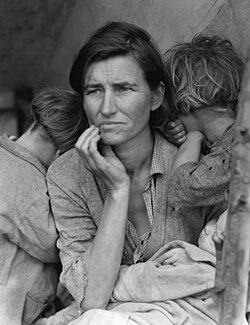
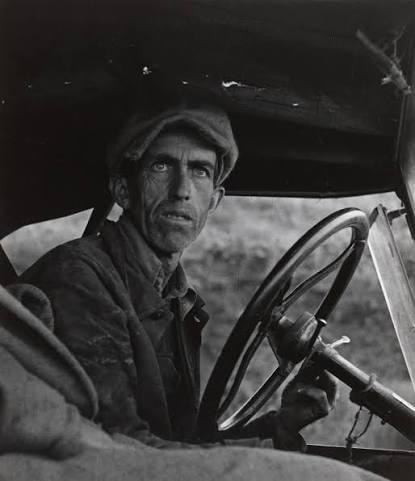
Professor Mixon showed us photographs by Dorothea Lange, whose work documented the human cost of the Great Depression. Nearly a century later, her photographs still allow us to look into the faces of people who endured the Dust Bowl and Depression and wonder about their lives. Her famous Migrant Mother, along with photographs such as Ditched, Stalled and Stranded, does more than record what someone looked like at a particular moment.

Migrant Mother

Ditched, Stalled, and Stranded

The pictures make you wonder what happened five minutes before the shutter clicked—and what happened five minutes afterward.

They make you compose a story in your mind.

Years ago, in a previous chapter of my life, I visited a young friend in the pediatric cancer ward of a hospital in Columbia. Most of the patients on that floor were under twelve, and many stayed for long periods.

As I stepped into the elevator, a young woman stepped in with me. She looked to be in her early thirties. She had long, straight hair and wore loose-fitting pants and an oversized, long-sleeved T-shirt. She carried a large bag. Stuffed animals peeked out of the top, along with a few clothes and snacks.

She never looked at me.

She looked at the elevator buttons.

When she saw the floor I had already selected, she didn’t press another button. She simply turned and stared at the wall.

I tried not to stare at her.

I knew nothing about this woman. I didn’t know who she was going to see or what news she had received. But something about her told me she had ridden that elevator a hundred times. She looked tired—deeply tired—but determined. There was a strength in the way she stood there that seemed greater than the circumstances surrounding her.

I wish I could have made a photograph of her.

Not because I wanted a picture of a tired woman carrying a bag of stuffed animals, but because I wish I could have captured that strength. I wish I could have taken a photograph that made someone who had never met her stop and wonder about her story.

Over the years, I have visited many people in their homes, and I have developed a habit of noticing the photographs they display.

Photographs tell so much about us.

And they keep so many secrets.

Most are the expected pictures—weddings, birthdays, anniversaries, vacations, graduations. In that way, the photographs on our walls are a little like the pictures we post on social media. They tend to show the good moments. Everybody is smiling. Everybody is dressed nicely. Everybody appears happy.

But occasionally a collection of photographs tells a deeper story.

Years ago, I visited a family who lived in a small mobile home. On one wall were eight photographs. As best I could tell, they were the only family photographs displayed in the house.

Each one had been made for a church pictorial directory.

You can usually recognize those photographs from across the room. Everybody is wearing their Sunday clothes. The smiles are slightly forced. And somewhere behind them is that inevitable blue background.

Eight of these pictures hung in a row.

The first showed a young couple. They were smiling and looked recently married.

In the second, they were holding a baby. Their smiles were even bigger.

The third showed the couple with a small child and another baby.

Then came the fourth photograph.

The children were teenagers now.

Nobody was smiling.

The mother looked tired. The father looked angry.

In the fifth photograph, the father was gone. Only the mother and her two older teenagers remained. She looked worried.

The sixth showed the mother alone.

She had a slight smile.

The seventh showed her with her two now-grown children.

All three were smiling.

And then there was the eighth.

The mother was gray-haired now. Beside her stood her two adult children, their spouses, and a small baby.

Everyone was beaming.

Eight photographs.

No captions. No explanations.

I never knew the whole story behind that wall, and perhaps that is what made those photographs so powerful. Somewhere between those blue backgrounds there had been love and disappointment, babies and teenagers, anger and absence, loneliness and reconciliation. Some chapters of a family’s life no camera recorded.

But you could still see traces of them.

The pictures told a story.

And so did the spaces between the pictures.

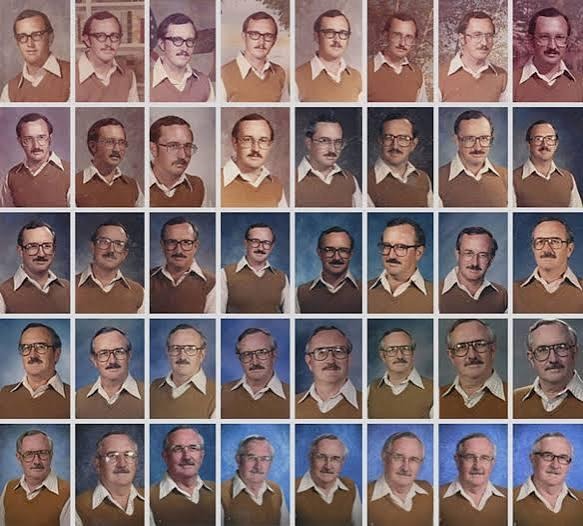
Several years ago, I read about Dale Irby, a physical education teacher in Dallas who accidentally wore the same outfit for his school yearbook photograph two years in a row. His wife dared him to do it again. Eventually it became a tradition, and for decades he appeared in his yearbook photograph wearing essentially the same polyester shirt and sweater vest.

What began as an ordinary school photograph became something else entirely.

It became a record of time passing.

The clothes stayed the same. The man did not.

Dale Irby, Prestwood Elementary School, Dallas, TX

Maybe that is part of what photographs do for us. They remind us that the world is always changing, even when we aren’t paying attention.

Today we probably take more photographs than any generation in human history. Our phones contain thousands of them. We photograph our meals, our pets, our grandchildren, sunsets, vacations, birthday cakes, and ourselves standing in front of places we may never visit again.

But strangely, the more photographs we take, the fewer we seem to keep.

We don’t print many of them anymore. We upload them online, look at them for a day or two, and then they disappear into the enormous digital attic of our phones and computers.

Perhaps that is why Professor Mixon’s distinction between taking and making photographs has stayed with me.

I don’t really need to learn how to take more pictures.

I already know how to do that.

I want to learn how to see.

I want to notice the woman in the elevator. The changing faces on the wall. The things most people walk past without seeing. I want to learn to make photographs worth printing and putting somewhere that people might stop and look at them years from now.

Maybe they will wonder what happened just before the shutter clicked.

Maybe they will wonder what happened afterward.

Maybe they will see something in the picture that I didn’t even know was there.

Because it is a big old world, filled with people and places we pass every day without really seeing.

Sometimes all it takes is a camera—and someone willing to pay attention.

Every picture tells a story.

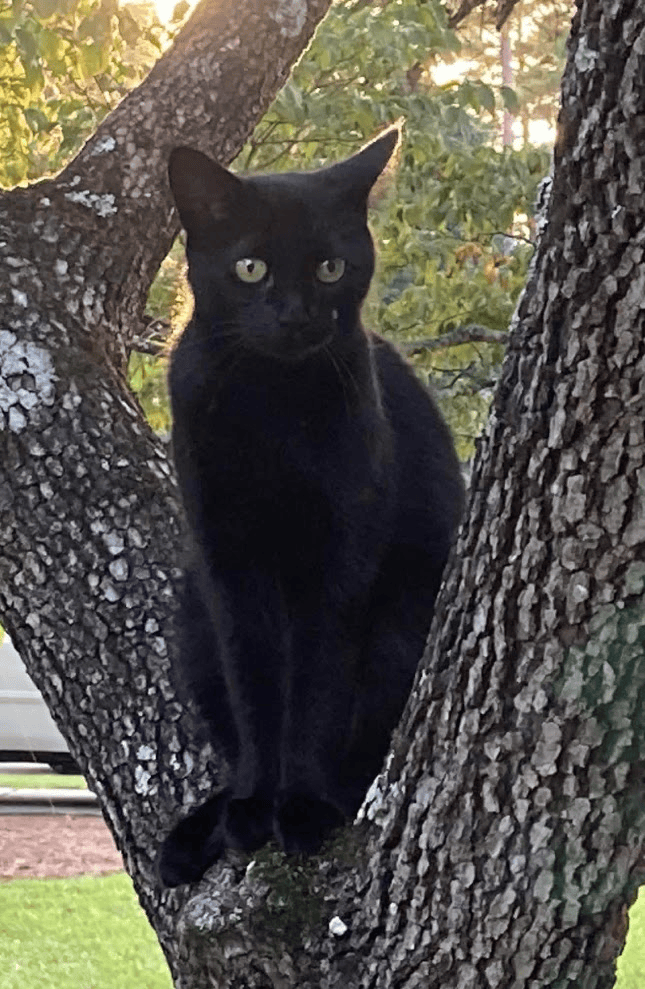
Hampton, my cat, whom I miss