Searching for the Spirit of the Great Heart

(Warning: this one is long and boring. Do not operate heavy equipment after reading.)

One of my favorite musicians is the late Johnny Clegg. You may never have heard of him. He was South African, and his music helped bring people together across the racial divisions of apartheid. His songs were filled with hope, courage, and a stubborn belief in our common humanity. And whenever I listen to him, I feel a little better about the world.

One of his music videos begins with the old parable of the starfish. You probably know it.
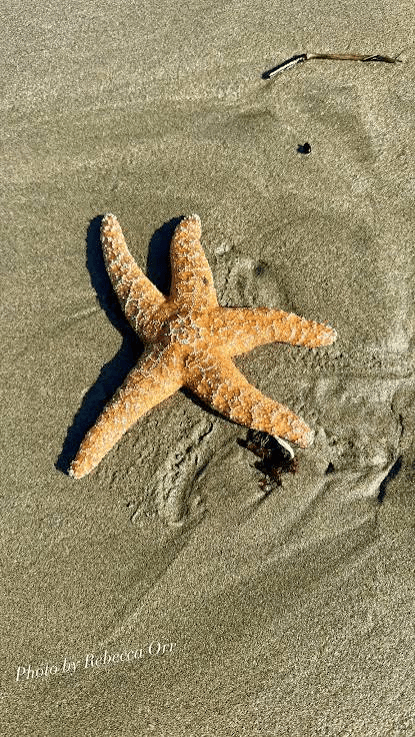
A young woman is walking along a beach, picking up stranded starfish and throwing them back into the ocean. An old man watches her for a while and finally asks what she thinks she’s accomplishing. Millions of starfish are stranded along thousands of miles of beach. Surely she can’t imagine that what she’s doing will make any difference.

The young woman bends down, picks up another starfish, and tosses it into the waves.

“It made a difference to that one,” she says.

The song is called Great Heart, and its chorus contains these words:

“I’m searching for the Spirit of the Great Heart, to hold and stand me by…”

(There’s a link at the end of this column.)

Hold on to that thought.

This past Sunday, November 22, was Christ the King Sunday in the Christian calendar. It’s the last Sunday of the Christian year, when we celebrate Christ’s reign and look forward to his return.

It’s not a particularly big holiday in most American churches. For one thing, it falls right around Thanksgiving, when we’re busy thinking about turkey, dressing, football, and Christmas shopping. But I suspect there’s another reason we don’t make much of Christ the King Sunday.

We Americans don’t particularly like kings.

I recently watched the old movie The Last of the Mohicans. It takes place during the French and Indian War, when Britain and France were fighting for control of North America. A British officer is attempting to recruit settlers on the frontier to join the militia and fight the French. Hawkeye, the hero of the story, isn’t particularly interested in fighting for Britain, or for anyone.

The officer challenges him about his loyalty to the Crown. “You call yourself a patriot and a subject of the Crown?!”

Hawkeye replies, “Don’t call myself subject to much at all.”

(There’s a link to this scene at the end of the column.)

I love that!

That’s us Americans. We don’t consider ourselves subject to much of anything. Or anyone.

I remember when the late Queen Elizabeth II came to America for a visit. The president and seemingly everyone else in the country went out of their way to honor her. There was all this fuss about protocol, proper greetings, and how one should behave in the presence of royalty.

I remember thinking, Didn’t we fight a war so we wouldn’t have to pay attention to these people?

(Forgive me, my British friends.)

We don’t want a king. If we want anyone in charge at all, and for some of us that’s a pretty big IF, we want a president.

Why?

Because we elect a president to do our will. The will of the people. Presidents take an oath to preserve, protect, and defend the Constitution, of course, but they also constantly remind us they were elected to represent the people.

They work for us. At least that’s the idea.

A king, on the other hand, is a different matter altogether.

Presidents are supposed to do our will. Kings expect us to do theirs.

And if there’s one thing Americans don’t like, it’s someone telling us what to do.

“Oh, yeah? Watch this!”

Maybe that’s why we aren’t particularly comfortable with the idea of Christ the King.

Jesus as Savior? Absolutely.

Jesus as friend? Wonderful.

Jesus as comforter, companion, and source of strength? Sign me up.

Jesus as King, whose will we are expected to obey?

Well, now. Let’s not get carried away.

“I’m searching for the Spirit of the Great Heart, to hold and stand me by…”

The Gospels contain a number of places where Jesus speaks about his return. Often he describes himself coming in glory, exercising authority, and judging the world.

And there’s something remarkable about what he says.

Or, perhaps more importantly, what he doesn’t say.

Take Matthew 25, for example.

Jesus tells a story about the Son of Man returning in glory, sitting upon his throne, and gathering all the nations before him. He separates the people as a shepherd separates sheep from goats.

Notice what he doesn’t say.

“You believed the right things about me. Come on in!”

“You belonged to the right church, memorized the Apostles’ Creed, and never missed Sunday school. Well done!”

No. He doesn’t ask them what they believed. He asks, in effect, how they treated people.

When I was hungry, you fed me.

When I was thirsty, you gave me something to drink.

When I was a stranger, you welcomed me.

When I was naked, you clothed me.

When I was sick, you cared for me.

When I was in prison, you visited me.

And when the righteous ask when they ever did these things for him, he tells them that whenever they did them for one of the least of his brothers and sisters, they did them for him.

That’s quite a list.

So we try to do those things. We donate to food banks, give clothes to charities, visit hospitals, and support ministries that help people in need.

And those are good things. Very good things.

But let’s not get too cocky. (Sorry, USC fans.)

Because I think Jesus is talking about something deeper than checking off a list of good deeds.

He’s talking about our hearts.

“I’m searching for the Spirit of the Great Heart, to hold and stand me by…”

I believe this story is about having eyes that see, ears that hear, and hearts that reach out.

It’s about what happens when the heart of Christ begins to grow within our own hearts.

We start noticing things.

We start noticing people.

The list Jesus gives isn’t an exhaustive list of everything we’re supposed to do. It’s a picture of what a heart shaped by love looks like.

A person with that kind of heart notices when someone is hungry. Notices when someone is lonely. Notices when someone is frightened, forgotten, or hurting.

And then does something about it.

The first step, though, is noticing.

Really noticing.

A beautiful expression is associated with the Zulu people of southern Africa. The greeting Sawubona is often explained as meaning “I see you,” with the response sometimes expressed as Sikhona, “I am here.”

What a wonderful thought.

Not simply that my eyes have registered your presence, but that I see you. I acknowledge you. You matter to me. You are not invisible.

And because you see me, I am here.

That reminds me of something that happened years ago with my niece Megan.

She was about five years old, and we were drying the dinner dishes together. Well, she was drying the dishes. I was mostly pretending to listen.

She was chattering away about her day at preschool, telling me all the things that were terribly important in the life of a five-year-old.

Meanwhile, my mind was somewhere else. I had a church meeting that evening, and I was thinking about what I needed to do.

“Uh-huh,” I said.

“And then we…”

“Uh-huh.”

“And you know what happened?”

“Uh-huh.”

Finally, she’d had enough.

She plunged her hands into the dishwater, reached up, put one wet hand on each side of my face, turned my head toward hers, and said:

“LOOK AT ME!”

Well, that got my attention.

She wasn’t asking me to solve a problem or do anything for her.

She just wanted me to see her.

And I hadn’t.

My body was standing there in the kitchen, but my heart was somewhere else.

I did not have a Great Heart at that moment.

I wonder how often we do that to one another.

We pass people on the street without seeing them. We exchange pleasantries without hearing the answers. We ask, “How are you?” and keep walking before anyone has a chance to tell us.

We see people as categories rather than individuals. The homeless. The poor. The elderly. The immigrant. The addict. The stranger.

As someone once observed, until we really know our neighbor, our neighbor is just an idea, not a person.

And it’s much easier to have opinions about ideas than to love actual people.

Which brings me back to this time of year.

Thanksgiving is upon us. Christmas is just around the corner. There will be parties, dinners, decorations, presents, church services, and all the wonderful chaos that comes with the season.

And there will be people.

People we might not notice unless we’re looking.

The teenager working the counter at a fast-food restaurant while friends are out having fun.

The person who seems perfectly happy on the outside but is quietly wondering how to get through another holiday season without someone they loved.

The addict who has tried a thousand times to quit, failed a thousand times, and wonders whether anyone will ever understand.

The person who has everything they ever wanted under the Christmas tree, or parked in the driveway, but still feels something missing deep in the soul.

And the person who has become so good at pretending everything is fine that nobody thinks to ask.

They’re all around us.

The question is whether we see them.

They’re all around us.

The question is whether we see them.

And I believe that’s what Jesus is getting at in Matthew 25.

Not simply that we should feed the hungry, welcome the stranger, and care for the sick, important as those things are.

But that we should become the kind of people who notice the hungry, the stranger, and the sick.

People whose hearts have become so shaped by the heart of Christ that we can no longer look away.

And here’s the thing.

I don’t believe we develop that kind of heart simply by trying harder to be nice.

We develop it by drawing closer to Jesus.

The more we love Jesus, the more we begin to love the people Jesus loves.

And who does Jesus love?

Well, that’s a pretty long list.

In fact, I can’t think of anyone who isn’t on it.

Every person. Every single person.

Even the people we don’t particularly like.

Even the people who don’t look like us, vote like us, worship like us, or live like us.

Even the people we secretly wish Jesus had left off the list.

They’re all there.

And if we claim to love Jesus while refusing to love the people he loves, perhaps we need to take another look at what we mean by loving Jesus.

That’s the challenge of Christ the King Sunday.

We can sing about Jesus being King. We can put crowns on the altar, preach sermons about his glory, and proclaim that one day every knee shall bow.

But if we aren’t willing to let his love rule our hearts, what does any of that mean?

The King doesn’t simply want our admiration.

He wants our hearts.

And when we give him our hearts, something wonderful begins to happen.

His Great Heart begins to shape our little hearts.

We begin to see what he sees.

We begin to notice whom he notices.

We begin to love whom he loves.

And sometimes, without even realizing it, we find ourselves doing something that makes a difference.

Which brings me back to Johnny Clegg.

And the starfish.

That young woman on the beach wasn’t trying to save every starfish in the ocean. She couldn’t. The old man was right.

But she could save one.

And then another.

And another.

Maybe that’s what having a Great Heart looks like.

We can’t feed every hungry person. We can’t comfort every grieving soul or heal every broken heart.

But we can notice the person standing in front of us.

And perhaps that’s what Jesus will ask when the King returns. Not whether we had all the right answers, but whether we noticed him when he was standing right in front of us.

“Lord, when did we see you?”

I wonder how many times I’ve walked right past him.

The King we celebrate returning is the same King who once knelt to wash his friends’ feet.

That’s the kind of King I want.

And that’s the kind of heart I want.

Until then, I’ll keep listening to Johnny Clegg.

And I’ll keep searching.

“I’m searching for the Spirit of the Great Heart, to hold and stand me by…”

And maybe, just maybe, I’ll make a difference to one starfish.

—

Addendum- If you’ve made it this far, dear reader, here are a few bonuses for you.

First, a video of Johnny Clegg and friends referred to above (with the starfish). I like this video because several other singers join in with their version of the song. Johnny Clegg is in the video, but he is not the focus. That’s the kind of person he was. However, the visual quality is not the best. Here’s the link.

Second, here’s a better version, from the album Third World Child, where it first appeared. Here’s the link. If I published a hymnal, this song would be in it.

Finally, here’s a link to the scene from The Last of the Mohicans.
What Do I Want to Be?

First, credit where credit is due.

Diana Butler Bass is a writer I love to read. If you haven’t discovered her yet, she’s worth looking up. On October 29, she posted a wonderful Halloween reflection titled A Halloween Treat.

In it, she recalled that when she was a little girl, her mother, an excellent seamstress, would ask her a question every year as Halloween approached: “What do you want to be this year?”

And then her mother would make the costume. Diana remembered that whatever she chose, it was always something sparkly and beautiful.

Since reading her reflection, I’ve been thinking about her mother’s question.

What do I want to be this year?

It’s a surprisingly difficult question.

My life has changed considerably over the past few years, and I’ve reached a place where I find myself a little confused. Out of place. Restless. Not exactly lost, but not exactly found, either.

A little history might help explain why.

After college, I worked for several years at a textile research firm, partly to pay off my college debts. It was a great job. Good pay, interesting work, and plenty of challenges. I’m grateful for those years.

Then I spent some time living and working in Europe, thanks to my mother and stepfather, who helped me find a job in a ski resort town in the Bavarian Alps. It was a cheap way to see Europe, and I loved every minute of it. New places, new people, new experiences. The world seemed wonderfully large, and I wanted to see as much of it as possible.

Eventually, I came home, went to seminary, and began serving churches as a pastor.

As a United Methodist, I was appointed to churches across South Carolina. I served tiny churches and large ones. Urban, suburban, and rural congregations. Churches with plenty of resources and churches where we had to be creative with what little we had.

I loved them all.

Everywhere I went, I found something worthwhile to do, both in the church and in the community. There were people to love, problems to solve, sermons to preach, and opportunities to make a difference. I always knew, more or less, what I was supposed to be doing.

And I am deeply grateful for those years.

But about six years ago, I knew it was time to retire. My health, both physical and mental, was beginning to affect my ability to do the work the way I believed it needed to be done. So I retired.

Or so I thought.

I hadn’t planned to do any more pastoring, but an opportunity came along to serve two very small country churches. I became what United Methodists call a “retired supply pastor.” Not exactly a glamorous title, but it suited me.

I loved those churches, too. They were small in membership and enormous in spirit. For four years, they gave me a place to belong and something meaningful to do.

Eventually, physical health issues made it difficult to continue, and I retired again. This time, completely.

For the next year, I did little more than read, write, pray, think, sleep, and eat.

And that was fine.

For a while.

But lately, something has been stirring.

I feel as though I’m being called to something else. The trouble is, I haven’t the slightest idea what it is.

And so the question keeps coming back.

What do I want to be?

People around town who have known me for years still call me “Pastor Mike.” I understand why, and I appreciate the affection behind it. But I don’t call myself that anymore. I’m no longer serving as a pastor, and the church I attend has a couple of wonderful pastors whom I do my best to support. I don’t want there to be any confusion about whose job it is to be the pastor.

When someone asks what I do, I usually don’t tell them I’m a retired minister.

I tell them I’m a writer.

Not an author, mind you. In my peculiar understanding of things, an author is someone whose work has been published and who is known, at least to some degree, for having written it.

But a writer? A writer is someone who writes.

And I do write, as you well know, dear reader.

I sometimes refer to my years in church leadership as “a past life.” That’s not because I regret them. Quite the opposite. They were wonderful years, and I wouldn’t trade them for anything. But they belong to a chapter of my life that has ended.

I meet regularly with a group of other retired clergy. We pray, talk, eat, drink, laugh, and occasionally try to answer a question that hangs over many of our conversations:

“Who are we now that our names are no longer on the sign?”

That’s a bigger question than it might seem.

For most of our adult lives, we had a title, a role, a place to go, and people who expected something of us. There were responsibilities and deadlines, meetings and emergencies, weddings and funerals. There was always something that needed doing.

And then, one day, there wasn’t.

A good friend at the church I attend retired recently. After a while, he went back to work part-time.

“I was sitting around doing nothing but rotting away,” he told me.

I understand what he means.

But I don’t feel called to return to church leadership. That chapter is finished, and I’m at peace with that.

Still, I feel a call.

Somewhere deep in my spirit, something is stirring. Something is asking for my attention. I just can’t quite make out what it’s saying.

Maybe my spiritual hearing isn’t what it used to be.

Or maybe I’m listening for the wrong thing.

Diana Butler Bass’s mother didn’t ask, “What do you want to do this year?”

She asked, “What do you want to be this year?”

There’s a difference.

My calendar and planner are already asking me to set goals for the coming year. What do I want to accomplish? What projects do I want to complete? What habits do I want to develop?

Those are good questions, I suppose.

I just wish I had some answers.

But lately I’ve begun to wonder whether I’ve been asking myself the wrong question.

Maybe I don’t need to know what I want to be.

Maybe I need to think about how I want to be.

My wife says that, above all else, I am generous.

I hope she’s right. I try to live up to what she sees in me. It’s a wonderful thing when someone who knows you better than almost anyone else sees something good in you that you hope is really there.

But generosity isn’t the only thing I want to cultivate.

I want to be kind.

I want to be courageous.

I want to be curious.

I want to be empathetic.

I want to be hopeful.

I could say that I want to be Christlike, but I’ve always thought that was something other people should be able to say about us, rather than something we ought to claim for ourselves.

And how will I know when I’ve become all those things?

There isn’t a measuring stick for kindness. No certificate of completion for courage. No little notification on my phone announcing, “Congratulations! You have achieved empathy!”

And hope? Well, some days hope is harder to come by than others.

Maybe these aren’t things we ever finish becoming.

Maybe they’re things we practice.

I’m not sure I can spend an entire year concentrating on becoming kinder, braver, more curious, more empathetic, and more hopeful. That’s a pretty ambitious New Year’s resolution, especially for someone who has trouble remembering what he went into the kitchen to get.

But I can work on them one day at a time.

Maybe Mondays can be my days to practice a little more kindness. Tuesdays, courage. Wednesdays, curiosity. Thursdays, empathy. Fridays, hope.

And on the weekends, perhaps I can work on all five. Or take a nap. There’s something to be said for a good nap.

I also want to keep learning. I want to discover new places, new ideas, new books, new people, and perhaps even a few new things about myself.

My word for 2026 has been RESIST.

Everybody has a word for the year these days, don’t they?

I’ve had mine plastered in various places as a reminder. I even wear it on a chain around my neck, alongside another word, GENEROUS, which reminds me of what Cathy sees in me and what I hope to become.

But I’ve decided that my word for 2027 will be DISCOVER.

I like that word.

It doesn’t require me to have all the answers before I begin. It doesn’t demand a five-year plan, a job description, or a new title. It simply asks me to keep my eyes open, my mind curious, and my heart willing.

Maybe I’ll discover something new to do.

Maybe I’ll discover something new to learn.

Maybe I’ll discover that the call I’ve been struggling to hear isn’t a call to another job or another position, but a call to become more fully the person God has been shaping all along.

Or maybe I’ll discover something I haven’t even thought to look for.

I don’t know.

And perhaps, for now, that’s all right.

When Diana Butler Bass’s mother asked what she wanted to be, she wasn’t asking her daughter to make a lifelong commitment. She was asking about one night, one costume, one opportunity to imagine herself as something different.

And whatever Diana chose, her mother helped her become something sparkly and beautiful.

I rather like that.

At this stage of my life, I don’t need another costume. I’ve worn enough of those, figuratively speaking. And I don’t particularly need another title.

But I wouldn’t mind discovering something beautiful in the years that remain.

Maybe even something that sparkles a little.

After all, it’s a big ol’ world out there.

And it appears I’m not through yet.

Route 66: The Road That Took America Somewhere

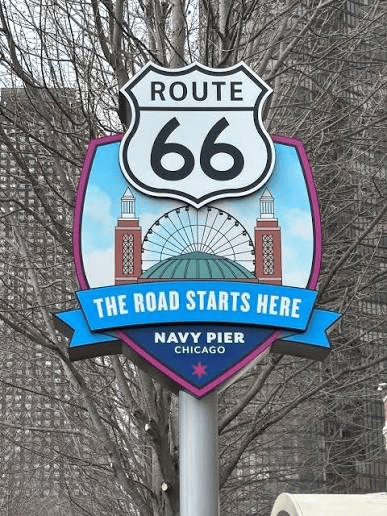
On November 11, 1926, exactly one hundred years ago today, a highway was officially established that would become one of the most famous roads in America. It was called U.S. Highway 66, but over the years it took on other names, including the Main Street of America, the Mother Road, the Will Rogers Highway, and, perhaps most fittingly, the Highway of Dreams.

Route 66 stretched about 2,448 miles from Chicago, Illinois, to Santa Monica, California, passing through Missouri, Kansas, Oklahoma, Texas, New Mexico, and Arizona. Eight states, three time zones, and enough small towns, roadside diners, gas stations, motels, and tourist traps to keep a traveler entertained for weeks. It was more than a road. It was a ribbon of asphalt connecting people, places, and possibilities. It may have inspired Woody Guthrie’s This Land Is Your Land. “As I went walking that ribbon of highway…”

Before our modern highway system, traveling across America was not particularly easy. Roads were often little more than dirt paths, and rain could turn a pleasant drive into an adventure that nobody wanted. Route 66 was not the first transcontinental highway, nor was it entirely paved when it opened. In fact, it would take another twelve years for the entire route to be paved. But it became one of the country’s most important roads, linking the industrial Midwest with the rapidly growing Southwest and California.

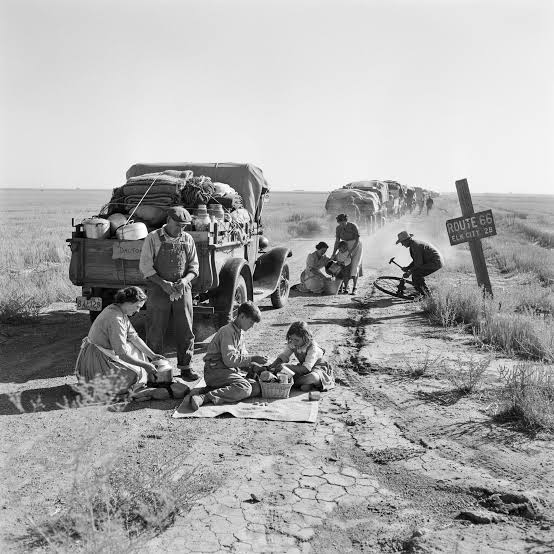
During the Great Depression, Route 66 became a road of desperation and hope. Thousands of families, particularly from Oklahoma, Arkansas, and Texas, loaded everything they owned into battered automobiles and headed west, hoping to find work and a better life. Drought, dust storms, and economic collapse had driven them from their homes. John Steinbeck immortalized their journey in his 1939 novel The Grapes of Wrath. Steinbeck gave Route 66 its most enduring nickname: the Mother Road.

For those families, the Mother Road was not a vacation. It was a road of hardship, hunger, uncertainty, and sometimes disappointment. California did not always turn out to be the promised land they had imagined. Yet the road represented something deeply American: the belief that somewhere beyond the horizon there might be a better life.

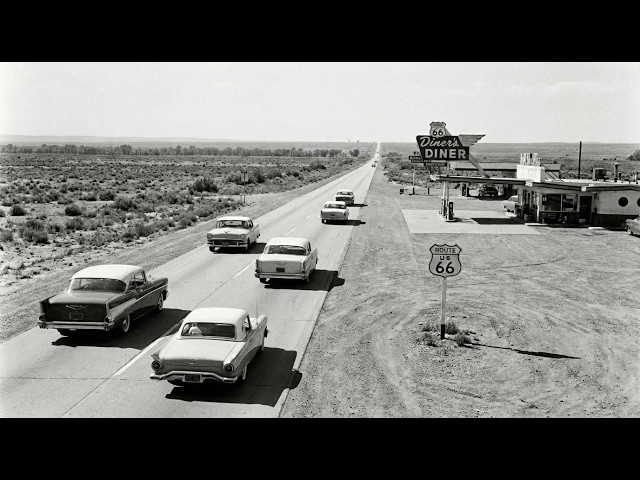
Following World War II, Route 66 took on a different character. Americans had money in their pockets, automobiles in their driveways, and a growing desire to see the country. The highway became a vacation destination in itself. Families piled into their Chevrolets, Fords, and Plymouths, packed suitcases, picnic baskets, and restless children, and headed west.

Along the way, a whole new American culture developed. Motor courts, which eventually became motels, restaurants with enormous neon signs, souvenir shops selling everything imaginable, and roadside attractions designed to separate tourists from their money appeared. Giant dinosaurs, concrete teepees, trading posts, and enough signs advertising the next attraction made sure nobody missed it.

In Missouri, travelers could explore Meramec Caverns, advertised for miles as Jesse James’s hideout. In Texas, they could stop at the Big Texan Steak Ranch, where anyone who could eat a seventy-two-ounce steak and all the accompanying food within an hour got the meal free. In Arizona, travelers could sleep at the Wigwam Motel, where they stayed in concrete structures shaped like teepees. In New Mexico, trading posts offered genuine Indian souvenirs, though some were undoubtedly more genuine than others.

Route 66 was also an important part of American music. In 1946, songwriter Bobby Troup wrote “(Get Your Kicks on) Route 66,” which became a hit for Nat King Cole and was later recorded by Chuck Berry, the Rolling Stones, and numerous other performers. The song named many of the towns along the highway and made them familiar to people who had never traveled farther west than their own county line.

Then, in 1960, CBS introduced a television series called Route 66, starring Martin Milner and George Maharis as two young men traveling around America in a Chevrolet Corvette. The show ran for four seasons. Interestingly, although the program was named for the highway, much of it was filmed in places nowhere near Route 66. But that really did not matter. The road had become a symbol of freedom, adventure, and the possibility of finding something new around the next bend. Rather than pay Bobby Troup a royalty for using his song, the producers hired Nelson Riddle to write a unique song for the show. I like both songs, but the Nelson Riddle one seems to have that call of the open road that Troup’s does not.

I was seven years old when that television show premiered. For those of us growing up in the 1950s and 1960s, the automobile represented a kind of freedom that earlier generations had never known. We could go places our grandparents might never have imagined visiting. My grandfather, who helped to raise me, was born in 1892. He used to complain that people only saw America through a car window. The interstate highway system was beginning to connect the country in ways that would have seemed miraculous only a few decades earlier.

Ironically, that very interstate system eventually brought about the demise of Route 66.

In 1956, President Dwight Eisenhower signed legislation creating the Interstate Highway System. The new roads were wider, straighter, faster, and safer. They bypassed towns rather than passing through them. Travelers could cover hundreds of miles without stopping at a traffic light, slowing down for a courthouse square, or being tempted by a roadside sign promising the world’s largest whatever.

Progress is wonderful, but it often comes at a price. That same grandfather said, of the interstate system, “Now you can travel from the Atlantic to the Pacific and not see anything.”

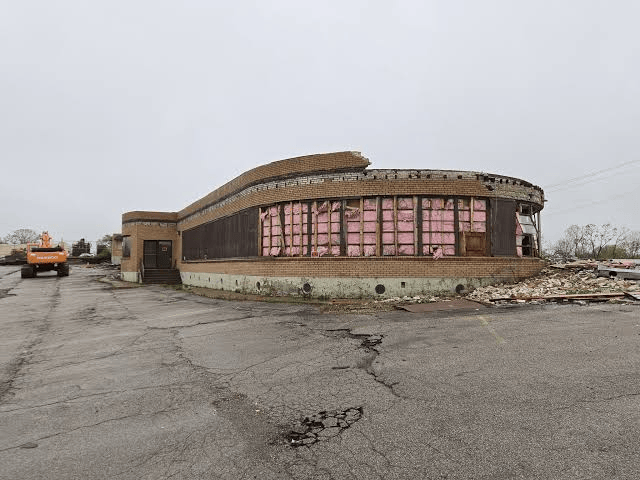
As the interstates replaced Route 66, the little businesses that depended on passing motorists began to disappear. Gas stations closed. Motels stood empty. Diners that had served generations of travelers shut their doors. Some towns that had once thrived along the highway became little more than forgotten places on an old map.

On June 27, 1985, the U.S. Highway System officially removed Route 66. The road that had carried millions of Americans westward was no longer an official U.S. highway.

But something interesting happened. People refused to forget it.

Preservation groups began restoring old buildings, saving neon signs, and marking surviving sections of the highway as Historic Route 66. Travelers who could get from Chicago to California much faster on the interstate began deliberately taking the slower road. They wanted to see the old diners, drive across the narrow bridges, visit the abandoned gas stations, and experience a little of the America that had existed before everything became standardized.

Today, portions of Route 66 remain open, and travelers can still follow much of the original journey, although it requires some careful planning. On our honeymoon, Cathy and I drove part of 66 through Winslow, Arizona. If it weren’t for that song the Eagles sang, that town would not be there today. Some sections of the Mother Road have disappeared entirely. Others are little more than frontage roads running beside the interstates. But hundreds of miles still let you travel through small towns, stop at independent restaurants, and see remnants of an America that has largely vanished.

This year marks the centennial of Route 66, and communities along the old highway are celebrating its history. There is something fitting about celebrating a road that officially ceased to exist more than forty years ago.

I think part of our fascination with Route 66 comes down to nostalgia. We remember, or imagine, a time when traveling was not simply about getting somewhere as quickly as possible. The journey itself was part of the adventure. We stopped to look at unusual things. We ate in restaurants where the owner might also be the cook and the waitress. We stayed in motels where the room key was attached to a large plastic tag, and the sign outside proudly advertised COLOR TV and AIR CONDITIONING.

Of course, we tend to romanticize the past. Those old roads were often dangerous, the cars were not nearly as reliable as we remember, and not everyone was equally welcome at the roadside establishments. For Black Americans traveling during segregation, a cross-country automobile trip required careful planning to find safe places to eat, sleep, and purchase gasoline. The Negro Motorist Green Book was not a collection of interesting tourist attractions. It was often a necessity.

The history of Route 66 is, in many ways, the history of twentieth-century America, complete with its hopes, achievements, contradictions, and failures.

I have always enjoyed traveling the back roads, stopping in small towns, visiting historic places, and discovering things that never make it into the tourist brochures. I would rather spend an hour exploring an old courthouse square than drive past it at seventy-five miles an hour. There is something to be said for taking the road that goes through a town instead of the one that goes around it.

Perhaps that is why Route 66 continues to capture our imagination.

A hundred years ago, America built a highway to connect Chicago with California. Along the way, it connected generations of people through their dreams, disappointments, adventures, and one another.

The road may have disappeared from official maps, but it has never left the American imagination.

And perhaps there is a lesson in that. We spend so much of our lives trying to get somewhere that we sometimes forget to enjoy the trip. We are always looking for a faster road, a shorter route, or a way to avoid the inconvenience of stopping.

But sometimes the most interesting things in life are found along the old roads, in the little towns, and at the unexpected stops we would have missed if we had been in too much of a hurry.

After a hundred years, Route 66 still has something to teach us.

Sometimes the journey is just as important as the destination.

And sometimes, to get your kicks, you have to get off the interstate.