I’m With The Banned

October 4–10 marks Banned Books Week, an event sponsored by the American Library Association and 15 other organizations, including Amnesty International, Little Free Library, and the National Council of Teachers of English. Established in 1982 in response to a sudden surge in challenged and banned books nationwide, the initiative highlights the essential freedom to access diverse literature and read without censorship. Unfortunately, the history of book banning is neither new nor brief.

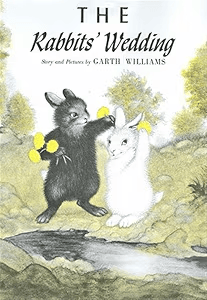
In 1959, Alabama challenged Garth Williams’s children’s book The Rabbits’ Wedding. The story simply depicts two bunnies getting married—one black and one white. State officials and the White Citizens Council argued the book went too far, prompting State Senator E. O. Eddins to demand that libraries remove it and burn it. Emily Wheelcock Reed, Director of the Alabama Public Service, refused to destroy or pull the book, though she ultimately moved it to a reserved section to protect it. It was not until June 1967 that the U.S. Supreme Court struck down all state laws prohibiting interracial marriage, and Alabama’s state constitution was not updated until November 2000. Eventually, The Rabbits’ Wedding returned to the children’s section where it belonged.

While most states restrict books on a district-by-district or county-by-county basis, my home state of South Carolina is among the few that have enacted statewide bans. In May 2025, South Carolina led the nation in statewide book bans—a disheartening distinction. This censorship coincides with broader educational challenges: South Carolina ranks roughly 13th highest in functional illiteracy nationwide, with nearly 57.6% of adults reading below an 8th-grade level and only 54% to 56% of 3rd-grade students reading at grade level.

Despite these challenges, many books eventually find their way back. Acclaimed works like Toni Morrison’s The Bluest Eye, Margaret Atwood’s The Handmaid’s Tale, and Khaled Hosseini’s The Kite Runner have all overcome local challenges in South Carolina. In Beaufort County alone, people challenged 97 books in 2022, though libraries ultimately returned all but five to the shelves.

Resistance to censorship has historical roots here, too. In 1987, a student at Baptist College of Charleston (now Charleston Southern University) asked to remove F. Scott Fitzgerald’s The Great Gatsby from the undergraduate reading list. The college president, Jairy Hunter, refused. Years later, when a member of a local church tried to remove the first Harry Potter book from a school district because of its themes of magic, a parishioner asked what I thought. My response was simple: “The only real magic in Harry Potter was that it was able to get kids to read.”

When this week rolls around each year, I look up the list of challenged and banned books in South Carolina. This year, there are 21. They remain available in bookstores and select public libraries by request, but they’ve been removed from school shelves—though I’m told a few manage to sneak back in.

I usually pick one up out of curiosity. Of the 21 titles, six are by Sarah J. Maas, a fantasy author who has sold over 75 million copies worldwide; I read one recently and found it genuinely intriguing. Ellen Hopkins has three books on the list, tackling heavy, real-world themes like addiction, abuse, mental health, and trauma—topics that deeply resonate with young readers.

Which brings me to my point: if you want your pre-teen or teen to read, tell them they can’t. But if you do, be prepared. It might just spark a change—or convince them that bunnies who love each other deserve to get married.

Feast Day of St. Francis of Assisi

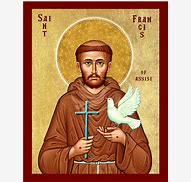
Today, October 4, is the Feast Day of St. Francis of Assisi (born around 1181, died October 3, 1226, at 44 or 45 years old). One of the most beloved and recognizable saints, Francis is remembered for his deep love of nature, his famous prayer (“Lord, make me an instrument of thy peace…”), and for founding a new order in the Catholic Church. His followers became known as the Friars Minor (“Lesser Brothers”), a name he chose to reflect humility and service. Francis wanted his community to live simply, caring for the poor and embracing poverty as a way to imitate Christ. Over time, they came to be called Franciscans, honoring their founder’s vision of joy, compassion, and reverence for all creation. He may rightly be considered a reformer, calling the Church back to its roots.

Francis, whose birth name was Giovanni di Pietro di Bernardone, was born into a wealthy family whose business was cloth. He spent much of his youth enjoying a lavish lifestyle, then joined the army and was sent into war. Captured and held prisoner for a year, he became seriously ill and began to reevaluate his life. Upon returning home, he resumed his old ways for a time but soon experienced a vision that changed him forever. He lost interest in worldly pleasures and wealth. When asked if he was considering marriage, he replied, “Yes, a fairer bride than any you have ever seen.” That “bride” came to symbolize Lady Poverty, his lifelong companion.

While praying in the ruins of a dilapidated church, Francis had a vision of Christ speaking to him from an icon. The crucified Christ said, “Francis, Francis, go and repair my church, which, as you can see, is falling into ruins.” At first, Francis thought this meant rebuilding the physical structure, but he later understood it as a call to renew the spiritual and moral life of the Church itself.

From that moment, Francis devoted himself to serving the poor and living the Gospel in its purest form. His humility, joy, and love for all creation continue to inspire people across centuries and faiths. His legacy reminds us that peace, simplicity, and compassion are not just ideals — they are ways of life.

He took up a life of poverty, chastity, and obedience, which forms the Rule of the Franciscans today. To celebrate his day, I read the Rule and reflected on it. (Here’s a site with the Rule and some interpretation of it.) There are 12 sections. They are worth reading and reflecting upon today. Those of us who are or have been preachers should pay special attention to Rule IX.

Franco Zeffirelli made a beautiful movie about Francis and Clare in 1972 titled Brother Sun, Sister Moon. A song from the movie, Little Church, by Donovan, has these lyrics-

If you want your dream to be Take your time, go slowly

Do few things but do them well Heartfelt work grows purely

If you want to live life free Take your time, go slowly

Do few things but do them well Heartfelt work grows purely

Day by day, stone by stone Build your secret slowly

Day by day, you’ll grow too You’ll know heaven’s glory

Here’s a link to the song in the movie. It has one of the best altars I have seen anywhere.

Francis had 11 brothers join him in Assisi, and they worked there, focusing on calling the church to its mission. The movement began to grow organically. It was not planned to be a worldwide movement, but it became one. Francis simply wanted to start where he was.

And I think that’s his message to me today. Start where you are. Do good work. Go slowly. But go.

And remember, in the words of Francis himself, “All the darkness in the world cannot extinguish the light of a single candle.” 

With Apologies

To: Carl Sandburg, Robert Frost, Maya Angelou, Mary Oliver, William Shakespeare, King David, Emily Dickinson, Walt Whitman, Langston Hughes, T.S. Eliot, Rumi, Edgar Alen Poe, William Wordsworth, Homer, Pablo Neruda, Dante Aligheri, William Blake, John Keats, Rainer Maria Rilke, Phyllis Wheatley, W.B. Yeats, Billy Collins, Dr. Seuss, Shel Silverstein, Anne Bradstreet, and just about every other poet I have read.

Except Brian Bilston. I refuse to apologize to him. I admire him, and love his poetry, but I simply refuse to apologize.

Having some time today,and being overtaken by an evil muse while the earth slowly tipped on its axis, I wrote two poems for the occasion.

An Answer To The Eternal Poetic Question Of Spring, Written On The Occasion Of The Autumnal Equinox

Fall has fallen
The grass may die
To the South
The birdies fly
Wing on bird? Bird on wing?
It doesn’t matter,
It’s fall, not spring.

A Poem On The Occasion Of 8:05 pm Eastern Standard Time, September 22, 2026 (0:05 GMT, September 23, 2026).

Do not put me in a box
on this autumnal equinox.
I think I’ll put on some shoes and socks
and go and sit among the rocks,
down by the river, where the locks
move the water…oh, look! A fox!
And his ears are pointed like Mr. Spock’s.

Now, where was I, my mind’s a pox.
I should be locked up in the stocks.
But this season’s quite a paradox
and this poem rather unorthodox
like the writings of Harvey Cox.
(Not forgetting Courtney, Brian, and Wally, who mocks
my shoes, they’re ugly crocs.)

For years I watched after flocks
(some brought me candy made by Brock’s!)
and most were nerds, though some were jocks,
a few wore hats called pillbox,
while some grew flowers called hollyhocks.
Though others preferred to grow some phlox,
I loved them all, which gave them shocks.

I tried and tried but cannot recall
a rhyme for this season known as…..
Autumn.

God is Sad

(Note: I wrote this back in 2008. It still captures how I feel on September 11.)

Barry attended the church I served in Cayce. He wandered in one day looking for food and company.

On a Sunday afternoon, a child from Noah’s Klubhouse, our children’s ministry, came running into my office.

“Pastor Mike! There’s a strange man sitting in Noah’s Klubhouse eating macaroni!”

I rushed down the hall to see what was going on. There, sitting in a kiddie chair, was a man who looked to be in his mid-twenties, eating a plate of macaroni and cheese. He looked up at me and smiled.

“Hi,” I said. “I’m Pastor Mike.”

“I’m Barry,” he said.

It was immediately apparent that Barry was developmentally disabled.

“Glad to meet you, Barry,” I said. “Why don’t you bring your supper with you and join me in my office?”

I grabbed a plate of mac and cheese, and the two of us walked back to my office.

It turned out that Barry had been walking down the road, saw people going into the church, and simply followed them inside. He lived about a mile away and attended a “school” nearby. I told him he was welcome anytime the church doors were open, but when the little people were meeting, he needed to come see me first.

And Barry started coming to church.

Every time the doors were open.

Worship? Barry walked in and made himself at home. Covered-dish supper? Barry was there. Youth or children meeting? He came to see me first, just as I had asked. Trustees meeting? Barry sat quietly in the back, never bothering anyone.

Eventually, he asked if he could join the choir. The choir director and members said, “Of course.”

Barry couldn’t read music or carry a tune. Mostly, he sang whatever the choir sang, only about half a beat later.

The choir was wonderful about it. No one complained. In fact, they began looking after Barry—helping him with clothes, food, transportation, and medical needs.

Eventually, I gave him another job. I asked him to carry our church banner into the sanctuary each Sunday with the acolyte. Barry would put on his robe, take hold of that banner, and carry it proudly down the aisle.

Then came September 11, 2007, the sixth anniversary of the terrorist attacks. It fell on a Tuesday, the same day of the week as September 11, 2001.

I had announced that our sanctuary would be open from 7 a.m. until 1 p.m. for anyone who wanted to stop by and pray. I arranged for quiet, meditative music to play throughout the morning. On the altar were four candles: two tall ones representing the Twin Towers, a shorter one for the Pentagon, and an even shorter one for the field in Pennsylvania. Prayer guides were available at the sanctuary door.

After getting everything ready, I spent some time there praying. Then I went back to my office to work.

A while later, I stepped outside for a breath of fresh air and noticed Barry’s “car” lying beside the sanctuary door.

Barry’s car was a long stick with a two-liter soda bottle attached to the end. He carried it with him everywhere and called it his car.

I knew Barry was inside.

I stepped into the sanctuary and saw him sitting there alone. No one else was there.

When he saw me, a big smile spread across his face.

“Passa Mike!”

Barry always had trouble pronouncing his t’s.

“Hey, Barry. What are you doing here?”

“I’m here for the 9-11.”

“Mind if I join you?” I asked.

He slid over, and I sat down beside him.

We sat there for a while, listening to the music and looking at the candles.

After a few minutes, Barry asked me a question.

“Passa Mike, is God sad?”

“Yes, Barry,” I said. “I think God is sad whenever we do things that hurt each other.”

“Oh,” he said.

We sat quietly for another minute.

“Barry, would you like to pray?”

“Sure.”

We bowed our heads. After a moment, I began praying aloud.

“Father God, on this day we remember—”

Barry began patting my leg.

“Passa Mike. Passa Mike. Passa Mike.”

I stopped.

“What is it, Barry?”

“Let’s be quiet. God is sad.”

So we were quiet.

Barry was my teacher that day.

Every year since, when September 11 comes around, I think about that morning in 2007 and about Barry sitting beside me in the sanctuary. Sometimes I listen to Bruce Springsteen’s “Into the Fire.”

But mostly, I sit in silence.

God is sad.

The Spaces Between the Pictures

I have gone back to school.

Our local university, Francis Marion University, is offering non-credit evening classes for the community, taught by its faculty, for the incredibly inexpensive price of $10 per course. I signed up for two: Photography: Make Not Take Better Photos, taught by Professor Julie Mixon, and Revolutionary War Battles in South Carolina, taught by Dr. Will Bolt.

I have a nice mirrorless digital camera that I know embarrassingly little about, and lately I have been traveling around South Carolina looking for lesser-known Revolutionary War battle sites. So both classes were right up my alley.

Professor Mixon’s first class introduced photography and what she believes makes a good photograph. A good photograph tells us something. It invites us into a part of the world we may not have noticed before. It often raises more questions than it answers. And, at its best, it gives us a new way of seeing the world around us.

She showed us photographs from her travels—landscapes, flowers, and some incredible close-ups of insects. She loves bugs. For our homework, she asked us to think about what makes a good photograph.

I’ve been doing just that.

Ansel Adams famously distinguished between taking a photograph and making one. Even when the shutter is open for only a thousandth of a second, the photographer has decisions to make. What am I photographing? Why? What belongs inside the frame? What should be left outside it? What should be sharp, and what should disappear into the blur?

A photograph may capture only a fraction of a second, but a good one can hold an entire story.

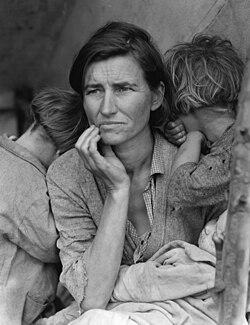
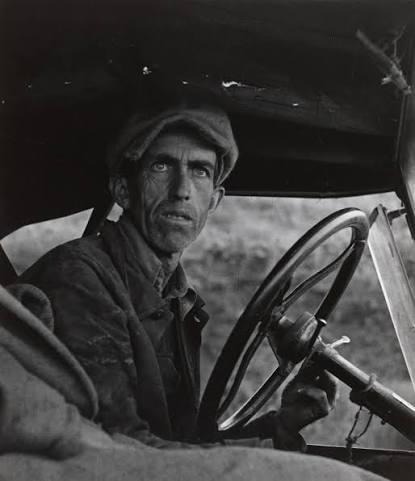
Professor Mixon showed us photographs by Dorothea Lange, whose work documented the human cost of the Great Depression. Nearly a century later, her photographs still allow us to look into the faces of people who endured the Dust Bowl and Depression and wonder about their lives. Her famous Migrant Mother, along with photographs such as Ditched, Stalled and Stranded, does more than record what someone looked like at a particular moment.

Migrant Mother

Ditched, Stalled, and Stranded

The pictures make you wonder what happened five minutes before the shutter clicked—and what happened five minutes afterward.

They make you compose a story in your mind.

Years ago, in a previous chapter of my life, I visited a young friend in the pediatric cancer ward of a hospital in Columbia. Most of the patients on that floor were under twelve, and many stayed for long periods.

As I stepped into the elevator, a young woman stepped in with me. She looked to be in her early thirties. She had long, straight hair and wore loose-fitting pants and an oversized, long-sleeved T-shirt. She carried a large bag. Stuffed animals peeked out of the top, along with a few clothes and snacks.

She never looked at me.

She looked at the elevator buttons.

When she saw the floor I had already selected, she didn’t press another button. She simply turned and stared at the wall.

I tried not to stare at her.

I knew nothing about this woman. I didn’t know who she was going to see or what news she had received. But something about her told me she had ridden that elevator a hundred times. She looked tired—deeply tired—but determined. There was a strength in the way she stood there that seemed greater than the circumstances surrounding her.

I wish I could have made a photograph of her.

Not because I wanted a picture of a tired woman carrying a bag of stuffed animals, but because I wish I could have captured that strength. I wish I could have taken a photograph that made someone who had never met her stop and wonder about her story.

Over the years, I have visited many people in their homes, and I have developed a habit of noticing the photographs they display.

Photographs tell so much about us.

And they keep so many secrets.

Most are the expected pictures—weddings, birthdays, anniversaries, vacations, graduations. In that way, the photographs on our walls are a little like the pictures we post on social media. They tend to show the good moments. Everybody is smiling. Everybody is dressed nicely. Everybody appears happy.

But occasionally a collection of photographs tells a deeper story.

Years ago, I visited a family who lived in a small mobile home. On one wall were eight photographs. As best I could tell, they were the only family photographs displayed in the house.

Each one had been made for a church pictorial directory.

You can usually recognize those photographs from across the room. Everybody is wearing their Sunday clothes. The smiles are slightly forced. And somewhere behind them is that inevitable blue background.

Eight of these pictures hung in a row.

The first showed a young couple. They were smiling and looked recently married.

In the second, they were holding a baby. Their smiles were even bigger.

The third showed the couple with a small child and another baby.

Then came the fourth photograph.

The children were teenagers now.

Nobody was smiling.

The mother looked tired. The father looked angry.

In the fifth photograph, the father was gone. Only the mother and her two older teenagers remained. She looked worried.

The sixth showed the mother alone.

She had a slight smile.

The seventh showed her with her two now-grown children.

All three were smiling.

And then there was the eighth.

The mother was gray-haired now. Beside her stood her two adult children, their spouses, and a small baby.

Everyone was beaming.

Eight photographs.

No captions. No explanations.

I never knew the whole story behind that wall, and perhaps that is what made those photographs so powerful. Somewhere between those blue backgrounds there had been love and disappointment, babies and teenagers, anger and absence, loneliness and reconciliation. Some chapters of a family’s life no camera recorded.

But you could still see traces of them.

The pictures told a story.

And so did the spaces between the pictures.

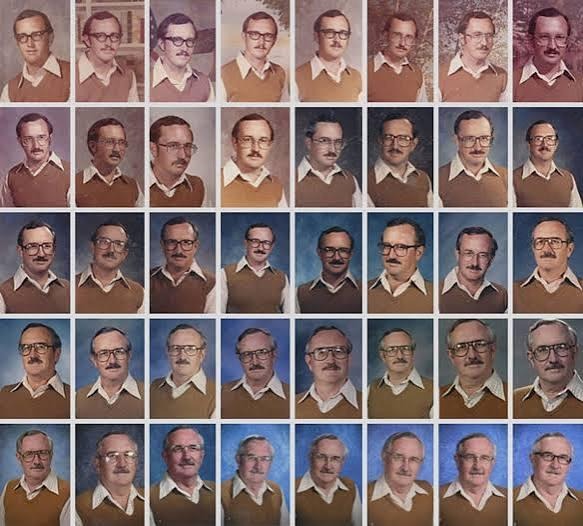
Several years ago, I read about Dale Irby, a physical education teacher in Dallas who accidentally wore the same outfit for his school yearbook photograph two years in a row. His wife dared him to do it again. Eventually it became a tradition, and for decades he appeared in his yearbook photograph wearing essentially the same polyester shirt and sweater vest.

What began as an ordinary school photograph became something else entirely.

It became a record of time passing.

The clothes stayed the same. The man did not.

Dale Irby, Prestwood Elementary School, Dallas, TX

Maybe that is part of what photographs do for us. They remind us that the world is always changing, even when we aren’t paying attention.

Today we probably take more photographs than any generation in human history. Our phones contain thousands of them. We photograph our meals, our pets, our grandchildren, sunsets, vacations, birthday cakes, and ourselves standing in front of places we may never visit again.

But strangely, the more photographs we take, the fewer we seem to keep.

We don’t print many of them anymore. We upload them online, look at them for a day or two, and then they disappear into the enormous digital attic of our phones and computers.

Perhaps that is why Professor Mixon’s distinction between taking and making photographs has stayed with me.

I don’t really need to learn how to take more pictures.

I already know how to do that.

I want to learn how to see.

I want to notice the woman in the elevator. The changing faces on the wall. The things most people walk past without seeing. I want to learn to make photographs worth printing and putting somewhere that people might stop and look at them years from now.

Maybe they will wonder what happened just before the shutter clicked.

Maybe they will wonder what happened afterward.

Maybe they will see something in the picture that I didn’t even know was there.

Because it is a big old world, filled with people and places we pass every day without really seeing.

Sometimes all it takes is a camera—and someone willing to pay attention.

Every picture tells a story.

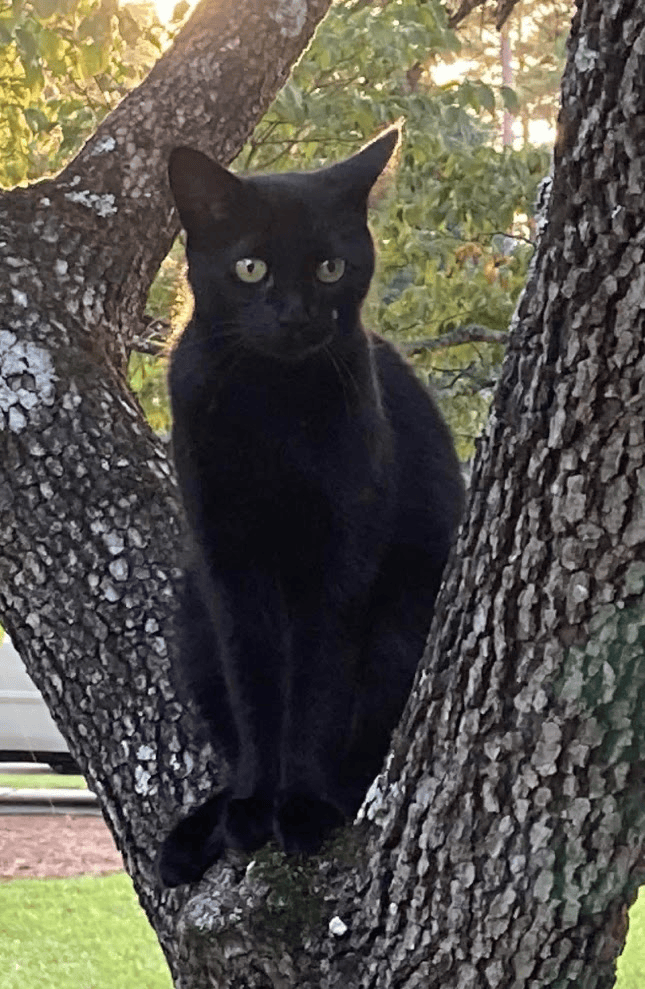
Hampton, my cat, whom I miss

The Assumption of Mary

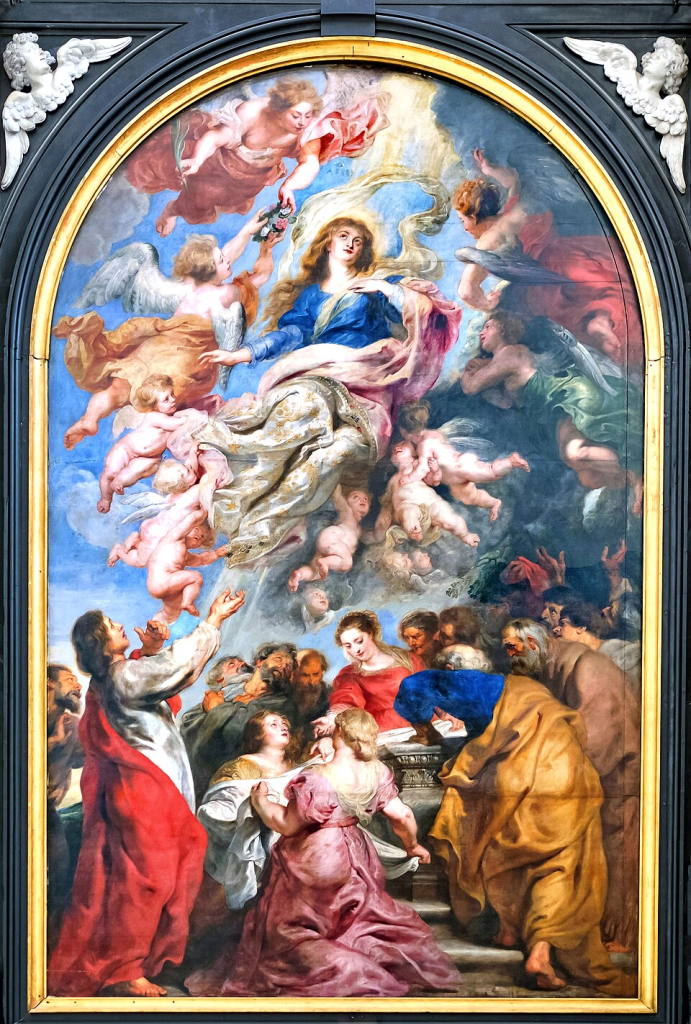
The Assumption of the Virgin Mary by Peter Paul Rubens, 1626. An altarpiece for the high altar of the Cathedral of Our Lady, Antwerp.

Today, August 15, is the date on the Catholic and Orthodox calendars to celebrate the Assumption of Mary, the mother of Jesus. Most Protestants do not know about this date, and the ones that do do not celebrate it in any way. For me, though, the Assumption has become a way to think about God’s grace, the limits of the boundaries Christians draw, and the hope that this life is not all there is.

Growing up in mostly small and medium-sized Southern towns, I had little contact with Catholics. I was taught—not by my parents, family, or church, but by the culture—to be suspicious of them. I was handed many falsehoods about “those people”: “They get their orders from the Pope.” “They do not believe in the Bible.” “They worship Mary instead of Jesus.” “They are not Christians.” I remember a fellow student in one of my first-year religion classes saying that Catholics worshipped Mary. A Catholic student in the class replied, “No, we do not worship her, but we do respect and honor her. How would you treat the mother of Jesus if she walked in the room?”

Most of my Southern Baptist friends do not believe Catholics are Christians. That’s okay; they do not believe that I, a United Methodist, am either. So many people who go by the name Christian are drawing lines to define who is in and who is out. They seem to ignore Psalm 24:1: “The earth is the Lord’s, and everything in it, the world, and all who live in it.” (Emphasis mine.)

Over time, that kind of boundary-drawing began to seem smaller than the gospel itself. If the earth and everyone in it belong to the Lord, then perhaps Mary can help me see not who is excluded, but how God keeps inviting ordinary people to bear grace into the world.

I eventually learned to see Mary as a model for all of us. God sends a messenger and asks whether she will bear Christ into the world. She says yes. She learns that doing so will involve pain and suffering, as well as joy. Still, she is faithful.

To be sure, there are all kinds of doctrines about Mary that I am not sure about—her perpetual virginity, whether she physically died, and exactly how to describe what happened at the end of her earthly life. John Wesley believed in Mary’s perpetual virginity, though Mary’s other children after Jesus present a problem or two for me. Some believe her physical body was taken to heaven without death; others believe she died and was then raised into new life. I do not need to settle those questions to find meaning in the feast.

What matters most to me is the word used to describe the transition from this life to the next: assumption. When Jesus left the earth, according to Christian scripture, he ascended; that is, he went up by his own power. Mary was taken—assumed—into heaven.

This tells me that God is never through with us. By God’s power, we continue to move and grow and live in the realm of God. This life matters: the earth is the Lord’s, and so are the people in it. God created it, loves it, cares for it, renews it, and calls us to care for it—including all creatures—too. But this life is not all there is. There is more yet to come.

And that is what I celebrate today: the joy, wonder, and beauty of this life, along with its pain, anguish, and hardship—and the promise that it does not end here.

SPANGHEW

Spanghew. This word has made me fall in love again with the English language.

As many of you know, I have a complicated relationship with my native tongue. Compared to other languages, it seems so feeble. For instance, consider the word “love.” The ancient Greeks had a whole collection of words that we now interpret simply as love: agape, philia, storge, eros, philautia, and pragma. We have “love.” “I love my wife. I love my children. I also love Pepsi Zero.”

And so many words we have can mean one thing and the opposite. They are called contronyms. For example, “bolt” can mean to secure something so it can’t be moved, or to run away from something very fast. Weather can mean to wear away, or to endure. Refrain can mean not to do something, while a refrain is something you’re expected to do again and again.

Steve Martin said, “Some people have a way with words, while other people…..not have way.” Even though most of my life has been dealing with words, I find I often not have way. 

Eventually I stopped opening the 20-pound Random House Webster’s Unabridged Dictionary my wife gave me a few years ago. Partly because I had given up on English and partly because the thing is a lumbar injury waiting to happen. 

And then spanghew somehow found its way to me. Spanghew, according to that same dictionary, means “to throw violently into the air; especially: to throw (a frog) into the air from the end of a stick.” 

We have a word for that? 

We have a word specifically for using sticks to throw frogs into the air? 

If I were still preaching, I would have to preach on Exodus 8:1-15 just so I could use the sentence “Egyptians and Jews, everyone from Pharaoh to Moses, spent days spanghewing.” 

There are so many words that I have completely overlooked or misused.

Defenestration- the act of throwing someone or something out the window. “You give me the urge to defenestrate.”

Syzygy- an alignment of at least three celestial bodies in a straight line. “Did you see the syzygy last night?”

Kenspeckle- conspicuous. “Mike’s attire of Dockers and a polo shirt made him kenspeckle at the Boy Harsher concert.”

Maybe I have been too hard on English. Any language that has survived long enough to have a word for throwing frogs into the air can’t be entirely feeble. There are probably thousands of wonderful words hiding in that 20-pound dictionary that I have never bothered to meet. 

And then there is the ever-popular floccinaucinihilipilification: the long, absurd act of judging something to be entirely worthless. Which, dear reader, you may be thinking of using now.

That’s okay. I have some spanghewing to do.

St. John the Baptizer Eve

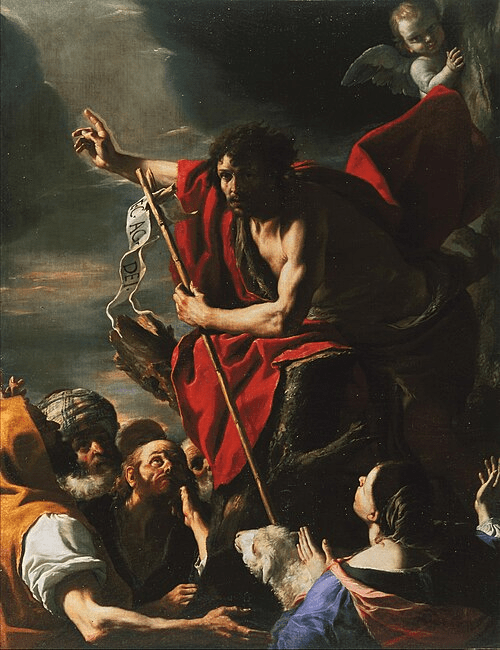
Today, June 23, is the feast day of St. John the Baptizer—or rather, the eve of the feast. Technically, the celebration does not begin until sunset, which is 8:34 p.m. where I am. It is one of only two major saint days in the Christian calendar that commemorate a saint’s birth rather than death. The other celebrates the birth of Mary, the mother of Jesus, on September 8. According to the Gospel of Luke, John was born six months before Jesus, which explains the date.

People observe this day in different ways. In many places, bonfires are lit. Some communities hold parades. Others celebrate baptisms or services for the renewal of baptismal vows. I prefer a quieter observance: reflecting on the saint, considering what I can learn from his life, and finding one practical way to put that lesson into action. Since it is far too hot to build a bonfire here, I took a short walk along nearby Jefferies Creek instead.

John, as you may know, was a fiery prophetic preacher who spoke boldly against the corruption of both the Roman Empire and the religious establishment of his day. He called people away from lives centered on themselves and toward lives centered on God and neighbor. His message can be summarized in five themes.

1. Repent — because the kingdom of heaven is near.

“Repent, for the kingdom of heaven has come near.” (Matthew 3:2)

Repentance does not simply mean feeling sorry for something. It literally means to turn around and head in a different direction. For John, genuine repentance required a changed life. Which leads naturally to his second theme.

2. Bear fruit — live a changed life.

“Bear fruits worthy of repentance.” (Luke 3:8)

A changed heart should produce a changed life. Jesus later echoed this teaching when he said that people are known by their fruits (Matthew 7:15–20). John insisted that faithfulness could not be inherited. He challenged those who trusted in their ancestry:

“Do not begin to say to yourselves, ‘We have Abraham as our father.'” (Luke 3:8)

Faith requires a personal response. No one can believe for us. Which brings us to theme three.

3. Practice justice and generosity — treat people rightly.

John’s preaching was remarkably practical.

“Whoever has two coats must share with anyone who has none.” (Luke 3:11)

Compassion and generosity are marks of genuine repentance.

To tax collectors he said:

“Collect no more than the amount prescribed for you.” (Luke 3:13)

Repentance affects how we conduct our work and handle our finances.

To soldiers he said:

“Do not extort money from anyone by threats or false accusation, and be satisfied with your wages.” (Luke 3:14)

Reject abuse of power. Reject greed. Treat people fairly.

4. Prepare for God’s judgment — take God seriously.

John preached both grace and judgment.

“His winnowing fork is in his hand.” (Luke 3:17)

God cares about how we live. John warned that a day of accountability would come when righteousness and wickedness would be separated. His message was urgent because he believed that what we do matters.

5. Look to Jesus — the Messiah, the Lamb of God, the Son of God.

Above all else, John pointed beyond himself.

“One who is more powerful than I is coming.” (Luke 3:16)

True ministry points people to Christ rather than to oneself.

“He will baptize you with the Holy Spirit and fire.”

“Behold, the Lamb of God, who takes away the sin of the world!” (John 1:29)

“I have seen and have testified that this is the Son of God.” (John 1:34)

“Look, here is the Lamb of God!” (John 1:36)

John taught that Jesus is God’s answer to our separation from God, from one another, and from creation itself. He willingly directed his own disciples away from himself and toward Christ.

Perhaps John’s greatest statement was simply this:

“He must increase, but I must decrease.” (John 3:30)

The faithful servant seeks Christ’s glory rather than personal recognition.

John’s final recorded testimony centers on faith:

“Whoever believes in the Son has eternal life.” (John 3:36)

In many ways, John stands as the bridge between the Hebrew prophets and the ministry of Jesus, fulfilling Isaiah’s vision of “a voice crying out in the wilderness: Prepare the way of the Lord” (Isaiah 40:3; Matthew 3:3).

There is no evidence that John continued baptizing after he baptized Jesus. But he never stopped preaching. He continued to speak the truth, refusing to back down, until it ultimately cost him his life.

Mussorgsky’s Night on Bald Mountain was originally titled St. John’s Eve on Bald Mountain. Inspired by a story by Nikolai Gogol, the music captures something of John’s spirit: the fire, intensity, urgency, and thunder of prophetic judgment. Yet the piece concludes with church bells and a sense of peace. The storm passes. A new day dawns.

Perhaps that is fitting. John’s ministry was never the destination. He was preparing the way for One who would bring a new way of living, a new kingdom, and a new hope.

As for me, I think I will spend this St. John’s Eve looking for something worth standing for. Maybe even something worth losing my head over.

Going To War- 2. McDowell County

WARNING: This blog post has lots of facts and figures.

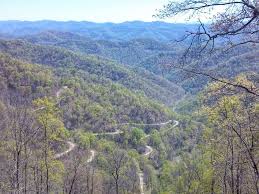
McDowell County is on the southernmost tip of West Virginia, covering an area of 534.899 square miles, all but 1,441 of them mountains. The rest is water. It has a population of 16,900 (2025 est.), down from 19,111 in the 2020 census. It has a population density of about 32 people per square mile (land), compared with 78 for the rest of West Virginia. There are 10 cities and towns-

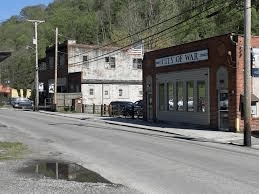
Welch (County Seat) population 3,413; Gary 687; War 546; Kimball 248; Iaeger 243; Northfork 205; Davy  185; Bradshaw 182; Keystone 153; Anawalt 148.

Additionally, there are unincorporated historic coal camps still in existence (though the coal mining has pretty much disappeared). Among them are

  • Crumpler: ~351 residents
  • Bartley: ~327 residents
  • Maybeury: ~88 residents
  • Cucumber: ~87 residents
  • Vivian: ~79 residents

The average household income is $31,559, and the per capita income is $17,253. The poverty rate is above 30%.

Seventy-five percent of the adults have a high school diploma as their highest degree, while 6 percent have a bachelor’s degree. There are two high schools in the county (Mountain View in Welch and River View in Bradshaw), 3 middle schools, and 6 elementary schools. There are no higher education schools, though there is an adult learning center in Welch.

Major employers in McDowell County are the public schools and the few healthcare facilities. Retail employment is mostly at Walmart, Family Dollar, Dollar Stores, and a few fast-food restaurants. The coal industry, formerly the area’s economic base, still has a few contract jobs available. The unemployment rate is 10.2%, compared with 4.5% for the rest of the state.

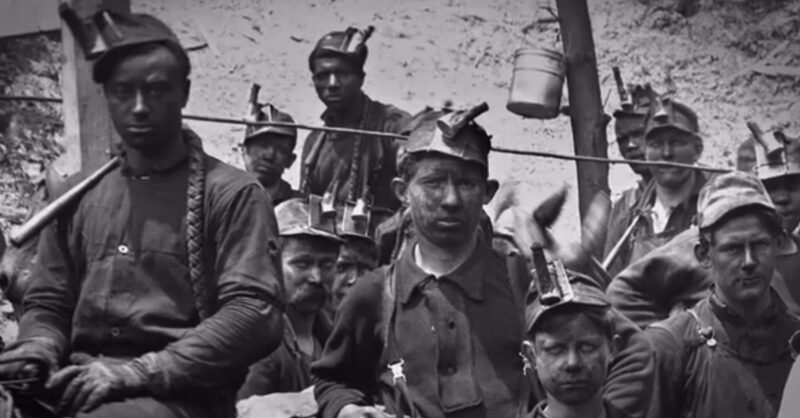
Many think that the poverty and terrible conditions are relatively new, that the demise of the coal industry has occurred within the last couple of decades. That is not true. Coal mining in McDowell County peaked in 1942, producing about 29 million tons of coal per year. The population was almost 100,000 at that time. Mechanization and the decline in coal demand began, and by 1959, John Kennedy visited Welch to see the effects of poverty in America. It was while he was there that he saw the need for the Food Stamp program, and when he became president, and the program became law, the first Food Stamps were given two years later. On May 29, 1961, Alderson Muncy, an unemployed coal miner in Welch with a wife and 15 children, purchased $95 worth of food stamps for his family’s first trip to a local grocery store.

JFK & West Virginia” Road to The White House | The Pop History Dig

Kennedy in Welch in 1959.

While there was more money in McDowell County during the coal-mining days, most of it went to the mine owners and supervisors. The majority of the workforce, the miners, lived in just above-poverty conditions. When the mines began to close, those with the money left, while the poorest were basically abandoned.

The county’s infrastructure was never improved. Today, it is not unusual for a person’s tap water to be black with coal dust. Septic systems empty waste into the mountain streams. Things we basically take for granted- clean water, septic systems, trash removal- are few and far between.

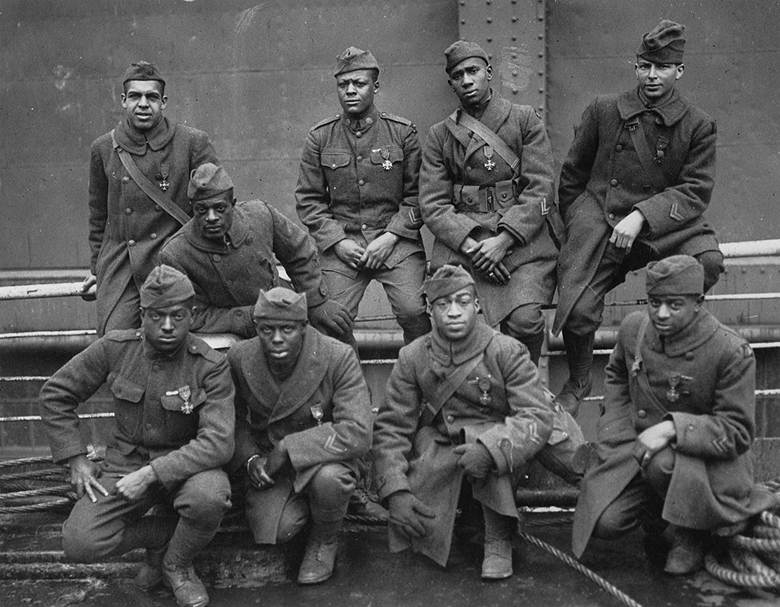
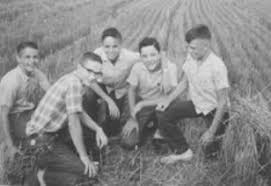
Despite it all, there are some bright spots in their history. The first (and so far only) memorial to African-American soldiers from World War 1 is Kimball. It was completed in 1928 when Black soldiers were denied entry into the local American Legion Post. Homer Hickman, a retired NASA engineer and Vietnam War veteran, attended Big Creek High School. He and some fellow students were known as the “Rocket Boys,” and their stories, along with those of Frieda Riley, their teacher, were told in the movie October Sky. Recently, there has been movement making the Hatfield-McCoy Trail, which runs through the county, a popular spot for hikers, mountain bikers, and ATV riders. And, of course, the mountains that are not scarred from the coal mining are beautiful.

African-American World War I Veterans
Rocket Boys
Frieda J. Riley
Hatfield-McCoy Trail
McDowell County

The youth pastor from Northbrook Church, in his Bible studies and devotions for the team getting ready to go, has said that we cannot save them. But, he said, we can bring them hope. I will examine that in my next reflection.

Below are some links to videos that show some of the conditions of McDowell County.

War, What The Hell Happened?

From coal mines to hard times: A West Virginia county braces for new public assistance cuts


McDowell County, WV – Those Who Stayed 

Going To War*

jordannichphoto- Instagram

Why am I going on this mission trip? That question has stayed with me as I have thought about McDowell County and what it means to say yes to this invitation.

I have been on a number of mission trips, some local—South Carolina, North Carolina, Mississippi, Alabama, Florida, Georgia—and some international—Guatemala, South Africa, Zimbabwe, Zambia, and Namibia. Every one of them has taught me something, and the people there, without exception, did more for me than I did for them. My view of God’s world and the grace of Christ has expanded because of them. Those experiences have also made me ask what it means not just to visit a place, but to belong to people over time.

PBS- The Mine Wars

Over time, I have found myself wanting more than a brief encounter with some other place or some other group of people who were not like me. The best of these trips, it seems to me, have been reciprocal. We begin to see ourselves as belonging to a community not defined by geographical, political, economic, or even religious boundaries. Instead, we live together in a mutual love of God and this world. That is why this particular trip has drawn me in a deeper way.

My sister, Paula, and her husband, David, have been joining their church in developing that kind of long-term friendship with the people of McDowell County in West Virginia. She has been going there for the last five years during their summer mission trip, and David has also gone in the fall to help people winterize their homes. It has made a real difference in Paula’s life. Paula and I have become fairly close over the last few years, and I have discovered that I would like to spend time with her and see what this friendship and service have formed in her life. So when the opportunity came to go to McDowell County this year with her and her church, I volunteered.

So, why am I doing this? I am going to be with my sister, to witness what God is doing among the people of that part of West Virginia, and to offer whatever small skills I have in service. But more than that, I am going because I want to make new friends and to be changed by them. If grace allows it, I hope this is not simply a trip, but the beginning of a friendship that lasts for the long run.