

Today, November 29, is the birthday of two of my favorite authors, C. S. Lewis and Madeleine L’Engle. Lewis was born in 1898, and L’Engle twenty years later, in 1918. Both have had a profound influence on my life and faith. Today I want to reflect on Lewis. I’ll save L’Engle for another column.
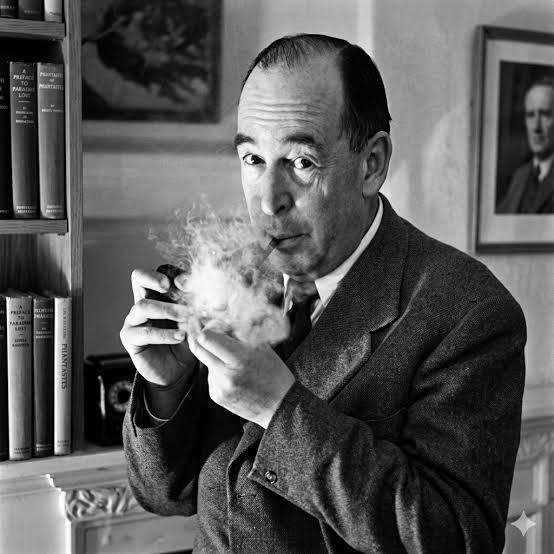
C. S. Lewis knew grief early in life.
When he was nine years old, his mother was diagnosed with cancer. Young Jack, as he was called, prayed fervently for her healing. But she died anyway, on his father’s birthday, no less. Her death shattered his childhood and, in time, contributed to his rejection of faith.
Years later, in Surprised by Joy, he remembered that moment: “All settled happiness, all that was tranquil and reliable, disappeared from my life.”
His father was overwhelmed with grief, and only a month after his mother’s death, Lewis was sent away to Wynyard School, a boarding school run by a cruel and unstable headmaster named Robert Capron, who was later declared insane. Much of Lewis’s remaining childhood would be spent away from home, in one boarding school after another.
I wonder if it was during those years that Lewis learned to protect his heart by retreating into his head. Books, imagination, and intellectual pursuits offered a refuge from a world that had become painfully unpredictable.
By his teenage years, he had abandoned belief in God altogether.
But something kept bothering him.
Throughout his life, Lewis experienced an aching longing for something he could neither explain nor possess. He called it Joy, though he was careful to distinguish it from ordinary happiness or pleasure. It was a fleeting glimpse of something beyond himself, something beautiful and mysterious that seemed to promise more than the world could deliver.
He had lost his faith, but he had never quite lost his longing.
On May 11, 1926, Lewis met a fellow Oxford professor named J. R. R. Tolkien. Tolkien was a devout Roman Catholic, and the two men quickly developed a friendship that would profoundly influence both their lives.
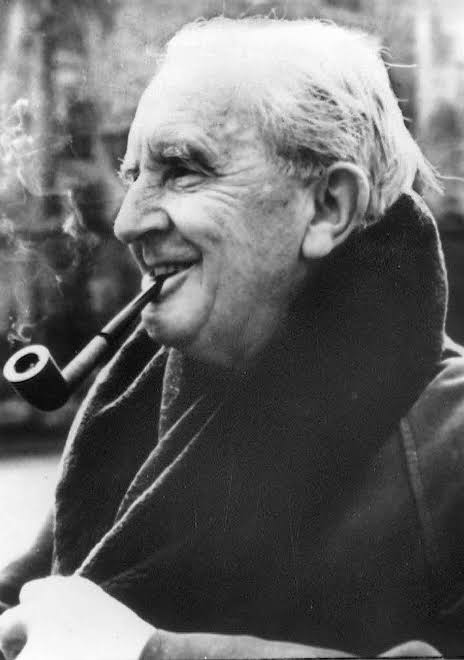
Tolkien encouraged Lewis to reconsider the questions he thought he had already answered. What was the source of this mysterious longing? Why did human beings hunger for meaning, beauty, and something beyond themselves? Could the ancient stories and myths Lewis loved contain echoes of a greater truth?
Their conversations continued for years.
In 1929, Lewis reluctantly abandoned atheism and accepted the existence of God. But believing in God and believing that Jesus Christ was God incarnate were, for Lewis, two different matters.
That would take another couple of years.
Then came one of my favorite conversion stories.
In September 1931, following conversations with Tolkien and other friends, Lewis took a motorcycle ride to the Whipsnade Zoo with his brother Warnie. Lewis later described what happened:
“When we set out I did not believe that Jesus Christ is the Son of God, and when we reached the zoo I did.”
Somewhere along that journey, the final pieces had fallen into place.
I should mention that I’ve had a few motorcycle rides that made me turn to faith myself, although usually for entirely different reasons.
Lewis had finally arrived at Christianity, but I think the journey from his head to his heart was far from over.
Look at the characters in his fiction.
The Pevensie children are sent away from their parents during the war. Prince Caspian grows up without his parents. Eustace Scrubb is separated from his family when he enters Narnia. Again and again, Lewis writes about children who find themselves in unfamiliar worlds, separated from the people and places that once made them feel safe.
But perhaps the most revealing character is Digory Kirke in The Magician’s Nephew.
Digory’s mother is dying. Of cancer.
Sound familiar?
In one of the most moving scenes Lewis ever wrote, Digory weeps before Aslan, the great lion. He is desperate to save his mother, and Aslan does something extraordinary.
He weeps with him.
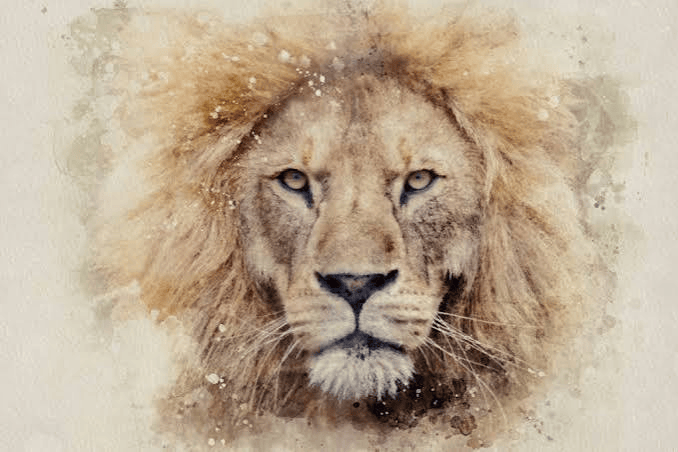
Eventually, Aslan provides Digory with an apple that will restore his mother’s health.
I have often wondered what Lewis was feeling when he wrote those words. Here, in a world of his own imagination, he was able to give a frightened little boy something he himself had desperately wanted, but never received.
His mother lived.
And perhaps just as importantly, the great lion did not offer Digory an explanation for suffering. He offered him compassion. Before there was healing, there were tears.
That strikes me as a remarkably profound understanding of God.
For all the warmth, compassion, and emotion found in his fiction, Lewis could sometimes appear reserved and intellectually formidable in person. He was a man who could argue theology brilliantly, yet I suspect he still carried some of the emotional defenses he had constructed as a grieving little boy.
Then Joy Davidman entered his life.
Joy was an American writer who began corresponding with Lewis in 1950. They met in Oxford in 1952, and eventually she moved to England with her two sons.
In 1956, facing the possibility that Joy would have to leave the country, Lewis married her in a civil ceremony so that she could remain in England.
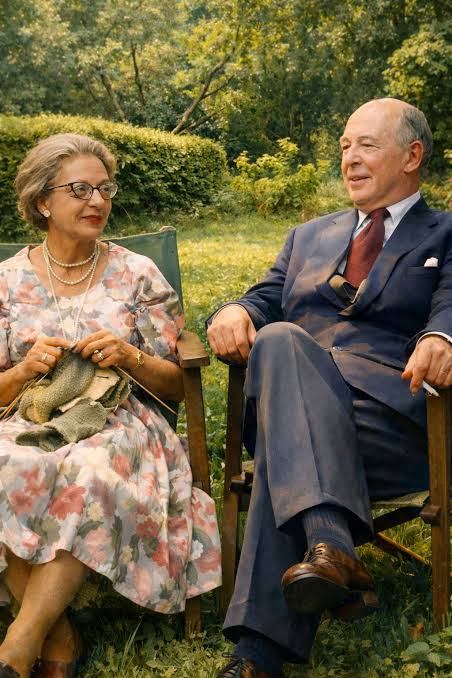
It was, at least initially, a marriage of convenience. But I have always thought that even if Lewis was not yet romantically in love with Joy, what he did was an act of love.
The story is beautifully told, though with some dramatic liberties, in the play and film Shadowlands. Lewis, the brilliant Oxford scholar who had spent so much of his life explaining love, gradually discovers what it means to surrender himself to it.
The man who had reasoned his way into faith was discovering that love demanded something more than reason.
And then came the cruelest irony of all.
Joy developed cancer.
The disease that had taken his mother when he was a child now threatened to take the woman he loved. Lewis and Joy celebrated a Christian marriage ceremony at her hospital bedside in 1957. She experienced a remarkable period of remission, and for a few precious years they shared a happiness Lewis had scarcely imagined possible.
But the cancer returned, and Joy died in 1960.
Once again, Lewis found himself confronting the same terrible questions that had haunted him as a child.
Only this time, he did not abandon God.
He argued with God.
In A Grief Observed, one of the most painfully honest books about grief I have ever read, Lewis laid bare his anger, doubt, loneliness, and confusion. The confident Christian apologist who had written Mere Christianity suddenly found that all his carefully constructed arguments offered little protection against the agony of losing someone he loved.
He discovered that knowing the answers and living through the questions are two very different things.
There is something else about A Grief Observed that has always interested me. Although Joy’s two sons were part of their family, Lewis says remarkably little about them in his account of his grief. In Shadowlands, however, we see a moving scene in which Lewis finally reaches out to one of the boys, and the two share their sorrow.
Whether or not that scene happened as portrayed, it captures something I believe was central to Lewis’s life.
Grief can isolate us. But it can also teach us to reach beyond ourselves.
Perhaps that was the lesson Lewis spent his entire life learning.
He began as a little boy who prayed for his mother’s healing and was devastated when she died. He became a young atheist who trusted his intellect more than his emotions. He reasoned his way back to God, discovered Christ through friendship and conversation, and eventually learned that love was not something to be understood from a safe distance.
It was something to be lived, even when living it meant risking a broken heart.
C. S. Lewis died on November 22, 1963, the same day President John F. Kennedy was assassinated. His death was largely overshadowed by the tragedy in Dallas.
But his words have continued to speak to generations of readers.
During his lifetime, Lewis wrote more than thirty books, including Mere Christianity, The Screwtape Letters, The Great Divorce, and The Chronicles of Narnia. His writings have inspired preachers, teachers, theologians, filmmakers, and ordinary people trying to make sense of faith and life.
And Aslan, that magnificent lion who weeps with a grieving child, continues to offer readers a glimpse of a Christ who does not stand apart from human suffering but enters into it.
I return to Lewis often, especially these days, as I continue trying to understand where my own life is going and what God might be calling me to become.
I find myself increasingly drawn not simply to his brilliant arguments for Christianity, but to the man behind them. A man who struggled, doubted, loved, grieved, and kept searching.
Maybe that is why Lewis still speaks to me.
He reminds me that faith is not simply about having the right answers. It is about learning to trust, to love, and to keep our hearts open, even when life gives us every reason to close them.
And perhaps the journey from head to heart is never quite finished.
So, to celebrate his birthday, I think I’ll have a cup of English breakfast tea.
But I will not eat Turkish Delight.
Lewis taught me that.

