Breaking Up Is (Not So) Hard To Do

Today, September 2, is the anniversary of the beginning of the Great Schism. Not the one currently going on in the United Methodist Church, but the one that started it all. At least for us Methodists. It was on this day in 1784 that John Wesley, an Anglican minister, consecrated Thomas Coke as a bishop, then sent him, to America to join Francis Asbury in leading the Methodists in this newly formed country.

The problem was- and is- John Wesley was not authorized to consecrate another person bishop. Only bishops could do that. And the bishop of London would not consecrate or authorize someone to go to America to lead the Methodist societies.

So John went ahead and did it. (An Anglican minister friend told me years ago that Methodists were not truly ordained because there was no ‘apostolic succession.’ Coming from a guy whose church was started just so a king could get a divorce, this really meant something to me.)

His brother, Charles, the great hymn writer, was livid. How could John do that? Even worse, this newly and wrongly ordained bishop later ordained Francis Asbury and then, after the Methodists elected him as General Superintendent at the Christmas Conference in 1784 consecrated him bishop. Charles wrote a little ditty about it. (He abbreviates Coke with just the letter C.)

“On C. consecrating Asbury

A Roman Emperor, tis said
His favrite (sic) horse a consort made:
But C. brings stranger things to pass,
And makes a Bishop of his – Ass!”

The Methodist Episcopal Church in America (the name of the new denomination in 1784) was born out of a schism. And it has been in our DNA ever since.

And the people on both sides of the schisms have always claimed that Scripture was on their side.

John Wesley took a hard stand against slavery. He urged boycotting businesses that benefited from slavery, and in the Book of Discipline always included a ban on Methodists owning slaves.

That was pretty much ignored by Methodists in the southern part of the US. In 1804 Asbury edited a version of the Discipline for South Carolina that omitted the ban on slave owning. Eventually, in 1844, the denomination split. The Methodist Episcopal Church (the northern branch) and the Methodist Episcopal Church, South. In some older church buildings you can still see on cornerstones “M.E. Church, S.”

In 1828 a group that wanted to have congregational governance and lay representation at the church Conferences (it was only clergy at the time) broke off to form the Methodist Protestant Church.

Along the way other schisms occurred that formed the African Methodist Episcopal Church (and from it the AME Zion Church), and the CME (Christian Methodist Episcopal – originally Colored Methodist Church) Church. These were based on the treatment of formerly enslaved peoples. Some groups broke off due to theology- mostly dealing with the understanding of sanctification (does it happen over time or is it instantaneous?). Regardless, divorce seems to run in our family. And everyone is sure God is on their side.

In 1939 the Methodist Episcopal Church, the Methodist Episcopal Church, South, and the Methodist Protestant Church united to form the Methodist Church. However, a small group of Methodist Protestants and a larger group of ME Church, S churches did not join in. Most of those churches did not want to unite with the north, and especially did not want to see any integration of blacks and whites in their churches. The ME Church, S churches that did not join formed the Southern Methodist Church. As of 2008 there were 42 Methodist Protestant Churches left, and as of 2017 the Southern Methodist Church had 72 churches (with a total membership of 3,200- most of the churches being in South Carolina).

In 1968 the Methodist Church and the Evangelical United Brethren united to form the UMC.

As you can see, we have had a long history of dividing up, and occasional times of getting back together. Every time we have split up, both sides claimed biblical authority. And both sides eventually came out weaker. With the current move of some churches to “disaffiliate” (a strange term since we never said we were affiliated before), we are just living out our history. Some believe that the break-off denomination, the Global Methodist Church, will have a majority of the churches disaffiliating join it. I am not so sure. The largest UMC churches moving towards disaffiliation have said they do not want to join another denomination, and are forming a network, The Foundry, where each church is independent. And the smaller churches that are talking about disaffiliation basically want to be independent, responsible only to themselves. Like the Methodist Protestant and Southern Methodist denominations, the GMC may have a grand start, but end up sidelined.

On a final, personal note- I keep hearing in the back of my mind the only prayer in the Bible specifically for followers of Jesus today. It was prayed by Jesus, and since it is the only one specifically for us today, we should pay attention. In John 17 Jesus first prays for himself, that God would glorify him in what he is about to do (the cross). Then he prays for his disciples, that they are not taken from this world but protected from the evil one. Then he says “I pray for those who will believe in me because of their word…” (That’s us! Pay attention!) He prays that we will all be one, even as he and the Father are one. And he gives us this promise, “if they are one, the world will be convinced that you (God) sent me.” I hear that in my mind, feel it in my heart, and think, is it any wonder we aren’t convincing people Jesus is from God?
A Walk Across South Carolina

Section 1

Tryon to Campobello

March 10, 2022

6.5 Miles

“You have to give up your hiking and long-distance walking.”

Those words came from Dr. Pande, my endocrinologist. She had been my diabetes specialist for the last 8 years. This short, dark-haired and dark-skinned Indian woman had been recommended to me by another physician friend. “She’s a little unorthodox,” he said, “but she will take good care of you.” Dr. Pande and I developed a love/hate relationship. I think she loves to take care of me, to help me get through diabetes. And I hate it when she tells me things, especially things I do not want to hear. But she is strong-willed and determined and does not let me get by with much.  Her concern for me was not so much my blood sugar, but one of the side effects of my diabetes. I have diabetic neuropathy and cannot feel anything in my feet. I did not realize how much of our balance depends on the feet feeling things. I found that I could walk on fairly even ground well, but rocks and roots, which used to not bother me, now caused me to lose my balance and fall. She was concerned about blisters, cuts, and nails coming through my shoes that I would not feel or know about until the end of the day.

“But I walk about 4 ½ miles every day,” I told her, only half-lying. The truth was I walked 4 ½ miles every day 3 days a week. Or 2. Or 1. Most weeks. “Okay,” she said, “you can walk 3 ½ miles, but then you have to stop.” “How about this?” I countered. “I walk 3 ½ miles, stop, take a break and check my feet, and if nothing is wrong, walk another 3 ½ miles?” My walking pace is about 20 minutes per mile, so this would take about an hour and ten minutes. I figured I could do four of these a day. “Okay,” she finally said, “you can walk 3 ½ miles in the morning, take a break for lunch, check your feet, then 3 ½ in the afternoon. But no further!” “But…” “No further!” she said. “Alright, seven miles a day it is,” I resigned. “And only one day a week, at most,” she said. I remembered a term from the Rumpole of the Bailey books- She-who-must-be-obeyed. “Yes, ma’am,” I said. She smiled at me. I love her smile.

Dr. Pande was not the only one who was hesitant for me to do this walk. My wife, Cathy, was concerned. She did not want me walking on a highway, even one that does not have much traffic for most of the day. “I’ll watch out for the cars,” I said. “I’ll wear an orange vest. I’ll be careful.” “It’s not you,” she said. “It’s those crazy drivers. I don’t want you to be hit by someone who’s looking down at their cellphone.” “People don’t do that,” I said. “You do,” she came back at me. I hate it when she’s right. But she also knows that walking like this and talking to people along the way is one of the things that give me joy in my life (besides just being with her), so she reluctantly lets me go without too much fussing.

The South Carolina part of US Highway 176 starts at the NC/SC border at Tryon, NC. Tryon is a pretty little town nestled at the foot of the Blue Ridge mountains, beside the Saluda grade, the first real hill you climb into the mountains. It began as a railroad town, with the steepest incline up to Saluda on the eastern seaboard. Trains would stop in Tryon to add an extra engine to make it up the mountain. Over time Saluda became a resort town. People would come from other places in the northeast or from the coast to spend summers in the relatively cool climate, among the waterfalls of the area. Sidney Lanier, the famous poet from Georgia, kept a home in Tryon. He went there thinking the climate could help him with his tuberculosis, which he contracted while a prisoner of war during the Civil War. In the mid 1930’s F. Scott Fitzgerald would travel from Baltimore or New York to Tryon, to spend time trying to overcome his bouts with TB and his alcoholism. Later, when is wife Zelda was in a psychiatric hospital in Asheville, he would stay in Tryon. Perhaps the most famous person from the area was Nina Simone. The singer-songwriter-civil rights activist was born there in 1933. There is a statue of her in town at the “Nina Simone Plaza” and her childhood home is being preserved as a national historic place. For clergy and storytellers among us, Frederick Buechner spent his early teen years in Tryon and was baptized there.

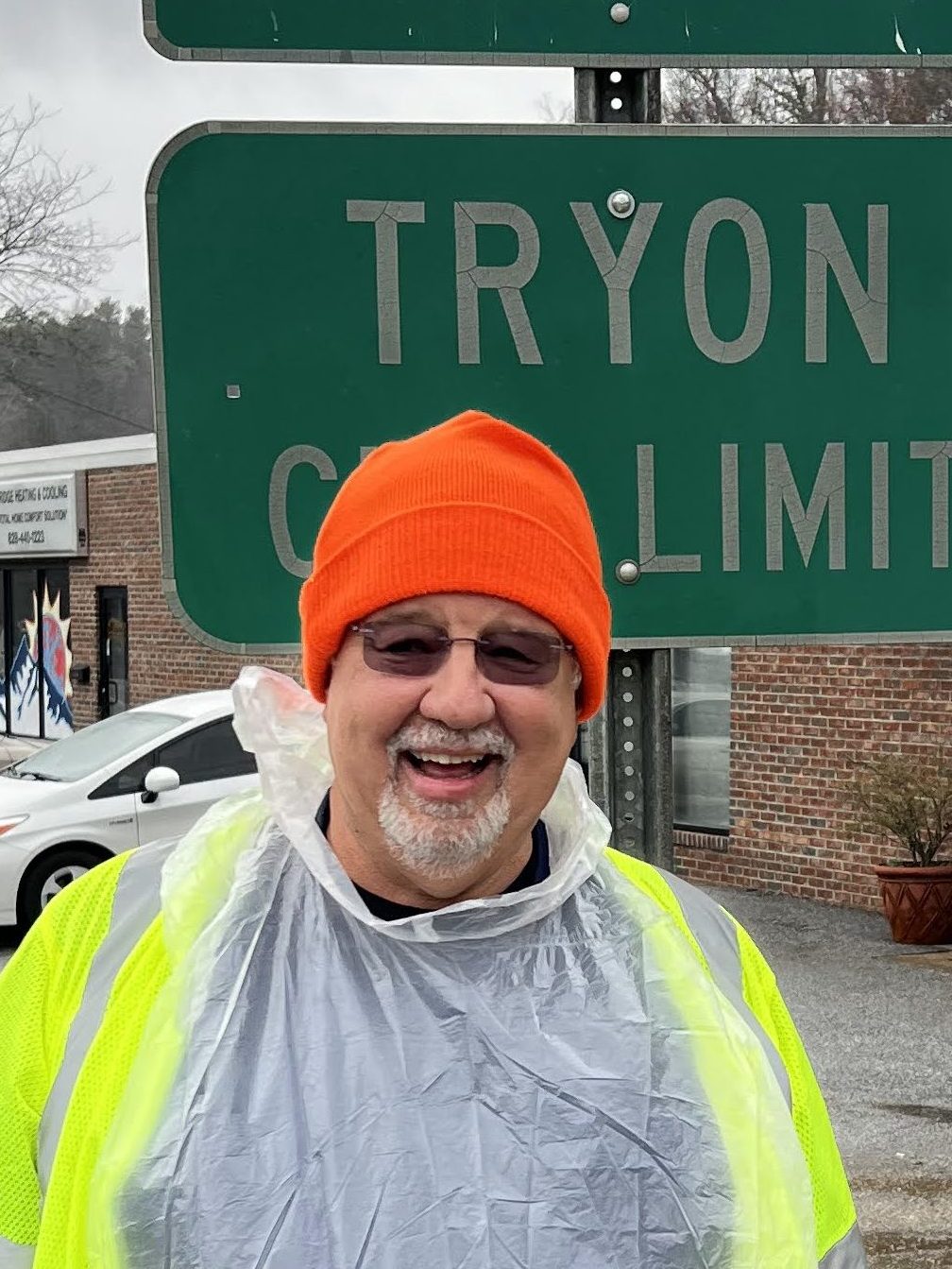
Me at the state line

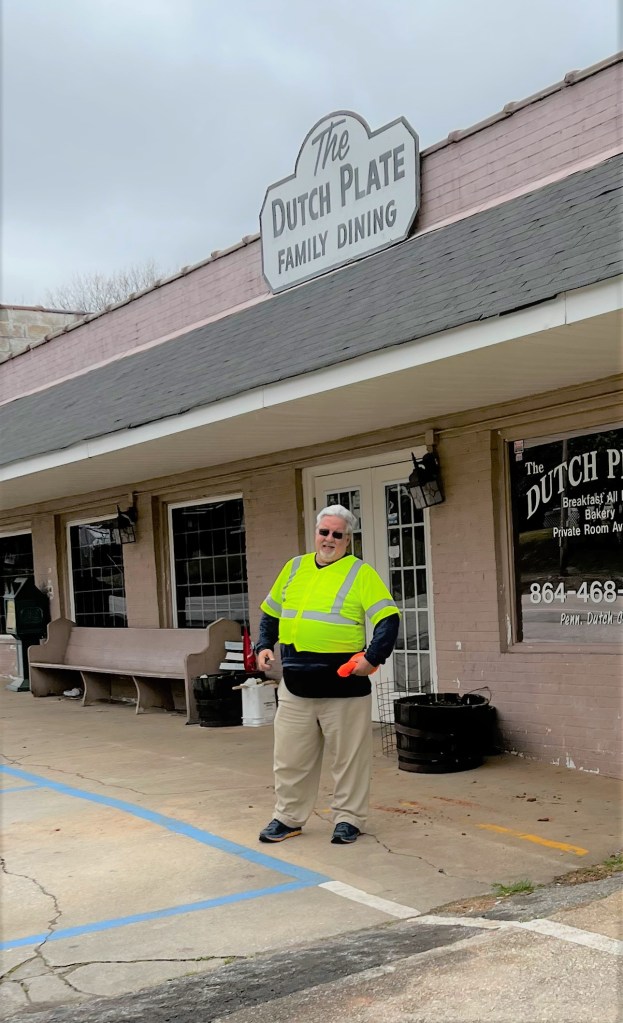
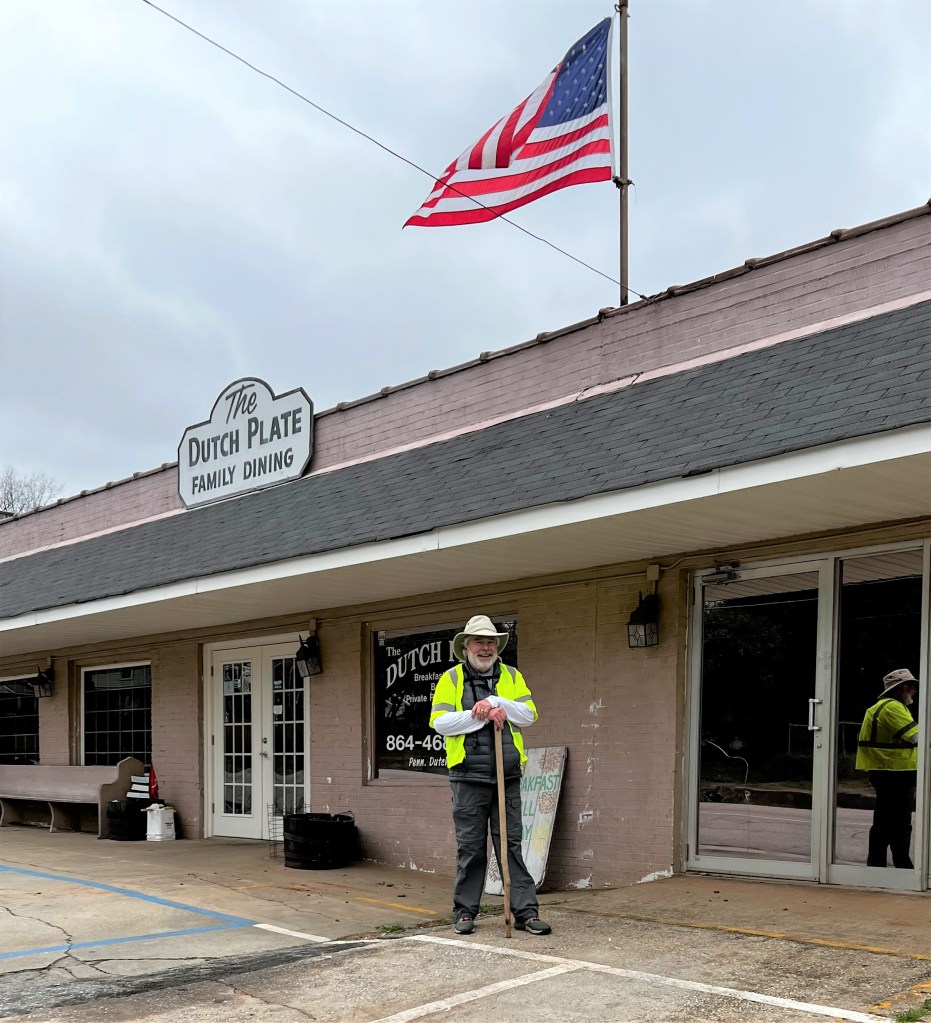
Six and a half miles east of Tryon is the little town of Campobello. My friend Jim Hunter, another retired United Methodist minister and quite an avid walker himself offered to walk with me on some of these first sections. We decided to meet in Campobello at the Dutch Plate Diner, leave one car there, drive up to Tryon, and walk back. I got to the Dutch Plate about 20 minutes before Jim, got out of the car, pushed the buttons on the door to lock it, and walked in. I sat down in the diner, ordered a cup of coffee from the nice waitress, and realized I had locked my keys in the car. Thirty minutes later and eighty-five dollars lighter, I got my keys. Patrick Farrell, the owner of the Dutch Plate was very friendly, He asked about what I was doing and wanted to know if I needed anything. Years ago I read Blue Highways by William Least Heat-Moon. As he traveled across the country on the small highways, the ones printed in blue on the maps, he stopped at a lot of diners. He said you could tell how good one was by the number of different insurance company calendars on the check-out counter. The Dutch Plate had four. I plan to eat there next time I come through.

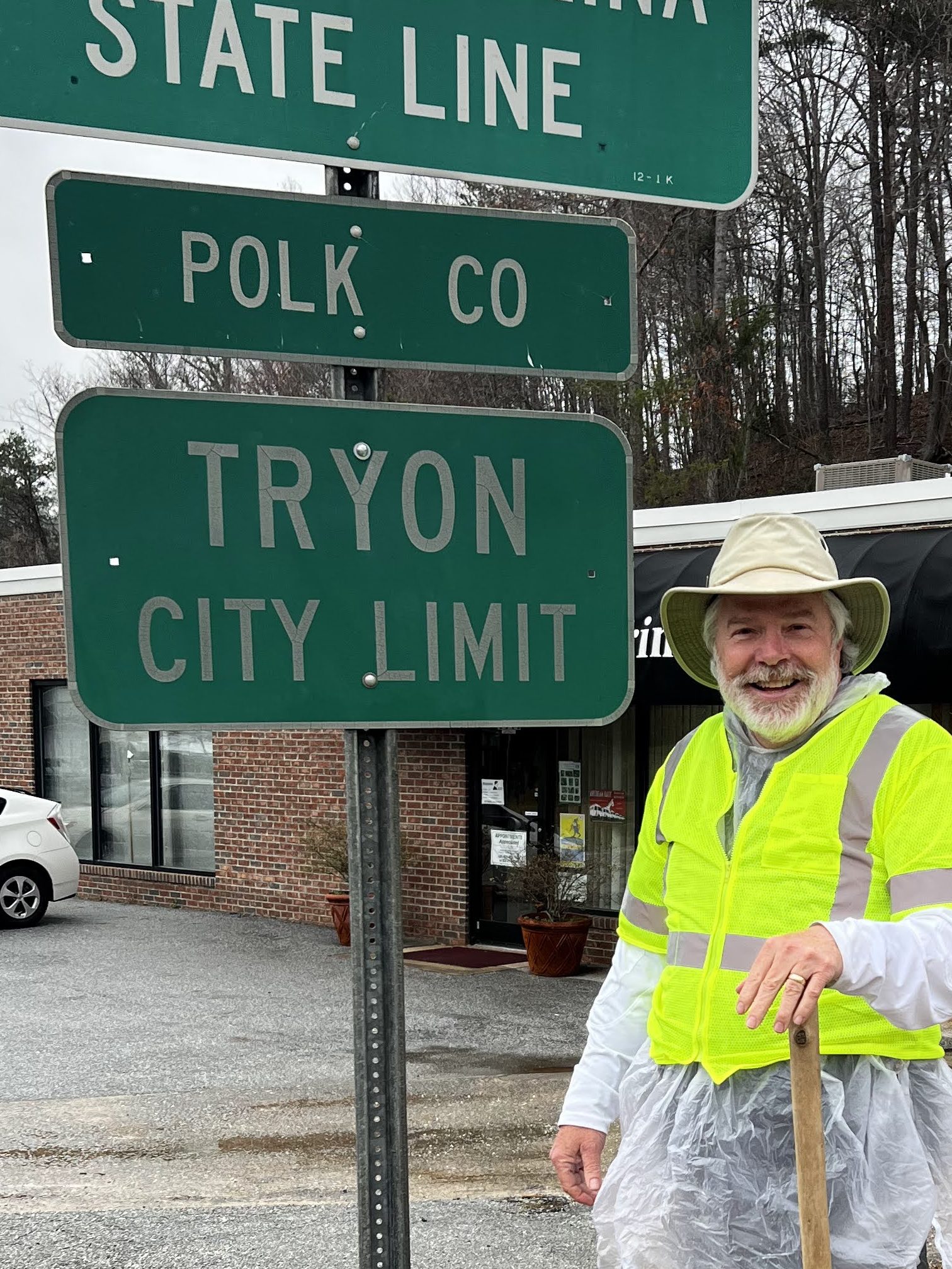
Jim at the state line

Jim and I drove to Tryon, parked the car near the state sign, and stepped out into the light rain.

Esso Station

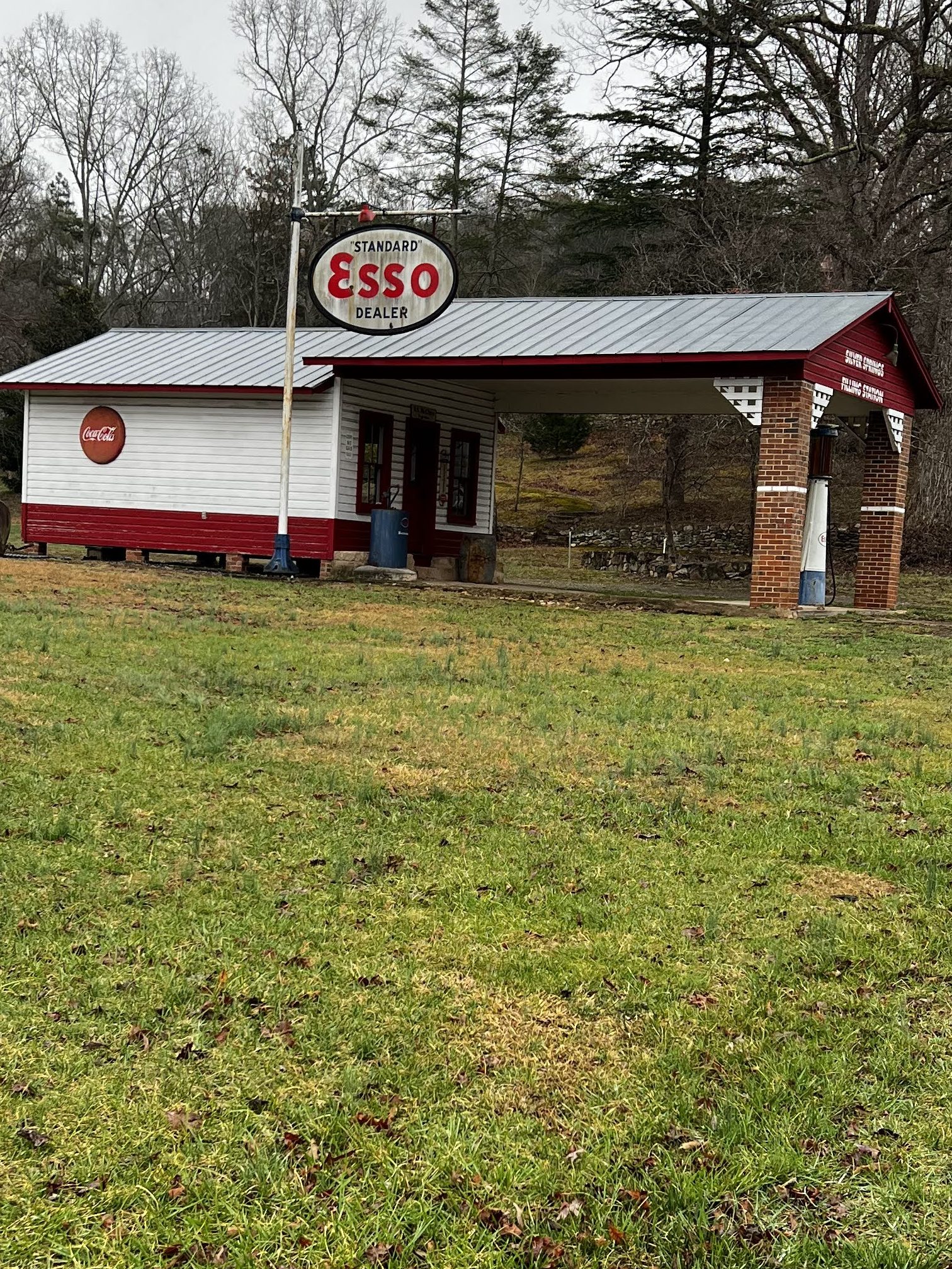
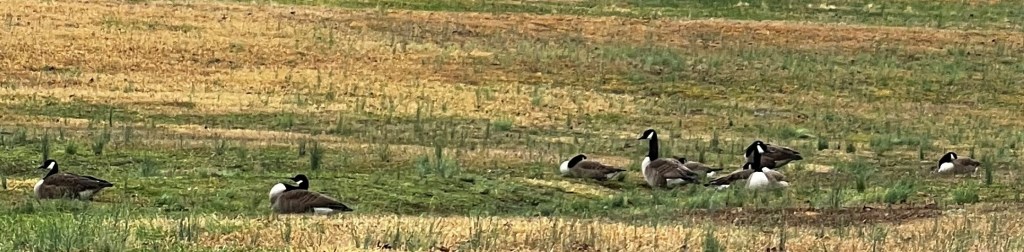
The first quarter-mile from Tryon the road goes uphill. It always takes me a few minutes at the beginning to get my heart rate up and to not be gasping for breath, so I began the trudge up the hill. Immediately on the left was an old Esso station, somewhat restored, but not in any use. We stopped by to see the sign and any of the other memorabilia there. Immediately two jokes from my early teen years came to mind. “Why did the bee fly cross country with its legs crossed? It was looking for a BP station?” and “What kind of bees use the Esso station? Esso bees.” Jokes that were funny for a 13-year-old don’t have the same impact on this 68-year-old sense of humor. But the memories are nice. A flock of geese landed in the field by the Esso station and honked us on our way.

We crested the hill and began the rolling terrain towards Landrum. Jim noticed all the empty mini-bottles on the side of the road. Turns out the favorite brand of liquor for litterbugs is Bombay Gin.

The walk to Landrum is about 2 miles and took us about 40 minutes. When entering Landrum on the left is a restored train depot. We walked by it, past the newspaper office (where my aunt worked for a while), and turned left onto the main business area.

Landrum was settled by early pioneers coming from Pennsylvania, Maryland, and Virginia. The fertile land, which was free, and a good climate made it a great place to start farming. Corn and timber were the first products. Later cotton, vegetables, beef, and pork were produced on the farms. In the early 1930s peaches became the major crop (and there are still a lot of peach orchards in the area), then apples. Textiles moved in in the late 1940’s and were dominant until the mid-1970s. The railroad extending into Landrum in 1880 caused the settlement to need a name. Originally called Landrum Station, after John Landrum, the donor of the land for the depot, it was later shortened to Landrum. Oddly, John Landrum, a Baptist minister from nearby Spartanburg, never lived in his namesake town.

With the downturn in textiles, Landrum began to diversify in terms of industry. The old buildings from downtown have been saved and many are specialty shops, restaurants, and boutiques. Landrum has the best Habitat for Humanity ReStore I have visited. If you are looking for good bargains on old antiques that may have been in these foothills homes, this is the place. Taking advantage of the number of horse lovers in the area (Tryon has an annual steeplechase, The Blockhouse), the Foothills Equestrian Nature Center (FENCE) is located just outside of town. Landrum has been able to retain that small-town feel while being welcoming to many new people moving into the area.

Jim and I walked through the business district, chose El Chili Rojo for lunch, and enjoyed a good meal. The staff was friendly but busy, so we didn’t get the chance to speak.

Me at Dutch Plate

Following lunch, we headed back out to the highway. The four and a half miles to Campobello were mostly rolling hills and flatland. Halfway between the two towns Landrum High School, home of the Cardinals, is on the left. A large, relatively new building houses the 610 students and around 60 staff. It is a highly ranked school both in the state and nationally.

About 3 o’clock we arrived in Campobello. Campobello is a small town with a population of 675. For a while it was a textile town, but (as with Landrum) textiles moved out in the 1970s. Landrum has a few businesses and some farmland, but most people moving there work in Spartanburg. They live in Landrum for the quietness of the country and the lower cost of land and housing.

Jim at Dutch Plate

Prior to the Civil War, a family in Spartanburg operated a large farm operation in the area. Mary Dean Davis, one of the owners, would ride out on horseback to check on the farm. She would often stop on Windmill Hill, look out towards the South Pacolet River, and enjoy the view. One day she looked at it and said “Campo Bella”, which means (in Italian) “Beautiful Field.” The name Campobella stuck. In 1882 the town was incorporated and the name changed to Campobello, the ‘a’ being changed to ‘o’ due to poor penmanship on the town charter.

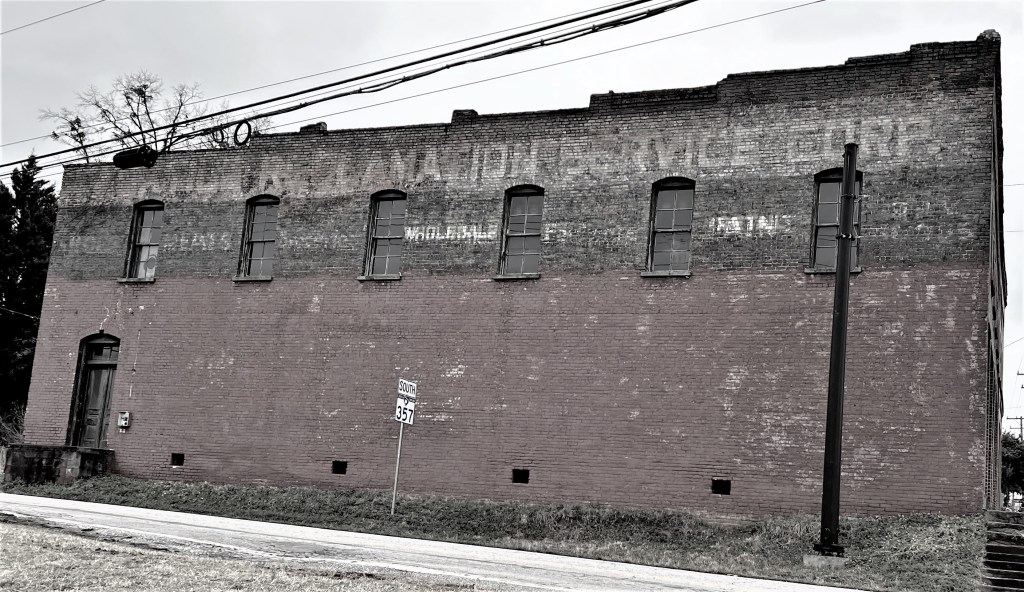
As Jim and I walked through the town, it was pretty much deserted. I have been collecting photos of “ghost signs” (signs that were painted on buildings years ago and have mostly faded). There was one in Campobello, so I took a photo. Jim drove me back to the car in Tryon, we said goodbye and headed home.

A Walk Across South Carolina

My home state, South Carolina, is really quite small. Of the fifty states, we are number 40, covering a little over 32,000 square miles. Alaska could hold almost 21 South Carolinas. The distance across the state is 260 miles and in less than 4 hours a person can drive from the mountains to the ocean. An airliner can cross the state in about 30 minutes, and a small private plane can get a good scenic overview in about 90 minutes. There are a lot of driving tours of our fair state, and from our capitol city Columbia, you can take day trips and see most of the state in less than a week. The Palmetto Trail, a 380 mile walking trail, takes a person from the mountains across the western edge of the state, through the Piedmont, Midlands and Fall Line, Pee Dee, and Coastal Plain to the Atlantic Ocean. It is very scenic, going through forests, by rivers, swamps, lakes, and through a couple of cities. I have walked it, section by section, over a couple of years.

None of these methods- flying, driving, walking the nature trails- let you see the real treasures of the state. South Carolina’s treasures lie in its people and the communities they form. The towns, small and large, are places where neighbors get to know each other, speak on friendly terms, help each other out, worship, work, and play together. You cannot get to know them at 600 miles per hour from 32,000 feet in the air, or driving past at 70 on an interstate. Nor can you do that walking on the beautiful trails, because there are not many people on the same section you are on (which is one o the advantages of walking them if you want to be alone). And though you cannot get to know the people and towns intimately by just walking through them, that is what I plan to do.

My grandfather, C. B. Smith, helped to raise me when I was small. He used to say that people saw the world through a car window, and that wasn’t good enough. He loved to walk. He walked to work home in Inman to his newspaper, The Inman Times. He walked to Dan’s Foodland, the Rexall Drug store, Castle’s Five and Dime, Fox’s Barber Shop. Along the way he talked to the people, shared stories with them, kept up with the needs of the community. One of my earliest memories is of the two of us walking to the Inman Theatre to see Old Yeller, my first movie, and him handing me a handkerchief to wipe the tears from my eyes as we walked home.

My grandfather had nothing against automobiles, he just thought that if you wanted to get to know a person or a place, walking was the best way. I walked the Palmetto Trail, and I can tell you a lot about the views, but I cannot tell you much about any people except the few who joined me on sections of the trail.

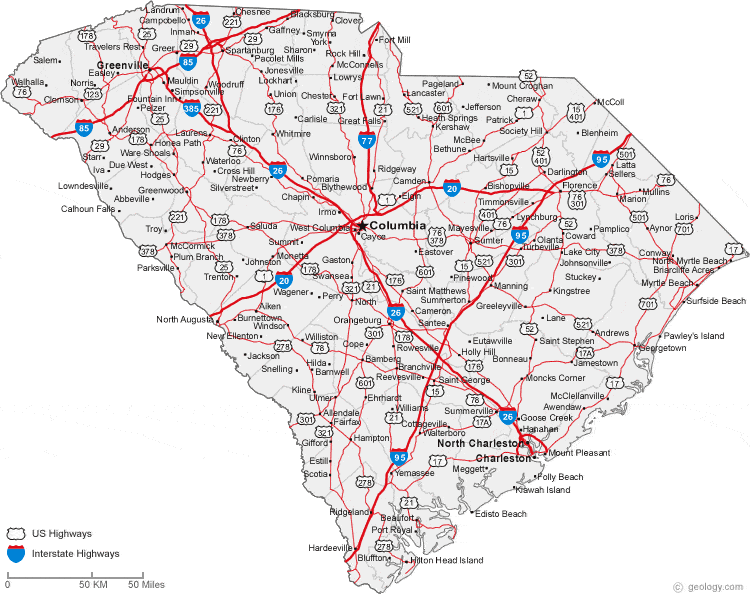
My plan is to walk down US Highway 176, from the North Carolina/South Carolina border at Tryon, NC, though the center of the state, to Goose Creek, where it ends. From there I will work my way down to Folly Beach, “The Edge of America.” I plan to walk it in short sections, around 7 miles each time, taking the time to get to know the places and the people I meet. It is 219 miles from Tryon to Goose Creek and about another 30 to Folly Beach, so it should take me from 35 to 40 walking days to complete the walk.

I invite you to join me, either by keeping up with my posts here, or even joining me for a few miles as I pass through your area. If you would like to be on my mailing list, keeping you posted for future walk dates and online posts, email me at mbh05281953@gmail.com. In any case, I hope to see you out on the road.

Happy trails!

Mike

A Portrait or A Vine?

Mona Lisa - Wikipedia

Leonardo DaVinci’s famous painting, Mona Lisa, lies protected deep within the Louvre museum in Paris. Guards surround it and thick glass covers it to keep air and light from destroying this ancient work of art. Crowds of people come to look at it, and try to get a photo through the dark glass that encases it. It has not changed It has not changed in over 500 years. The same enigmatic smile, the same background. Those who looked at it in the early 1500’s saw the same thing I saw when I was there (without, of course, the dark glass case, the guards, and the people with cameras).

Plant Vine Clip Art - Plants Transparent, HD Png Download ...

Outside of the museum, in one of it’s courtyards, is a vine that has been growing for years, perhaps since the museum was founded in 1793. Not many people notice the vine, but it is carefully attended by a gardener. While the vine is the same vine it has always been, it does not look the same as it did in the past. It is living and growing.

Our relationship with Jesus often becomes like that of the painting. We have not changed, we have not moved, we have not grown. We worship, study, pray to, and serve not a living God, but a portrait of what that God was like back when we first came to Christ. We turn a living relationship into a set of closely guarded and protected rules and dogma.

Yet Christ is alive and our relationship with him should be like that of the gardener and the vine. (As a matter of fact, Jesus said something about him being a vine and we the branches- a living relationship.) We should be growing, expanding in grace, serving  in new ways, and welcoming people to the family of Christ that are different from us.

Here’s a quick way to tell if you’re worshiping an idol, or in relationship with a living God. As in all things be honest. Answer these questions:

1. How have you changed in the last year?

2. What do you believe now that is different from what you believed when you first came to Christ?

3. Would those who know you best say you are changing in ways that make you attract people to Jesus?

4. Who have you last brought to Jesus?

The answers will tell a lot about whether your relationship is with a painting or a living vine.

(Credit Where Credit’s Due Department: the idea for this came from Selling Water By The River by Shane Hipps. I highly recommend the book.)

If you would like to get updates, please click on the “Follow Michael Henderson” button.

On Walking (with apologies to HDT)

Walking can be a lifesaver, but many need to pick up paceIf I could do anything else for a living, I would walk. I see the world more clearly when I am walking. My thoughts are much better, I am more creative, and more peaceful. I notice the large things and the small ones. I see the past more clearly and the future more hopefully.

I love walking in places where I am familiar. I get to see new things that I had not noticed before. I notice the details. At night, I see how the light shines in the darkness, and see the same things differently than I do in the day. I wonder about the people in the homes, and pray for the families  on the street.

I love walking in new places. I like seeing something I’ve never seen before, for getting a new view of the world, for discovering something that may be old for others, but new for me.

I love discovering old paths, walking them and thinking about who has walked them before.

And I love walking, or making, new paths. To go where others may have looked, but not walked.

When I was 8 I would walk all over Inman. I would explore the well-known streets, go down the little side alleys, discover shortcuts through hedges. When I first moved to Florence, I walked all over town. For a while I was known to folks as the “walking preacher.” And I love James Taylor’s song “Walking Man.”

One of my fantasies is walking across South Carolina, starting at the state line at Tryon NC/Landrum SC, following US 176 as far as I could (Goose Creek r NOrth Charleston) then walking on out to Folly Beach. Maybe writing a story about it- about people and towns and history. Recollect times in my own life at various places along the path.

My grandfather, who loved to walk, once said that people (this was in the 1950s) saw the world through automobile windows. We don’t even see it that way anymore. We see it through electronic screens. Computers, phones, tablets, tvs. 

Sometimes, most times, I think I could walk forever.

And so the question comes to my mind, if I love walking so much, why don’t I do it more? Or at all? I seem to have stopped. And that is to my pain and detriment.

Jesus called his followers to walk with him. I hope I don’t stop that walk.

If you would like to follow my wanderings and writings, please click on the box that says “Follow Michael Henderson.” Thanks!

Scars

“A scar is a mark left on the skin after a wound or injury has healed.” (from the website of the National Health Service, United Kingdom)

I have a number of scars on my body. Fortunately, most are not obvious. There is one on my right shin from where I stepped into an open clay pipe while running across a yard when I was a young teen. It actually tore away the skin and everything underneath down to the bone. There is a thin layer of skin covering the wound. It has no feeling. Perhaps the nerves were also severed.

There is also another one on my left leg from trying to jump over a barbed-wire fence back in those same festering teen years.

I used to have them across my face, due to an accident in that same time period. But thanks to a wonderful doctor in Macon, all but one small one on my upper lip, just below my nose, are gone.

Like most teens, I was not too careful.

I have two new ones, the result of surgery. One is a small one that goes down my sternum for a couple of inches. At the top it goes a little to the right. It is from the surgery that was done by another magnificent doctor to take care of my septic arthritis and sepsis in the chest cavity. With the little marks from where the stitches were, it looks like the Hebrew letter dalet – ד – which is often used for the word ‘door.’ The few times I have shown people the scar, I tell them it’s the door to my heart.

Right below it is a small round scar from the drainage tube that was in my chest. It is beginning to fade. Most scars do over time, but they never go away completely. Like the quote at the top of this, they are reminders of the body healing itself (often with the help of skilled people).

I’ve heard a lot about the scars on Jesus’ hands and feet. I’ve heard preachers use this phrase in sermons- “We will know him by the scars in his hands.” I’ve often sung songs and hymns in church that refer to his nail-scarred hands. I’ve been thinking about those lately.

Strangely enough, the Bible never refers to Jesus’ “nail-scarred hands.” The references to his hands after the resurrection are in Luke and John. He shows his hands and side to Thomas, both with open wounds, no scars. And he uses his hands, no mention of scars so probably still bloody, to bless his disciples before he leaves.

I think this is significant. If scars are a sign of healing, and the crucifixion of Jesus- the nails in his hands and feet- were to heal (save) the world from its sin, perhaps they have not healed because we have not healed. Even to this day, Jesus’ hands and feet, his head and side, are still bleeding.

It’s not surprising. Healing for humanity is an on-going work. And, after all, it is by his wounds, not his scars, we are healed.


Want to receive notices about new posts? Click on the “Follow Michael Henderson” blue tab at the bottom right.

A Baptism Story

I don’t remember being baptized. It happened when I was an infant. My mother and father brought me to the altar at Inman Methodist Church and there the pastor asked them if they would raise me to come to know the love of God in Jesus Christ. They said they would. He asked the congregation if they would do everything in their power by God’s grace to help me come to know Jesus as my Lord and Savior. They sai they would. I know this happened because it is what we do in the church. Then he took the water, put it on my head, and said, “Michael Bernard, I baptize you in the name of the Father, Son, and Holy Ghost.” ‘Ghost’ was the word used back in 1953. My parents made a promise; the church made a promise; and somewhere in the depths of Heaven, God made a promise. God’s promise was something like this- “I will love you with an everlasting love. With lovingkindness, I will draw you to me.” You can read that promise. It’s from God. It’s in the book of Jeremiah, chapter 31, verse 3.

That’s what Christian baptism is- a promise from God. There are other baptisms in the world, and there are other baptisms in the Bible. John’s baptism was a baptism of repentance for forgiveness of sin. But that’s an act of man. As Christians our sins are forgiven not because of our repentance, but because of Jesus dying on the cross for us. Look it up. 1 John 2:2 and 1 Corinthians 15:3 are good places to start. Christian baptism says this- “Jesus died for us even before we knew it (once again, look it up- Romans 5:8) and we’ll do everything it takes to help you come to know how special you are in Christ. One day, you’ll realize it and say ‘Yes!’ to what God has already said.”

So parents and aunts and uncles and grandparents and Sunday school teachers and preachers and neighbors spent lots of time helping me to understand that God loves me, that Christ died for me, and that I can live in his power. With me, it took lots of time.

And one day, when I was 14, it finally clicked. I finally knew. I remember praying “Jesus, I never knew that you loved me this much. Thank you! I’ll live the rest of my life for you.” (That’s a whole ‘nother story.) I had been drawn into God’s love by the power of his Spirit.  It had been there all along (that’s what the word ‘everlasting’ means), and now I knew it.

My parents had tried to keep their promise. The church had kept their promise. And most of all, God had kept, and keeps on keeping, his promise.

Some people tell me that I have not been truly baptized, because I didn’t have anything to do with it. But that’s what Christian baptism is al about. Jesus did it all. He has loved me with an everlasting love, and with lovingkindness, he has drawn me to him.

And if someone tells you that this ain’t baptism, they’re wrong. Because it’s not about us. It’s about God and Jesus. And thank God for that!

A June 6 Meditation for My UMNext Friends

June 6 is the anniversary of D-Day, the day in 1944  (seventy-five years ago as of this writing) that 160,000 Allied troops landed along a 50 mile stretch of French beach held by the Nazis. More than 9,000 Allied soldiers were killed or wounded, but that day changed the course of the war, and of the world. History shows us that it was on that day that the war was won.

Although it was not until May 8, 1945, 11 months later, that the European front ended, and September 2 of that same year that Japan surrendered in the Pacific, both sides knew and began to act differently after June 6. The Allies began to plan and act as though they had won, and the Axis powers began to figure out how to best get out when defeated.

There were a lot of important battles between those dates, and a lot of pain and grief from them, but the war was won on June 6.

I think of the cross and Good Friday that way. The war against evil and pain and death was won on that day. When Christ said “It is finished,” the old kingdom was defeated and the new one, God’s kingdom of peace, justice, love was breaking in. Between Good Friday and the fulfillment of the kingdom of God, there are a lot of important battles, a lot of pain and grief, but we can (and should) live as though the victory has been won.

I have been watching the results of United Methodist Annual Conference meetings across the country, including my own beloved SC Annual Conference. I see something new taking place as people are electing folks to be delegates to General Conference. I see a new wind blowing, dare I say a Pentecostal wind, something of the Holy Spirit, through our gatherings. We are electing delegates who want to make the church open to all of God’s children, who want to see a revival of the warm-heart and willing hands faith in Jesus. I am seeing people repent of our exclusiveness, and pray, work, and celebrate a new kind of church.

What I see are lots of “little D-Days.” The war is not over, will not be for a while. And there will be lots of important battles to be won, and (unfortunately) there will be pain and grief.

But I am ready to live in a new way, the way of Christ. For he has removed all the dividing lines between us, and his victory is sure.

I am grateful for those who stormed the beaches 75 years ago. We owe them a debt we cannot repay. And I am grateful for those who are storming the fronts of exclusivity. Because of God’s Spirit working in you, the war may not be over, but it is won.

Hungry Heart

Bruce Springsteen’s first big hit, Hungry Heart, has been running through my mind lately. For those of you who are not over 50, it was released in 1980 on his album, The River. The lyrics deal with making some bad choices, continuing to make bad choices, and always ending up with a hungry heart. The music is pretty upbeat, contrasting with the lyrics. You can listen to it here.

Perhaps the reason the song keeps popping up is that I am also reading Geneen Roth’s Feeding the Hungry Heart. It came out in 1982, and I do not doubt she danced around her den singing Springsteen a couple of years before.

The title for the song (and maybe the book) come from Alfred, Lord Tennyson’s poem Ulysses. There is this wonderful line “For always roaming with a hungry heart” that speaks to never being filled.

The book is about compulsive eating.  Roth writes of our need to fill something that cannot be filled otherwise. Her opening chapter starts with these words- “You can never get enough of what you really don’t want.”

She mostly deals with people who are binge eaters. A gallon of ice cream covered with whipped cream, walnuts, and cherries at one sitting. Several packs of Oreos at once. A dozen or two donuts. And the associated guilt and shame that usually follows. She says that we are trying hard to love ourselves, and we don’t know how. There is aching inside that, while it cannot be filled with food, it can be silenced for a while. But until the hungry heart is satisfied, the hungry stomach never will be.

St. Augustine wrote in the fourth century, “Our hearts are restless until they rest in you.” Referring to God. Evangelists in the 1960s and 70s, the age of psychological fulfillment, would say that our hearts had a God-shaped hole that nothing else could fill.

But what about those who do know Christ? Have asked him to come into their lives, forgive their sin, lead them to new life? Those who seek to follow him every day, to be his body in the world today?

I ask this question because I am a follower of Jesus, yet I have a hungry heart. Both in the Springsteen and Roth modes. While I have made some bad choices in the past, hurt myself and others, I am trying to not continue down those paths. And, by the grace of God and with the support of good friends and spouse, I am stumbling towards the goal.

I do not binge eat like the clients in Roth’s book, at least not anymore. But I eat. A lot. That is, if I am sitting down and there is food, it is about to be eaten. I’m not hungry. But put me in front of a tv, in a movie theatre, or just sitting on the back porch pondering the goodness of life, and there will be calories consumed.

During this season of Lent, I have been taking time each day to do some deeper self- examination. This is one I have been looking at (and singing about) for the last week. What am I trying to fill? And why don’t I stop when I realize it will never be filled? At least not by food.

There’s a great scene in the movie High Fidelity. John Cusack, who runs a record store, keeps sabotaging relationships with one woman to move on to the next. He stops for one second and yells “Why do I keep doing this?!!!”

Springsteen says

“Everybody needs a place to rest
Everybody wants to have a home
Don’t make no difference what nobody says
Ain’t nobody like to be alone.”

And maybe that’s what I need to remember. I am not alone.

O God, feed my hungry heart.


Nine Things to Help Have Quality Time Alone With Jesus

There are many things, disciplines, we can use to help us grow in our spiritual life. Worship, prayer, serving others, fellowship just to name a few. Essential for our growth in Christ is taking time alone with him. Just you and Jesus. It’s not the only thing we need to do in order to grow, but it is perhaps the most essential. Just as you and your spouse cannot grow closer to each other if you are never alone together, you cannot grow closer to Jesus if you are never alone with him.

I know there are many reasons people use to say they do not do that. That’s for another column, though. In this one, I want to give you some practical tips on how to grow in your time alone with Jesus.

I share these from a lifetime of successes and failures. Sometimes I have been consistent, and sometimes I have let other things crowd out this important one. It’s a good thing our God is always a God of second chances. And third. And fourth….

Here are some practical things you can do.

First, set aside some time when you know you can be alone with Jesus. For most of us, it’s in the morning. Early morning. Before the kids get up, before the emails and texts start coming in. Before the day begins. I know some people are “night” people.  But I have found that most folks who wait to spend that time at night with Christ rarely do. Or when they do, they tend to fall asleep. Getting up early in the morning may mean planning so you can go to sleep earlier in the evening. I have had to train myself to do this. I am not a natural early morning riser. And I love to stay up late. But early morning, even for me at this point in my life, is better. If you can do it better later in the day, and stay consistent in it, go for it. But I recommend early morning.

Second, set aside a place where you can read, think, study, pray, and not be disturbed. I have a bedroom-turned-into-a-study. Might be a kitchen table. Or maybe a corner in the den. Having a consistent place, and a place where you can get your materials together easily every day, will make it easier for you to do this. I do not recommend the bed. Falling asleep is just too easy there.

Third, be there. I read this recently- “Wherever you are, be there.” Have you ever known someone who was in the room with you, but you knew their mind was somewhere else? It’s really easy to become that person- thinking about what’s coming up next, who you’re going to see, what you need to do. I keep a little pad of Post-It notes on my desk. Whenever anything comes into my mind that I may need to remember later, I quickly scribble it onto the Post-It and put it aside. At first my desk was littered with Post-Its, but now I usually have only one or two. I think I have trained my mind to “be there.”

Fourth, start with a prayer. I write mine because I think better when writing. You may want to try that. I just start telling Jesus what’s on my mind- what I am grateful for, concerns I have, requests for guidance, questions. Whatever is on my heart and mind goes into the prayer. Sometimes it sounds really holy and fancy, but most times it’s just me writing out my thoughts to Jesus.

Fifth, read Scripture. I recommend getting a Bible that you can read easily and you do not mind marking in. And I recommend having a system or plan for reading. Some people like to just open the Bible to random spots and “see what the Lord is telling me today.” Which, to me, is sort of like walking into the pantry, closing your eyes, reaching onto the shelf, and eating whatever can you pick up. You may get something from it, but in the long run, it’s not very nutritious. Find a plan that helps you move through the Bible at your own speed. The Bible is not a novel. I do not recommend trying to read it like one. If you start at Genesis and try to read straight through, you’re probably going to bog down after Exodus. I have tried many reading plans. Here’s one that I recommend –https://www.biblica.com/resources/reading-plans/ If you use the Bible App, here’s a page with theirs. https://www.biblegateway.com/reading-plans/?version=NIV I also recommend that whatever plan you use, make sure it focuses on Jesus. He is the author and source of our faith, and if we focus on something else, we can often miss what God wants us to know and to be.

My particular pattern right now is to read a Psalm (going through them one a day, except Psalm 119, which I will divide into several days), then a chapter from an Old Testament book (I go through the whole book a chapter at a time), followed by some readings in the Gospels (I read through each one a few verses at a time), and then from one of the other New Testament books. If you do not have the time like I do at the moment, read the Gospels, then the letters of Paul. Those are what define us. As Christians, they are ours.

Sixth, write what you read means to you. Any new insight, question, or idea from the readings. Keeping a journal of this helps you to see where you have grown and what you have learned. If you read something that you do not understand, write the question down and later look it up. Talk to someone who knows the Scriptures; look it up on the internet. Though, I do not recommend that you take the time to look up things immediately. We are far too easily distracted when we turn on our computer. Email, Facebook, and other things draw us in so quickly.

Seventh, read something that will build you up spiritually. It may be a daily devotional, like the Upper Room, or a book of them like Jesus Calling by Sarah Young. It could be a topical book or a spiritual autobiography. It’s good to read what others have found.

Eighth, spend some time quietly sitting. Some folks call this meditation, some call it listening prayer. Research shows that people who do this for only 5 minutes every morning hare more productive, have less stress, and are more creative, regardless of their faith. For those of us who are Jesus followers, it gives us a chance to listen. Keep that pad of Post-Its available. Things will come to jot down.

Ninth, do this alone but find some other person or group to regularly meet with to discuss and share what God is telling you. We come to Christ as individuals, but we become part of a larger body when we come to him. We are not meant to follow him all alone. As a matter of fact, we cannot. We are part of his body.

Well, that’s it. The most important part is to start. Let’s do it.

What would you add?

I’m for you!


Michael