I’m With The Banned

October 4–10 marks Banned Books Week, an event sponsored by the American Library Association and 15 other organizations, including Amnesty International, Little Free Library, and the National Council of Teachers of English. Established in 1982 in response to a sudden surge in challenged and banned books nationwide, the initiative highlights the essential freedom to access diverse literature and read without censorship. Unfortunately, the history of book banning is neither new nor brief.
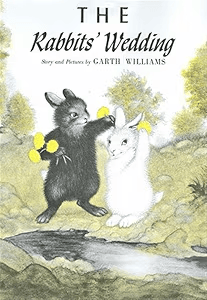
In 1959, Alabama challenged Garth Williams’s children’s book The Rabbits’ Wedding. The story simply depicts two bunnies getting married—one black and one white. State officials and the White Citizens Council argued the book went too far, prompting State Senator E. O. Eddins to demand that libraries remove it and burn it. Emily Wheelcock Reed, Director of the Alabama Public Service, refused to destroy or pull the book, though she ultimately moved it to a reserved section to protect it. It was not until June 1967 that the U.S. Supreme Court struck down all state laws prohibiting interracial marriage, and Alabama’s state constitution was not updated until November 2000. Eventually, The Rabbits’ Wedding returned to the children’s section where it belonged.

While most states restrict books on a district-by-district or county-by-county basis, my home state of South Carolina is among the few that have enacted statewide bans. In May 2025, South Carolina led the nation in statewide book bans—a disheartening distinction. This censorship coincides with broader educational challenges: South Carolina ranks roughly 13th highest in functional illiteracy nationwide, with nearly 57.6% of adults reading below an 8th-grade level and only 54% to 56% of 3rd-grade students reading at grade level.

Despite these challenges, many books eventually find their way back. Acclaimed works like Toni Morrison’s The Bluest Eye, Margaret Atwood’s The Handmaid’s Tale, and Khaled Hosseini’s The Kite Runner have all overcome local challenges in South Carolina. In Beaufort County alone, people challenged 97 books in 2022, though libraries ultimately returned all but five to the shelves.

Resistance to censorship has historical roots here, too. In 1987, a student at Baptist College of Charleston (now Charleston Southern University) asked to remove F. Scott Fitzgerald’s The Great Gatsby from the undergraduate reading list. The college president, Jairy Hunter, refused. Years later, when a member of a local church tried to remove the first Harry Potter book from a school district because of its themes of magic, a parishioner asked what I thought. My response was simple: “The only real magic in Harry Potter was that it was able to get kids to read.”

When this week rolls around each year, I look up the list of challenged and banned books in South Carolina. This year, there are 21. They remain available in bookstores and select public libraries by request, but they’ve been removed from school shelves—though I’m told a few manage to sneak back in.

I usually pick one up out of curiosity. Of the 21 titles, six are by Sarah J. Maas, a fantasy author who has sold over 75 million copies worldwide; I read one recently and found it genuinely intriguing. Ellen Hopkins has three books on the list, tackling heavy, real-world themes like addiction, abuse, mental health, and trauma—topics that deeply resonate with young readers.

Which brings me to my point: if you want your pre-teen or teen to read, tell them they can’t. But if you do, be prepared. It might just spark a change—or convince them that bunnies who love each other deserve to get married.
Some Thoughts on Flag Day, June 14

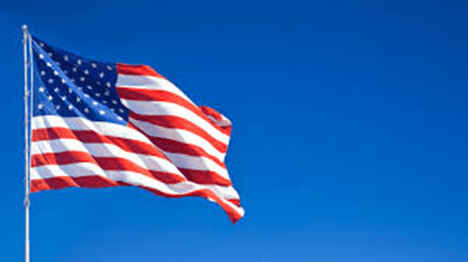
I am writing this on Flag Day, June 14, 2024. June 14 has been declared Flag Day since 1916, when President Woodrow Wilson declared June 14 (the date in 1777 that the Congress adopted the Stars and Stripes as our national flag) Flag Day. In 1948 Harry Truman signed into law Congressional legislation designating the same and calling on the President to make an annual Flag Day declaration. You can read President Biden’s Declaration here. A portion of it reads “ I urge all Americans to observe Flag Day and National Flag Week by displaying the flag and honoring all of our brave service members and revering those who gave their last full measure of devotion defending our freedoms.  I encourage the people of the United States to observe with pride and all due ceremony those days from Flag Day through Independence Day, set aside by the Congress (89 Stat. 211), as a time to honor the American spirit, to celebrate our history and the foundational values we strive to uphold, and to publicly recite the Pledge of Allegiance to the Flag of the United States of America.”

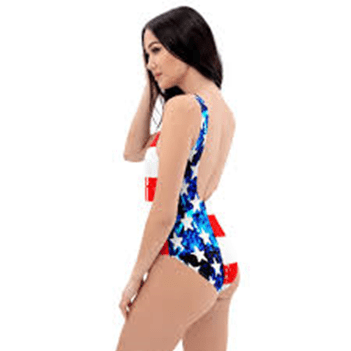
Our flag is used and misused in so many ways. It always amazes me that the same people who object to the flag being burned don’t seem to mind when they go to Myrtle Beach and see it used as a bikini or bathing suit.

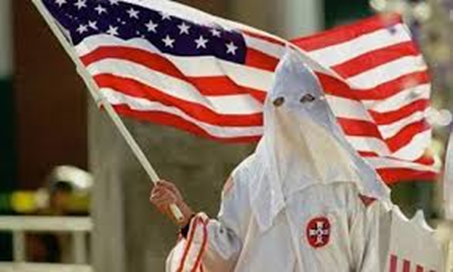
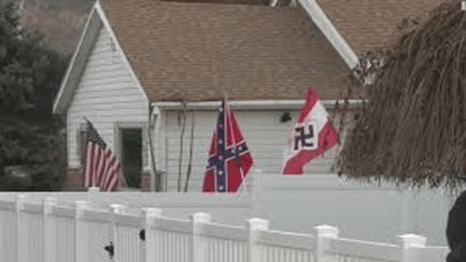
We recite the Pledge of Allegiance, which begins with “I pledge allegiance to the flag of the United States of America and to the republic for which it stands….” ends with “with liberty and justice for all.” Then see the flag used as a weapon against fellow citizens, even used alongside other flags that speak against all we want to stand for.

I think the flag is misused more today than ever before.

July 3-5, 1970, I attended the second Atlanta Pop Festival at the Middle Georgia Raceway in Byron, Georgia, with some friends from high school. A quarter of a million people showed up. In the middle of the raceway was a giant flagpole with a huge American flag flying from it. On the first day some people had lowered the flag, turned it upside down, and raised it again. (This was during a time of protesting against our government’s policies, especially in regards to Viet Nam.) Leaders on the stage asked that it be turned around correctly, saying “We are here to show peace, love, music and unity and if the flag is flown upside down, that will be the only thing we see on the news.” They quickly set it aright.

One of the ways people showed their disdain and disagreement with the government back then was to burn the flag, which upset most of us. Strangely, a lot of those people who were upset called themselves Christians, but never seemed to be upset when people burned crosses.

I’ve come to think there are worse ways to disrespect our flag than burning it.

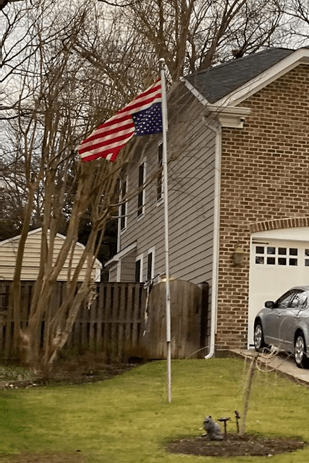
A few come to mind. Flying it upside down when you disagree with the rule of law. As mentioned above, using it physically as a weapon against other people. Flying it along with flags that were representative of groups or countries that fought to destroy us and harm the world. Wearing it as a badge of honor while dishonoring the people who died for what it stands for.

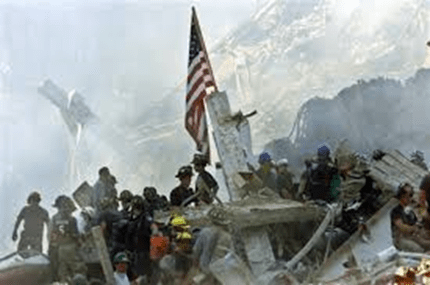
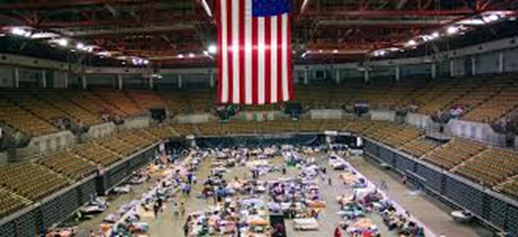
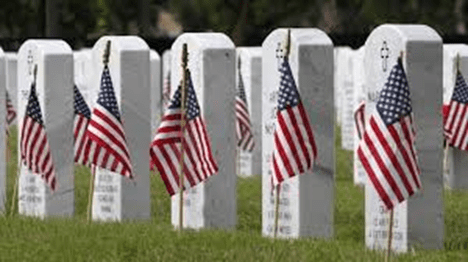
On the other hand, I’ve seen it flown in ways that make me proud. When seeing people working through the rubble of the Twin Towers, with the hope of finding more living victims, or recovering the bodies of those who died, bringing a little peace to the families and to the country. When flying above the rescue centers after natural disasters. When people wave them together and not at each others. And it brings tears to my eyes when I see all those flags flying in front of all those tombstones on Memorial Day.

Cathy and I have a small American flag that we fly from time to time outside our home. We fly it as it should be flown- not upside down, not touching the ground, not mixed with other symbols. Just a simple flag flown with the hope that one day, one day soon, there will be liberty and justice for all.