A Summer Solstice Meditation

Today, June 20, 2025, is the longest day of the year for those of us in the northern hemisphere. (I now have lots of friends in South Africa, Zimbabwe, Zambia, and other countries on the other side of the equator, so I am constantly reminded that my “northern” view is not the only one. Thanks to them for helping me with that.) The sun rose at 6:07 this morning, and will set at 8:33 this evening- making 14 hours and 26 minutes of direct sunlight, and an extra half hour on each side of indirect. It’s a long day.

In my festering childhood days, I loved the summer! You could spend almost all of the time outdoors. As a matter of fact, parents would push us out the door if we stayed in. Shoes were optional. Even in the stores. If you didn’t get hot and sweaty and then cool yourself off with a spray from the garden hose, the day was not quite right. When the sun would go down and finally get dark, we would watch the fireflies- lightning bugs called them- blinking through the night. Kids in Inman would search through the night for the mythical lightning bug hive, a place that would glow all night because of the number of fireflies there.

We slept with windows open and maybe a fan in the window to cool things off, or we took blankets out in the backyard and “camped out” behind the house. Ancient communities used to dance around the fire at this time of the year, believing this special day to be one when the wall between heaven and earth became very thin. In the late-night cool air, we could somehow feel the breath of God blowing on us.

This year, we need God’s breath to blow on us again—to cool our fevered brows, reawaken our joy in everyday life, remove the heat, and let us enjoy the light. I see the light of God in the people working for justice for all God’s children. I feel the breath of God in the prayers offered by so many. I see the fire of God in those who call out for us to stand against the symbols of hate and division in our land.

But I see heat without light in so many, too. Those who blame the victims. Those who want to further divide people. Those who wish to use violence as a way to end violence. Even Jesus did not do that, though he could (see Matthew 26:47-53).

As the day is brighter, I pray for more light in my soul, for more fire in my heart, and for the breath of God to blow through me.

Today I found myself singing several songs. John Mellencamp wrote a moving song about the brevity of life. He had recently experienced a heart attack. He wrote a great song, Longest Days, with this haunting lyric, “Life is short, even in its longest days.” Take a listen.

I recalled that we kids used to sing while lying on blankets at night. We would sing the only three songs we knew—starting with Elvis Presley’s “You Ain’t Nothing But A Hound Dog ” and ending with Sheb Wooley’s “One-Eyed, One-Horned Flying Purple People Eater.” Between the two, we would sing “Beneath the Cross of Jesus.” 

O God, today we need a place to rest from the burning of the noon-tide heat, and the burden of the day.
My “Jaws” Story

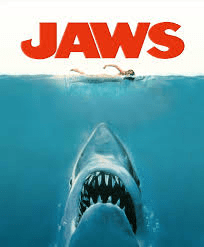
Today, June 20, 2025, is the fiftieth anniversary of the release of the movie Jaws. The film not only shot Steven Spielberg into stardom as a director, and moved John Williams into fame as a composer and director, it brought about things such as the terrible knockoff Orca, Saturday Night Live’s long running skit Landshark, a bad guy in a couple of James Bond films called Jaws, the Sharknado enterprise of six movies, and Shark Week on the Discovery Channel. People who were not alive fifty years ago recognize the ominous sound of “duuuuh duh….duuuh duh…..duh duh..duh duh..duh duh” and look for something to attack them.

The book came out in February 1974. A freelance journalist, Peter Benchley, wrote the novel based on his idea from the exploits of shark fisherman Frank Mundus. I read the book when it came out and was captivated and appalled from the beginning. I have a vivid imagination, and could see all the attacks in my head better than anything that could appear on screen.

The shark is not seen until an hour and twenty-one minutes into the film, which lasted two hours and ten minutes. But the presence of the leviathan is felt almost from the opening credits. When the shark appears, Matt Hooper (Richard Dreyfus), Quint (Robert Shaw), and Sheriff Martin Brody (Roy Scheider) are out chumming for the shark. Brody is complaining about having to do the dirty work of tossing the bloody fish guts over the back of the boat when the shark breaks the surface, mouth wide open. Sheriff Brody utters the famous line “You’re  gonna need a bigger boat.” That line was not in the book or the script for the movie. Scheider ad-libbed it—one of the most iconic lines in movie history.

When the shark came out (whose name was Bruce, after Spielberg’s lawyer Bruce Ramer), everyone in the theatre in Spartanburg screamed, including my date. Everyone except me. I was expecting it.

For a while in the movie, I was kidding my date. Whenever we would hear the music, or when the scene would get a little tense, I would nudge her and say something like “Watch out! He’s coming for you!” (Is it any wonder that I did not have a lot of dates in those days?) Near the end of the movie, Hooper is in a “shark cage,” which, in reality, is a human cage. The person is in the cage; hopefully, the sharks can’t get in. But this one is different. It has destroyed boats, docks, and several people. Hooper looks off into the murky water for any sign of the shark. You begin to hear “duuuh…..duh…” and you know the shark is coming. It is coming up from behind, not in the direction Hooper is looking. And it is coming to attack. The music gets louder and faster. The shark gets closer. Hooper still doesn’t see it. Its huge mouth is open and about to bite down on the cage. Everyone in the theatre, including me, was on the edge of their seat.

That’s when my date leaned over and bit me in the shoulder.

Everyone in the theatre missed the scene. They were all looking for the person who had jumped up and screamed like a banshee.

Sometimes you bite the big one. And sometimes…the big one bites you.

The Seed Catalog

“If I loved anything more than the spreadsheet (for the plans for next year’s garden), it was the seed catalogs. They were my porn- temptation on every single page, photograph after photograph of plump turnips and fat carrots, juicy fruits and glistening tomatoes. Some of the cannier seed dealers went not with photos but with line drawings. These were even more powerful. I filled the white space in my imagination with not only vibrant produce but also my fantasies of being an old-time gentleman farmer. Every listing burst with promise, every seed packet shouted with hope. Nothing had failed yet. All was still possible.” (Jeff Chu, Good Soil: The Education of an Accidental Farmhand)

Nothing is much better than a seed catalog to get your mind and heart set on a positive future. Burpee’s and Park Seed (from my home state of South Carolina) have filled my mind with desires untold since I was a youth. Though I had no experience growing anything other than the sea-monkeys I ordered from the back of my comic books, I knew I could bring in tomatoes for sandwiches all summer if I had the chance. Is there a way you can grow Duke’s Mayonnaise?

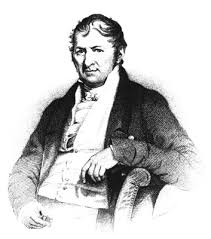
But it’s not just seed catalogs with their promise of abundant gardens. I was captured by the stories of early inventors from the books I checked out of the Inman Library. Blessed by my mother to be a reader from before elementary school, books became my escape from making up beds, picking up yard trash, and drying dishes. It moved me from trying to learn sports I would never excel at- football, baseball, basketball (we were too poor for tennis and nobody played golf)- to seeing a universe where I could make a difference. My heroes were Samuel F.B. Morse, Henry Ford, Eli Whitney, Thomas Edison, and Ben Franklin. So were Marie Curie and George Washington Carver, though I never thought I could be that smart.

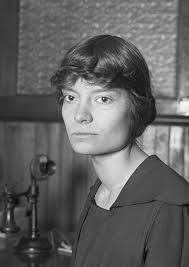
Later, stories of people who worked to improve life for all filled my evening hours. Florence Nightingale, Dunant and Moynier, Sojourner Truth, Frederick Douglass, Abraham Lincoln all gave me a vision of what life could be like. And, of course, in my teen years, I read of John Wesley, Francis of Assisi, George Müller, Dorothy Day, Teresa of Avila, who worked to make the world better for all because, as Wesley put it, “the love of God was shed abroad in their hearts.”

Later, fiction, mostly science fiction, gave me scenes of the world as it could be and not as it is. Ray Bradbury, Isaac Asimov, Arthur C. Clarke, Ursula K. LeGuin, and Madeleine L’Engle described societies where people were more concerned for the general welfare than their riches. As time has marched on, as our technology has advanced, it seems like those worlds are farther away than before. I guess that’s why it’s called fiction.

Today, it seems that our “heroes” are those who stress gain at any cost, including human rights. Worlds where people are put into classes, and never given the chance to advance. George Müller was once condemned for helping people experiencing poverty to “rise above their station.” (I hope to be blamed for something like that.) We have become a zero-sum game world, where if one person succeeds, another has to lose.

Something in me screams that is not how we are meant to be. We can all move ahead. We can all get better. Another person, nation, or race does not have to lose for the rest to get better. I don’t have to lose so that you can win. Something in me wants something more, something better, for us all.

I need a new seed catalog.

Daikon- Roots and Leaves

In the book Good Soil: The Education of an Accidental Farmer, Jeff Chu writes about growing daikon, a type of radish more popular in Chinese cooking than in American. He planted some and worried when the leaves (what we Southerners call greens) were growing abnormally fast. They were taking over the garden space. He knew that if the leaves and stems were growing above ground, not much was growing below, which is where the tuber was. The above-ground part of the plant was using energy needed for the below-ground part. Later, when he pulled up the plants for a harvest, he found that he was correct. Instead of a healthy radish, it was just strings.

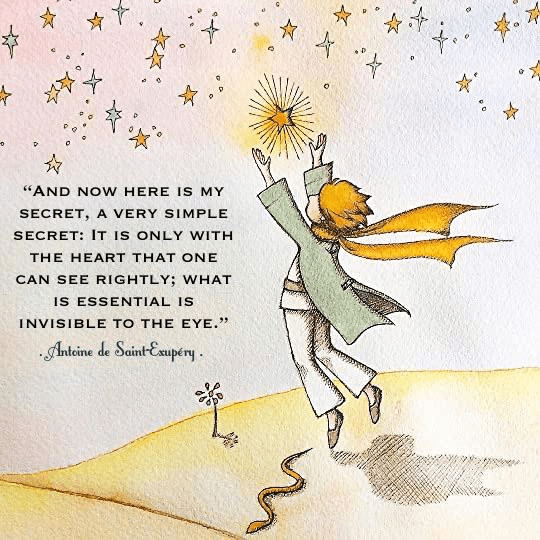
I have been thinking about that this morning. How much energy do I put into the things that I can see, that others can see? And how much do I ignore what is beneath? In his excellent book The Little Prince, Antoine de Saint-Exupery says, “It is only with the heart that one can see rightly; what is essential is invisible to the eye.”

It is in doing away with some of the externals that we provide time and energy for the place of real growth. However, we do not need to get rid of all things. The leaves are essential to the plant. Jesus did not talk about tubers, at least, not that I know of. But he did talk about grapes and grapevines. He said you must cut away the dead branches and prune the ones that produce, so that the ones left can be more fruitful. It is the same principle, except that you can see the grapes. You do not see what is underground.

This is somewhat of a problem. We do not know if that root, that tuber, is growing underground until harvest time, which takes some trust.

What must I do to help that part of my life grow? I need silence, meditation, time for reading and thinking, and even rest. And what do I need to trim, remove, or prune from my life? I am still working on that because I love those greens. And greens, while often tasty and nutritious if cooked well, will not sustain my life.

Author, banker, vicar, and researcher George Lings writes about seven “sacred spaces” that are avenues to a deeper spiritual life. They are cell, chapel, chapter, cloister, garden, refectory, and scriptorium. Of all of them, cell (being alone with God) is the hardest for most of us. Our world today is not designed for silence, introspection, or deeper growth in unseen ways.

But it is the most essential part of life. If I spend that time in my cell (my study at home), turning off the phone, closing the door, lighting a candle, and listening to the inner voice of the Spirit, I come out more at peace.

If I do not do this regularly, I will find that my roots are no longer roots. They are just strings in the dirt.

Ode To Joy

The date was June 3, 1997. Nineteen months earlier, my life had fallen apart (that’s a story for another time). I was now living in the rural community of Oswego, SC, serving a church and healing up. As I rode from the parsonage on Red Apple Lane to the church on the corner of Lodebar and Leonard Brown Roads, I saw a couple of my church members out in their farm fields, taking care of the land. On my left was Billy McCoy, on a tractor, doing something to keep the crops growing. Across the street was his brother, Sam, baling hay. Billy and his wife Stella were leaders in the church and were very supportive and helpful to me. If you rode by their home and saw the front door open, you were invited to stop by. A glass of water or tea awaited you, maybe a snack, but most of all a listening ear, an open heart, and a wise mind if you needed any of them.

When I saw Billy and Sam working, an idea hit me. I called Billy. He answered. “Billy, do you know what day it is?” “Not really,” he replied. “It’s not your birthday, is it?” “Nope. What’s the date?” He thought and said, “It’s the third of June…” and I broke into my best Bobbie Gentry, singing “another sleepy, dusty, delta day…” I slid into those notes like I was sneaking into my house when I was a teenager. “It’s Billy McCoy Day!” I shouted, then resumed singing, “I was out chopping cotton and my brother was baling hay.” Although it was not cotton season yet in Oswego, or down in Mississippi, Billy got it immediately.

Since then, I have called Billy every June 3 and sung part of that song to him. Usually, I get him early in the morning while he is out on the porch with his break-of-day coffee. We catch up with each other, share news of our families, always laugh about things, and promise to keep each other in our prayers.

Today, June 3, 2025, is the 28th time I have called and sung to him. Twenty-eight years of love and support, friendship, and laughter. After I hung up the phone, I realized I was smiling.

Music often expresses the joy we feel. The words may say something meaningful, but the tune frequently speaks in more profound ways. One of Ludwig van Beethoven’s final works was Symphony Number 9, which concludes with his powerful “Ode to Joy.” We often sing that tune in church, saying, “Joyful, joyful, we adore Thee…”

People have different songs to express joy in their lives. Some sing hymns, like “Amazing Grace” or “This is My Father’s World.” For some, it may be an old pop song, like James Taylor’s “Country Roads” or “It’s a Beautiful Morning” by The Rascals. Chris Stapleton’s “Joy of My Life,” Beach Boys’ “Good Vibrations,” and Bobby McFerrin’s “Don’t Worry, Be Happy” all come to mind. For me, today, it’s “Ode to Billie Joe.”

The song itself is not that joyful. It’s rather tragic. Billy Joe MacAllister commits suicide. Something…or someone…was thrown into the Yazoo River. Brother gets married and moves away, Papa dies, Momma doesn’t want to do much of anything, and the singer spends her days dropping flowers off the Tallahatchie Bridge. Have a nice day.

But the song brings back memories of people who loved me, helped me heal, laughed, and cried with me, and a community where I found my wife. Oddly enough, “Ode to Billie Joe” has become my Ode to Joy.

A Penny For Your Thoughts?

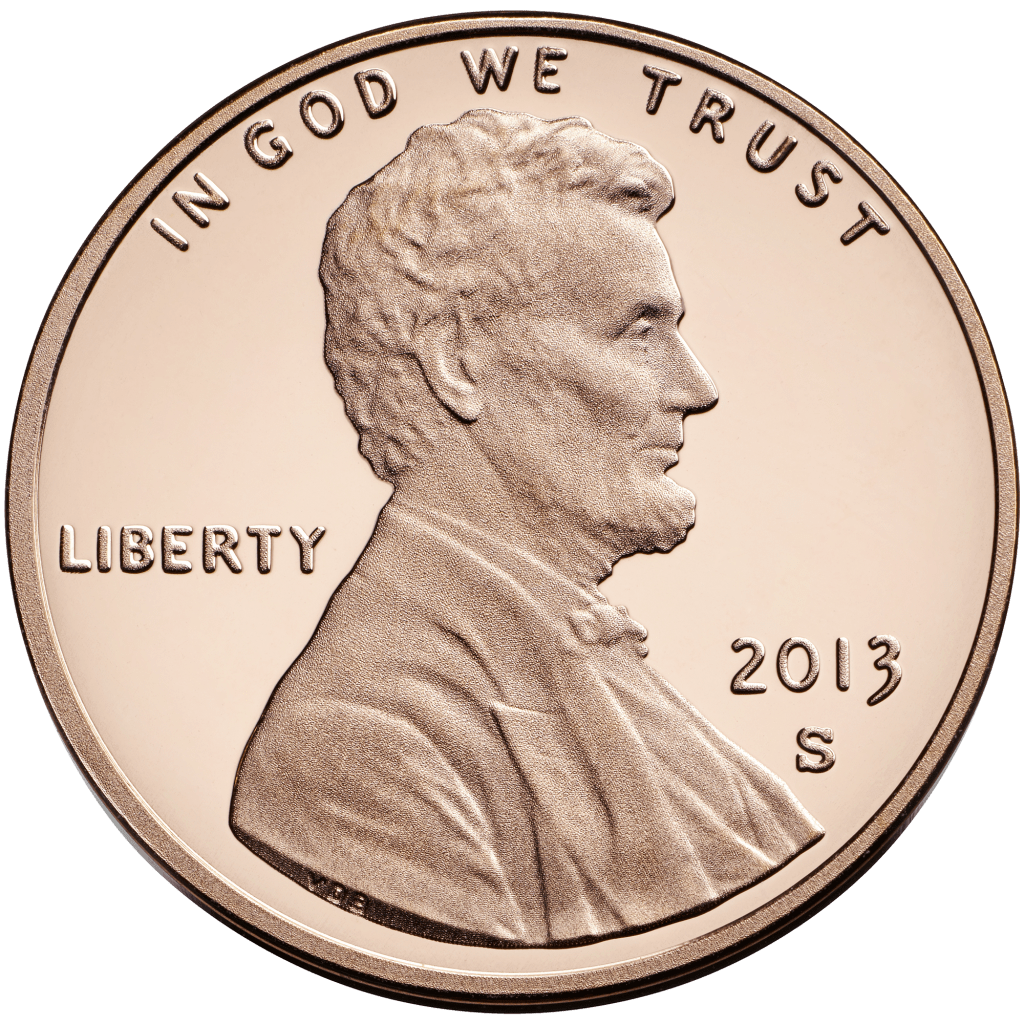
The cost of thoughts is about to go up. The US Treasury Department has announced that after the latest order of blanks for the penny is used up, they will not be producing them anymore. The expected time to stop minting them is in early 2026.

The reason is that it costs 3.69 cents to produce one. A nickel costs 13.78 cents to produce. While not the 269% increase that a penny costs, it is still 176% of the worth, so it may be on the chopping block soon. A dime costs 5.2 cents and a quarter 14.68 cents. The seldom-used half-dollar coin costs n even 34 cents, and the rarely used dollar coin 12.43 cents (probably the best deal, but we don’t seem to want to carry them). The US Mint produces other coins, too, but they are more for collecting and investing, rather than circulation. If you were walking around with one each in your pocket, it would cost 83.78 cents to make the $1.91.

Although Mr. Trump sent out a directive to stop the production of the penny, he was not the first president to attempt to do so. President Obama expressed support for eliminating the penny, as did the late John McCain.

As pennies become more and more rare, businesses will begin rounding off to the nearest nickel. My suspicion is that they will always round up, rather than lose the fractions of dollars that rounding down would cause. In addition to the slight but significant loss that consumers will experience over time, our language will also change.

Some of you are old enough to remember pay phones. There used to be a saying, “Here’s a nickel. Call someone who cares.” (Over time, it became a dime, then a quarter.) When the phone companies decided to start charging 35 cents for a call, you couldn’t easily say, “Here’s a quarter and a dime. Call someone who cares.” It did not roll off the tongue as easily. Now, it seems, a penny for your thoughts, putting your two-cents worth in, a penny saved is a penny earned, penny wise and pound foolish, penny-pincher, a bad penny always turns up, and worth every penny will go away from the common idioms.

Most people in the US make everyday purchases using credit or debit cards, though cash apps are on the rise. Cash is being used less frequently. Even though most businesses now charge between 3 and 4 percent of the bill to cover the cost of using a card, people still use them. As one friend said, “I get cash back on my card.” When I asked how much, he said, “Two percent.” Do the math. I prefer to pay with cash because…well….I am a troglodyte.

I will miss the penny when it is gone. I am old enough to remember when there was penny candy, penny ante poker, and a few nails at the hardware store could be bought for one cent. Picking up the pennies on the ground for good luck (if it was face down, be sure to turn it over three times before putting it in your pocket), wrapping enough of them to get a half-dollar, and putting one under a table leg to keep it from wobbling. All gone. I’ll miss it all.

And that’s my $.02 (now rounded up to a nickel).

Memorial Day

Monday, May 26, 2025, is Memorial Day.  It is the 160th year celebration of this holiday. Memorial Day began on May 1, 1865, in Charleston, SC, as a way to honor those who had died in the war to preserve the Union.  A group of recently freed enslaved people and others found graves where 257 bodies of unnamed Union soldiers from the war were buried. The graves were in disrepair and disregard, near the Hampton Park Race Course (beside the current Citadel). In gratitude for their sacrifice in helping to preserve the Union and bring an end to slavery, they cleaned the graveyard, placed flowers on the graves, and held services of prayer and thanksgiving for those who now lie in the earth. Over 10,000 people attended.

Since that time, we have honored those who have died in our seemingly never-ending wars. A service at the National Cemetery in Florence will be on Monday at 10 a.m. There will be other services throughout the country. I  encourage you to go to one. Each year, I attend the service here. It is very moving, and I am grateful to God for all who have given themselves to preserve the Union.

Several years ago, I ran into Will Malambri, then pastor at Central UMC, at the service. He was there with his son. After the service, we talked about the previous day’s worship at our churches and bemoaned the small attendance. (It’s usually one of the lowest-attended days in the church year.) Will said he started to stand up at the beginning and say, “I’d like to welcome all of you who do not have a house at the beach, the lake, the mountains, or the river!” We both laughed because it’s true. We started this holiday to thank God for those who gave their life for us, making it public and large, something to show our gratitude as a community and nation, not just as individuals. But slowly, like most holidays in America, it has become just another day off, and a day to have special sales.

I encourage you to make it different this year. Offer God praise, lift up in prayer those who are grieving, pray for the leaders of our country and of the world that they will soon decide to follow Jesus, the Prince of Peace, rather than Mars, the god of war. 

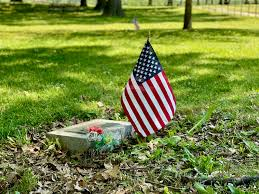
And Monday, find a cemetery and look for a grave with a small American flag on it. Go and stand beside the grave and offer a prayer. You may not have known that person, but we all owe him or her more than we can repay.

And please, pray for the day to come when we will not have to pray these prayers anymore.

Praying for Donald Trump

It will come as no surprise to most of you that I am not fond of Donald Trump. I do not like the way he has been working to destroy not only basic democracy in our country, but basic humanity as well. Making fun of handicapped persons, ridiculing veterans, constantly putting out social media messages that sound like the rantings of a middle school bully has made the office he holds a laughing stock in the world. And his constant barrage of executive orders has done nothing to lift the poor, the needy, or even strengthen the middle class. I am not fond of him at all. That does not surprise any of you who know me.

Knowing that I pray for him every day may surprise you. Not like the Republicans and MAGA ranters who said they prayed for President Biden, quoting Psalm 109:8- “Let his days be few; and let another take his office.” That Psalm, which was quoted laughingly by Marjorie Taylor Greene and others, goes on to say: “Let his children be fatherless, and his wife a widow. Let his children be continually vagabonds, and beg: let them seek their bread also out of their desolate places. Let the extortioner catch all that he hath; and let the strangers spoil his labor.Let there be none to extend mercy unto him: neither let there be any to favor his fatherless children.Let his posterity be cut off; and in the generation following let their name be blotted out.” I heard their prayer and thought, I bet Jesus himself turned away.

I am afraid to say that now I have heard a few left-leaning folks use the same prayer about Mr. Trump. In both cases, it is disgusting.

That’s not the kind of prayer that I offer.

Here is how I pray for him. I do not pray all of this daily, but it becomes a habit over time.

I pray for his safety and the safety of his family. There are a lot of crazy people in the world, and some would like to see him physically hurt. This includes political opponents and those who think he is not conservative enough. So I pray for his safety.

I pray that he will come to his senses and begin acting presidential, caring for all the people, not just the wealthy. I pray that he will learn that the poor, not only in our country but in the world, are God’s children, and we have a responsibility to care for them.

I pray that, for the first time in his life, he will remain faithful to his vows. He has admitted to not keeping any of his marriage vows and has shown that he does not intend to keep his vows to support and defend the Constitution. I pray that he will turn and keep his word.

I pray that he would understand that life is not a business transaction, and that “the one who dies with the most toys wins.” Life is about so much more than business.  He has a zero-sum gain attitude: somebody always has to win, and the other person has to lose. While this may be suitable for a football game, it does not apply to life. Eventually, people learn that. I pray that he understands it soon.

And I pray that he will be removed from office safely and legally if he does not change. I pray this not just for the country’s sake but for his sake as well. I believe that we will all eventually recognize the ways we have hurt others, and that we will begin to live differently. If that does not happen in this life on earth, it will happen in the next life. And the sooner we learn that, the sooner we can begin to change. The more damage he causes to people and our country, the longer it will take him to make amends.

So I pray for him every day.

The Misplaced C

My friend Neil and I met to walk the Shot Pouch Trail in Sumter, SC. The trail is a 3.1 mile trail that runs from Dillon Park to Swan Lake Iris Gardens. It is a beautiful, well-maintained paved trail for walkers, runners, and bikers.

It was a typical May day in Sumter. Warm, but not overbearing, and, as always in Sumter, humid. About half-way across the trail Neil said, “I could use some water.” We had both been sweating a fair amount.

In front of us was the Sumter YMCA. I said, “I bet there’s a water fountain in there.” We crossed the street and entered the building. We walked into the lobby of the very nice buiding and I walked up to the counter. The young woman working there smiled at me and asked if she could help us. I said, “Yes, ma’am. We’re visiting town and walking the Shot Pouch Trail. I was wondering if you had a place where we could get a cold cup of water?” She asked, “Are you members here?” “No, ma’am.” “Then I’m afraid I can’t let you in,” she said, still smiling.

I looked over at Neil, standing by the fancy cross in the lobby. We just started laughing and walked out.

I said “So much for that ‘C’, huh?”

Additional note: if you’re ever walking the Shot Pouch Trail in Sumter, bring your own water. And have lunch at the Sumter Cut-Rate Drug Store in town. Not only will they give you water, their onion rings are terrific!

A New Season/A New Chapter

“Those who lean on Jesus’ breast feel the heartbeat of God.”- Monk of Patmos

It was on Epiphany, January 6, 2020, that my doctor cut open my chest to see what was wrong. (Epiphany, by the way, means “unveiling” or “revealing.”) For the previous two months I had been in and out of the hospital and had several different specialists trying to figure out what was making me sick. Each path we took came to a dead end, a bad term to use when it seems that may be the actual ending. Finally, a couple of doctors thought they had a pretty good idea of what was going on. I had septic arthritis, And sepsis seemed to have filled my chest cavity. My surgeon, Dr. Holley, an expert in the area and a man I will be forever grateful for, was going to have to remove part of my sternum, clavicle, and first rib. Then he would clean out my chest. Cathy had been sitting by my bedside constantly for the weeks and helping me as I got weaker and weaker. They rolled me off to prep me for surgery while she wondered if I would live. I did not know how serious it was and would not find out until later when I was well on the way to recovery.

In the OR the anesthesiologist explained everything to me and began to do the things that would knock me out for the next few hours. His assistant talked to me and offered words of encouragement. I do not know if he knew I was a minister and a follower of Jesus, but he may have. My writings had appeared in the local newspaper for the previous seven years. It may have been because he was a follower of Jesus, too. Just before I closed my eyes and the anesthetic took over, he leaned down beside my head and whispered in my ear, “Just be like John and lean your head on Jesus’ breast.”

And that was the image I went to sleep with, just leaning my head on the breast of someone who loved me and whom I loved.

When I woke up, Cathy was there. They told me that everything had gone well, and that I would eventually be fine. The scar on my chest looked familiar to me. I realized one day it was the Hebrew letter daleth Icon

Description automatically generated with medium confidence, which is often used to mean “door.” I told the few people who saw it that it was the door to my heart. What I have come to understand over the last few years is that it was a way of my heart being open to God’s heart. There are many doors to God’s heart, I believe. But for some of us, we must listen for the heartbeat to find it.

I am getting ready to enter a new season in my life. My friend Johnathon calls it a new chapter, which I like, especially since I plan to spend more time writing. I do not know what the next season, the next chapter, will hold for me. Whatever it holds, I’ll try to remember my friend’s words, and just lay my head on the breast of Jesus.