

On December 31, 1995 (can it be that far back, almost 30 years?) the final Calvin and Hobbes comic strip was published. Calvin, the perpetual six-year-old, and his imaginary-but-very-real tiger friend are going out sledding on a perfect winter morning. As they marvel at the possibilities, they end up sledding off into the future with Calvin saying “Let’s go exploring!”
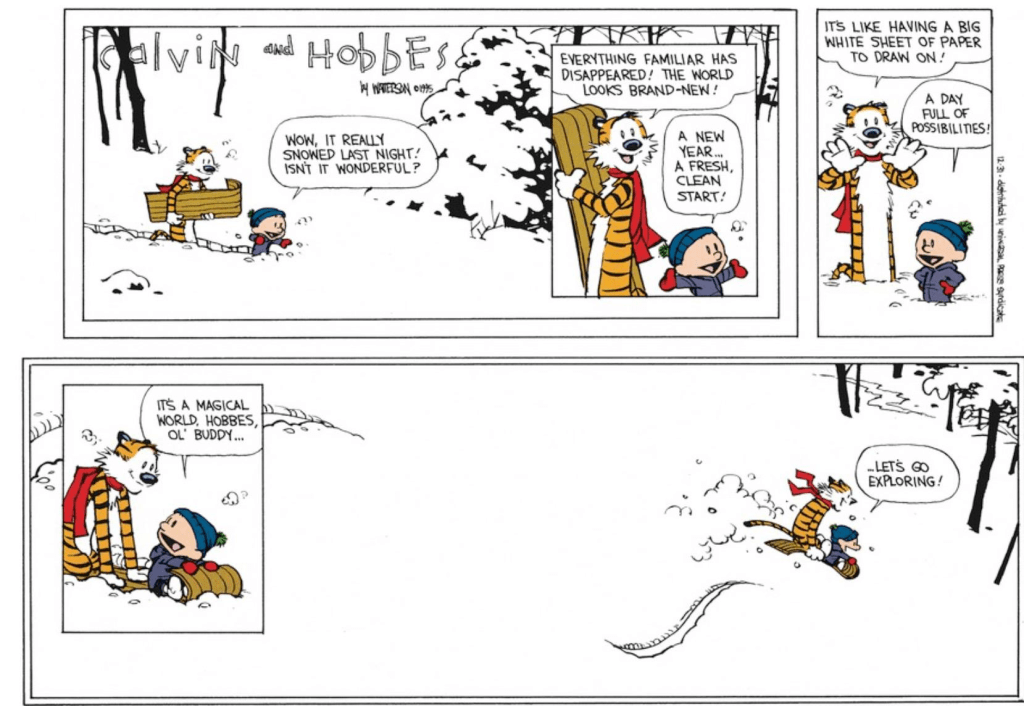
They came to mind as I thought about another couple of explorers today (I am writing this on May 14, 2024). Two hundred twenty years ago today, Meriwether Lewis and William Clark set off with their companions from Camp Dubois (Camp Wood), Illinois, to explore parts of the newly acquired land, the Louisiana Purchase, and to find a water route to the Pacific Ocean. Over the past few years, I have read several books about Lewis and Clark and watched several documentaries about them. I believe most of us, especially those of us in the United Methodist Church, are on the edge of a new land. While many want to go back to the old, familiar ways, some are like Calvin and Hobbes, or like Lewis and Clark, or (dare I say it) like Paul and Timothy and Silas. We are ready to go on to new lands, see what God has out there, and learn what new things the Lord has for us.
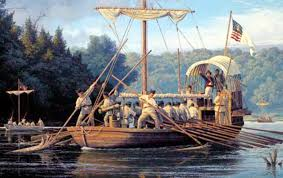
Corps of Discovery setting off, May 14, 1804.
There are some lessons from Lewis and Clark I think would serve all who want to explore what’s out there. Here’s what I’ve picked up-
- Have a partner. There’s a popular saying “If you want to travel fast, go alone. If you want to travel far, go with others.” There was a reason why Jesus sent the 12, and then the 70 (or 72) out in pairs. We need each other. People alone in the wilderness or in the new land will die much quicker than those with a partner. That’s even true in life in general. Married people, or people with a partner, live longer than single people. Don’t go alone.
- Actually, a small group is better than a couple or a large group. Lewis and Clark had 33 people who traveled with them, the Corps of Discovery. Each one had some special skill or gift that added to what they needed. No one was superfluous. (Only one died on the trip, Charles Floyd. He died from a ruptured appendix, and probably would have died if they had been in Philadelphia instead of what’s now Sioux City.) They could have taken more people, but then it would take more energy to keep up with the Corps, rather than exploring and moving forward. Small groups are better than large ones.
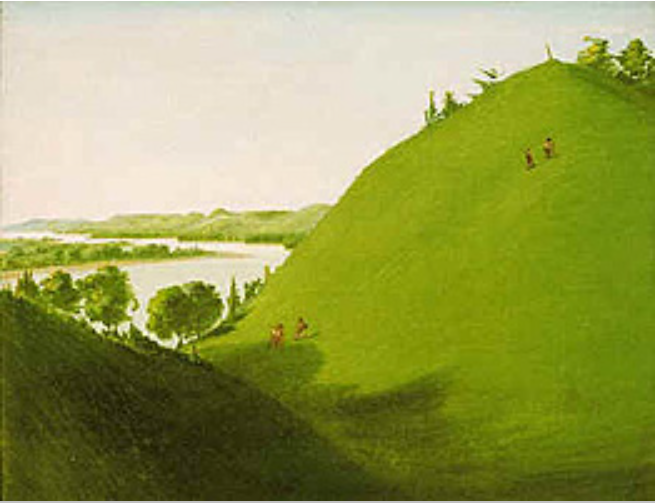
- Bluff where Charles Floyd was buried
- It’s good to have a general goal or destination but be prepared to find things you did not know about. Lewis and Clark and the Corps thought that they could canoe to the Pacific. They did not know about the Rocky Mountains. They had to adapt to new things almost daily. Living with ambiguity was a necessity.
- Learn from the people you meet along the way. Though Lewis and Clark and the Corps were “discoverers” they were not the first people out there. There had been generations of people living in the “new land” and Lewis and Clark were willing to learn from them, as well as share with them their knowledge.
- Sometimes you may have to split up for a while, but if you do, do it with grace and plan to meet later. On their return trip from the Pacific, the Corps divided at Traveler’s Rest on June 30, 1806, with one group going north and another south. The plan was to explore new areas and meet where the Yellowstone and Missouri Rivers come together in North Dakota. The separation was risky, but they were able to cover more area and share with each other when they met again more than a month later.
- Always keep in mind that the destination is not the final goal. There is always new land to explore, and new truths to discover. Imagine what our lives would be like if we said that races should continue to be kept apart, that women should be held in subservience, that children in poverty were meant to be there, and that people dying of hunger are part of God’s will. One of my professors in seminary told me that Christians were called to move from the center of society to the edges, to find not only the people there but find the Lord there. What I have found is that when I think I have arrived at the edge, there is another edge further out. And as scary as it sometimes is, I hear the voice of God saying “Come on. Don’t stop. You can do it.”
Wherever you are in your life, maybe today’s a day to think about who you are traveling with, why you are going, and what you will see and do along the way.
See you out in the new land!
 Michael Henderson
Splendid, Mike. Thank you for this deep but informative reflection. Yes, your words are appropriate and timely for United Methodists. But they are good for everyone.
LikeLike