Longest Night 2023

(Note: I am writing this on December 21, 2023.)

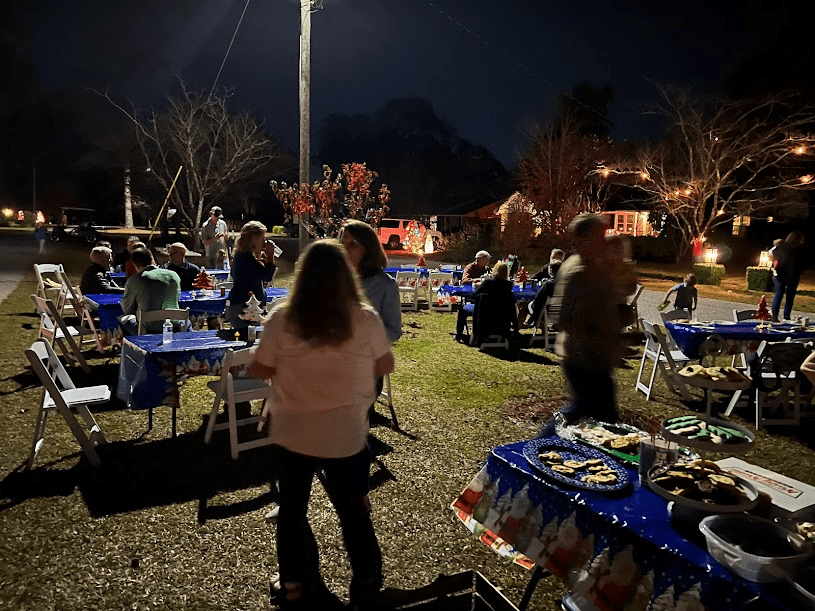
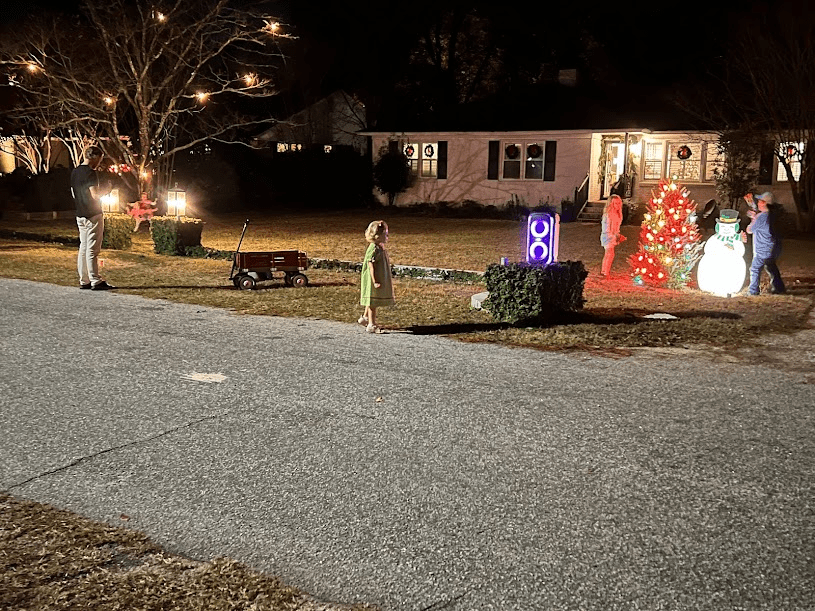
I love the neighborhood I live in, and especially my street. If you are ever in Florence this time of the year (December) take a ride through Forest Hills and especially down Iris Drive. Our street is decorated with every house having a small tree with the old-fashioned C-9 bulbs, and a plywood snowman with the family name on it in every yard. Some have a few other lights hanging from trees, and you can see our Christmas tree through the front bay window of our living room. None of the houses are in the running for the Griswold Award nor would we be on any of the tv shows with homes competing for the best lights. But every home contributes to the atmosphere of the season.

I like the street for other reasons, too. We have a mixture of families. Several years ago we had few families with children on the street. Now we have a lot, so many that we watch out for them all up and down the block. We have a few older retired families (like ours), and middle-aged families doing their best to get by. The yards are kept nice, and the neighbors know each other. At least on a first name basis. And while we care about and for each other, no one is intrusive. We just watch out for each other.

Which brings me to tonight. It is the winter solstice, the longest night of the year in the northern hemisphere. Where I live the sun will set at 5:13 p.m. and rise tomorrow at 7:21 a.m. Which means that we will have 14 hours 8 minutes of darkness and 9 hours 52 minutes of light. For some people, that is a long night.

It has been a hard year for a lot of us. Like many of you, I have lost some dear friends this year. A few to death, a few who moved far away, and a few in relationships that have died. I find on the long night I miss them all.

For some it has been a hard year financially. Though that is not true for Cathy and me, we have some close friends who are really struggling. We do what we can to help them through this tough time, remembering when family and friends helped my mother, my sister, and me in our dark nights.

For some of us, me included, it has been a hard year healthwise. Though my cancer treatment seems to have slowed the growth of my cancer, the treatment itself saps me of energy. And while I can get around okay most days, I often find myself exhausted from normal activities. Not quite what I thought when I retired and planned to walk across the state. Still, I am here.

And many of us are worried about the state of our nation. Living in a democracy is hard, and it appears that many people are ready to turn to a dictatorship. Seeing the possible end of this great experiment in a new way of living is wearing on us all.

And there are those who are fighting things spiritually and emotionally. Loss of faith, loss of hope, loss of vision for our future causes great depression. Suicide rates in the US are the highest since 1941, and suicide is now the number one killer of teens.

All this is on my mind when I wake up at 2 a.m. to go to the bathroom. (All you older guys know what I am talking about.) Before going back to sleep, I go sit in our living room and look out past the Christmas tree and see the lights from all the trees on the street. They somehow seem brighter in the late-night darkness. And I think of the lights in the world around me. Friends who have stuck close and continue to get closer. Those who are following Christ in the United Methodist Church and are open to people with different opinions. The fact that I have all the things I need, most of the things I want, and am able to help others in this time. My doctors, nurses, pharmacists, and therapists who not only treat me like a patient, but more like a friend. Having Cathy to help me through all these days, and sticking by me in long days and long nights. And the people who are working, striving, praying, voting to keep our country united. And those who are there for the ones who are struggling deep down, who have listening ears and open arms for the neediest around us.

And I remember, as I continue to look at the lights down the street, that as we focus on the fact that all of us live together on this little blue ball, we can make through. We just need a reminder of the light that lives within each of us. And eyes to see it in the darkest of times.

So, my friends, on this dark night, may you see the lights around you, and find the light within you.

…5…4…3…

August 2, 2039.

That’s the date I will die, according to this World Population Website.

Oh, it gives all kinds of other equally cheerful information. Like the number and percent of people on the planet younger than me (as of this writing 7,571,041,802; 94%) as well as the much smaller number and percentage older (502,705,603; 6%). And, for even more enjoyment, you can watch the number on the left side constantly get larger, while the right side gets smaller.

Significant dates are given. My birthday- which is supplied by me (May 28, 1953) and the date I turned 18 (May 28, 1971). No big surprise there. Some interesting dates were the day I became the 1 billionth person on the planet (November 21, 1964), along with 2 billionth (November 10, 1974), just a few days shy of ten years later. Three billion came about 6 months faster, April 30, 1984. Four billion on September 30, 1992, one year and seven months faster. We hit five billion seven years and ten months later, on July 23, 2001. Six billion came along on March 4, 2010, slowing down the billion new person rate to 8 years, 9 months. Seven billion came along on July 3, 2018, 8 years and 4 months later. I’ll be the 8 billionth person on this more crowded blue ball on February 17, 2028. Seems we’re slowing down a little. I’ll make nine billion on May 13, 2039, celebrate my birthday two weeks later, and then check out about 2 months after that.

Turns out if I lived in Canada, I’d live a little more than a year more. Zimbabwe would take me out 6 years earlier. People born on my birthday in Australia, Norway, and Japan are all going to outlive me. Almost all of Asia (except Japan), South America, Africa, and a large amount of Europe will pass before my very eyes. I have my ideas about some of the places, but on a lot, I wonder why.

People have asked me from time to time if I would like to know when I would die. I usually told them I’d rather know where rather than when. Because then, I wouldn’t go there.

Seeing a date, even though it is just a statistical average, brings some things home. It’s less than 16 years away. Sixteen years ago was 2007. Doesn’t seem that long ago.

I heard someone say that it isn’t that life is so short, it’s that death is so long. The great 20th century philosopher Woody Allen once said “I don’t want to achieve immortality through my work. I want to achieve it through not dying.” He also said (my favorite quote), “There are worse things in life than death. Have you ever spent an evening with an insurance salesman?”

Stoic philosopher Seneca said, “It is not that we have a short space of time, but that we waste much of it.” When I think that I probably have less than 16 years left, and there is so much I have not seen or done that I would like to see and do, I feel like a kid at Disneyland who has only one day and wants to ride every ride and see every show, yet knows he will not only not be able to, but will spend a lot of that time standing in line. Tempus, it seems, is fugiting.

I’m a follower of Jesus. And because of that, I believe that my life (and yours) will go on after this earthly veil has been torn away. But I am not really in a hurry for the tearing. Recently a few close friends have died. They knew they were dying, and were ready, even anxious, for the transition to their new home to come. While I am not afraid of death, and I know it must come, I don’t have that “I can hardly wait to get to heaven” attitude some have expressed. I like it here. Like it a lot.

In the Hebrew Scriptures, a psalm attributed to Moses has the line, “Teach us to number our days so we may gain a heart of wisdom.” (Psalm 90:12) Obviously, none of us knows exactly how much longer we will live. An accident, disease, or heart attack may take me out tomorrow. Or I may live into my 90s, like Jimmy and Rosalyn Carter. Regardless of the unknown length, like the Carters, I don’t want to waste my time. There’s more to do than stand in line.

Table Talk

The season is upon us! From next Thursday, November 24, 2023, until February 11, 2024, we will find all kinds of ways to feast. We start off with Thanksgiving and all the things that follow on the weekend. We quickly move into Christmas, with parties, family gatherings, office celebrations, church meals, and just plain pigging out on peppermint and chocolate. Then New Year’s, with more feasting on whatever your local custom is. (Ours is black-eyed peas, greens (collard or turnip), sweet potato in any form, and ham!) We then put on loose-fitting clothes and make our way to Super Bowl Sunday, where wings, barbecue, chips, dips, and whatever one-handed food we can make ends up being eaten in front of the tv. It’s a good thing Ash Wednesday starts three days later. For those who celebrate Lent, we can decide to fast, or at least to cut back.

Wait a minute! That’s Valentines’ Day. And I must celebrate with a special meal with my honey. Reckon I can get a special one-day deferment from the preacher? Oh yeah….I am the preacher. No problem.

Whenever this time of the year rolls around, I think of the tables I’ve sat at for all the meals. Growing up, most of these meals would be at my mother’s family homes (her two sisters, Louise and Pauline). Invariably, the adults would sit at “the big table,” while kids would sit at card tables. We had to sit at them until a space opened at the big table due to someone going to heaven. It was okay. It was what we were used to. No one had a home with a dining room big enough to seat upwards of 14 people. I was about 16 when I finally got to sit at the big table.

I’ve sat around all kinds of tables in my life. Dining room tables, kitchen tables, lunch room tables, conference tables, lab tables, picnic tables, and even tiny TV tables (the worst of the lot). We’ve often described the Kingdom of God as a giant banquet table where there was room for all. Though I have rarely used an actual table for communion, we have often called the kneeling rail and altar the communion table, and I have always invited everyone who would come to the table to come. (If they could not come for some reason, I would take the bread and wine to the people at their seats. But it always seems to feel better to eat that meal next to other people kneeling with you.)

Lunchrooms in middle and high schools are a great place for sociologists to study human grouping behavior. One of the most unsure times of any kid’s life is the day they first walk into the lunchroom and wonder where they will sit, who they will sit with, and if they’ll be accepted.

Several years ago, I experienced one of the maddest times I have had in my ministry. The youth group of the church I was serving was invited to meet with a group of a different denomination. I thought it would be a great thing for both churches. When they returned, I found that they had a good time, singing, playing, sharing. Until the closing worship. The host church had communion, and the youth and counselors from my church were told they could receive a blessing, but not communion. So, while the other kids got bread and wine, my kids got to look on. It’s like going to someone’s home for a dinner party, and when time for the meal comes, you are told you can be a part of the prayer but not the meal. I went ballistic. I probably said some things that were not very kind. But these were my kids. Actually, these were God’s kids. Brothers and sisters of Jesus.

In the churches I pastored, I worked hard to overcome this. We emphasize that there’s room at the table for everyone. One of my favorite songs is by Carrie Newcomer, where she sings about it. And people who have been excluded from decision-making, who have been denied power and authority, often say they want a seat at the table. Women and all types of minorities will testify to this.

One of the most interesting tables I have seen was at Cayce United Methodist Church. It was donated to the church by a business in the area. It was huge and trapezoidal. It would probably seat 15 people. One end was very narrow, and the two long sides spread out as they went to the far end. It took me several years to figure out why the table was that way. Finally, it dawned on me. Wherever you sat, you could see everyone else without having to lean forward and block someone else’s view or voice. Clever table.

Still, there was a head to the table. The narrow end was considered the head.

The story is told of one of our former bishops who was visiting a church for one of their grand occasions. They had a luncheon following the service. The bishop served his plate and was about to sit at one of the tables when one of the church leaders said “Bishop, come up here and sit at the head of the table.” To which the bishop replied, “Wherever I sit is the head of the table.”

And that’s the problem, isn’t it? Even if there were room at the table, there’s always a head of the table. I wonder if the disciples argued about who got to sit by Jesus at their tables. Even if you can see everyone, there’s still some kind of pecking order. Jesus mentions it in one of his parables.

I’ve been reading Sarah Bessey’s book, Jesus Feminist. (Why hasn’t someone told me about her? Her writing is incredible! I’m going to have to buy another highlighter and a new tin of book darts just for this book!) She starts off by saying that maybe the table is not a good metaphor for our life together in Christ. Rather than a table, how about a fire pit with plenty of chairs that can be moved and arranged and changed as needed. Sitting out under the dome of the night sky, drinking good wine or strong tea (she’s Canadian, so tea is very important), and sharing life together. Sounds pretty good to me.

Years ago, I watched the movie Green Pastures. It’s a 1936 movie with an all-African American cast. It tells the stories of the Bible from the viewpoint of rural Black people. Despite some of the stereotypical things in the movie, it has some very good and very moving scenes. One of the opening scenes shows a bunch of people standing around a park filled with live oak trees, what you might find on John’s Island. The camera goes around and you begin to notice that some of the characters have wings. They are angels. All of the people, it turns out are in Heaven. After a few minutes, a distinguished-looking man in a coat with tails, tie, and hat walks out among the crowd. All the people and angels turn to look at him. He is the Lord. He looks at everyone and says, “Let the fish fry begin!”

That’s what I think the Kingdom of God is like. There may be a table laden with all the best food. It may be like a fish fry or a barbecue. It’s got plenty for everyone. You pick up a plate, load it up, start eating and talking with whoever is near you. Then you find a new group to eat with. Then another.

The table, as good as it may be, still speaks of law, hierarchy, status, and prominence. Is it any wonder that C.S. Lewis, in his wonderful story The Lion, The Witch, and The Wardrobe, has Aslan, the Christ figure, sacrificed on a table. And when Aslan is resurrected, the table is broken, never to be used again. The breaking of the table was not just so sacrifices could never be made again, but so that all that went with it was done away.

Tables may be good. But they aren’t the Kingdom.

Atonement

Note: This is part of an ongoing inner conversation I have dealing with questions about my faith. You might want to read my post A Questionable Faith if you have not.

Why would someone, especially Jesus, have to die for something I did? How does that make things better? How does that satisfy justice?

I was raised on what most people call the substitutionary theory of atonement. That is a fancy way of saying “You did something wrong, it has to be paid for, and someone else paid it.” And it didn’t matter what was done, the penalty was death. Kill another person? Someone has to die. Cheat on your spouse? Someone has to die. Steal a 25-cent plastic toy? Someone has to die. Tell your mother you had brushed your teeth when you hadn’t? Someone has to die.

It was based primarily on the Christian Scriptures “All have sinned and fallen short of the glory of God” (Romans 3:23) and “the wages of sin is death.” (Romans 6:23) Sin was considered doing something wrong, which separated us from God, therefore ensuring we would not go to heaven (where God is) but instead go to Hell (where God is not), unless somebody who was innocent paid the penalty for me (Jesus). 

The Hebrew Scriptures tell us that each person is responsible. “Fathers shall not be put to death for their sons, nor shall sons be put to death for their fathers; everyone shall be put to death for his own sin.: (Deuteronomy 24:15)  The prophet Ezekiel says “The person who sins will die. The son will not bear the punishment for the father’s iniquity, nor will the father bear the punishment for the son’s iniquity; the righteousness of the righteous will be upon himself, and the wickedness of the wicked will be upon himself.” (18:20) And Jeremiah echoed Ezekiel- ““In those days they will not say again, ‘The fathers have eaten sour grapes, And the children’s teeth are set on edge. ‘ But everyone will die only for his own wickedness; every man who eats sour grapes—his own teeth shall be set on edge.” (31:29-33)

But Christian theology, at least this version of it, says that Jesus took the punishment so we do not have to.

There are several other ideas behind this. The first is that God, being holy and pure, cannot be in the presence of anything that is not holy and pure. It would “contaminate” God, as it were. And since we are unholy and impure, God cannot have us in God’s presence. The Hebrew Scriptures are filled with warnings about approaching God and not being holy and pure. Christian Scriptures often echo this theme.

But I question this. If we are creations of God, even if we go our own way, why would God not want us to be in God’s presence? Jesus told a parable about a father who had a son who took his inheritance early (treated his father like he was dead), left home, and squandered his inheritance. When the son came to his senses, he decided to go back to his dad. He was sorry for what he had done, and was willing to take whatever the father meted out to him, he just wanted to be back. In the story, which Jesus tells as a way of talking about God’s relationship with us, the father sees the son coming while the son is a long way off, and runs to meet him. The only way you see someone a long way off is if you are looking for them. The father had been looking for the son, wanting him to come back. And when the son starts into his apology, the father basically ignores it. The son is still pretty much “unholy and impure,” yet the father welcomes him in. Seems like Jesus was trying to tell us that maybe our understanding of God is majorly wrong. Maybe God wants us back no matter what.

The other idea is atonement means to bring back together something that has been broken, especially a relationship. What if Atonement is not about paying a penalty for something we have done that is wrong, but is more about being together through all that we go through?

The one thing all humanity has in common is death. Everyone will die. It is the “great equalizer.” In some churches a pall, a large white cloth, is placed over a coffin, hiding the intricacy or the simpleness of the coffin. Everyone is the same. Plain pine box or titanium sarcophagus, we all are the same.

And while death is the common denominator of humanity, it is the defining difference between humanity and divinity. God, by very definition, cannot die.

Part of Christian theology, a part that is not emphasized enough, is that since humanity cannot lift itself to divinity, the Divine becomes human to the point of giving up everything that it means to be divine and taking on death. Paul, an early follower of Jesus, put it this way- Let the same mind be in you that was[a] in Christ Jesus,

 who, though he existed in the form of God,
    did not regard equality with God
    as something to be grasped,
but emptied himself,
    taking the form of a slave,
    assuming human likeness.
And being found in appearance as a human,
    he humbled himself
    and became obedient to the point of death—
    even death on a cross. (Philippians 2:5-8)

So, perhaps Jesus’ death was not a price God paid to cover up our wrongdoings. Instead, it was God saying that God has experienced everything God’s creation has and will experience. It’s our way of knowing we are not alone in anything.

Atonement becomes less of a way of paying for our sins, and more of a way of experiencing life together. We are “at-one” with God because God has become one of us.

I used to sing an old song that went 

“I had a debt I could not pay,
He paid the debt He did not owe,
I needed someone,
To wash my sins away.
And now I sing a brand new song,
“Amazing grace” all day long,
Christ Jesus paid the debt,
That I could never pay.” 

But perhaps a better song would be:

“Oh, I’ve heard a thousand stories of what they think You’re like
But I’ve heard the tender whisper of love in the dead of night
And You tell me that You’re pleased and that I’m never alone.” (Good Good Father, Chris Tomlinson)

And if this is true, then what am I afraid of?

Names

For a long time, I had trouble with my name. My middle name is the name my father went by. I used to not tell people. It dealt with my anger towards my father (which I have mostly gotten over, but that’s a story for another time).  However, it was my first name that gave me trouble. Michael. Or, as most people call me, Mike. Not a bad name. It means either “lover of God,” or “one who is like God.” Comes from the name given to one of the archangels. Quite a bit to live up to. But that was not the problem.

The problem was its popularity. From before I was born until I was in my early 50s, it was the most popular name given to boys in America. And whenever you hear your name, you usually turn to see who’s calling you. Walk down a crowded street and shout “Hey Mike!” and see how many people turn around. When someone knows your name, they often have some kind of power in your life. Back when telemarketers used to call me at my churches, they would start off using my name as if they had been sitting in the front pew for the last few years. And it would make it harder for me to politely hang up the phone and get back to work.

Frederick Buechner wrote that when Moses wanted to know the name of the god who was talking to him at the burning bush (Exodus 3), it was so that he could have some power over that entity. God, of course, was not fooled. He gave him the answer “YHWH”, because the Hebrews did not use vowels. It could be translated YaHWeH- which means “I am who I am,” but also means “I am who I was“ and “I am who I will be.” Later God says, “Just say ‘I Am’ sent me.” And God hasn’t had a single moment of rest since. (I often think it could be pronounced “YooHWooH”.)

Names are also a sign of caring and attachment. My wife (name: Cathy) volunteers at the Florence Area Humane Society. She works mostly with the horses brought into their horse farm, but some of the larger dogs end up there. Everyone of them has a name. If they don’t have a name when they are brought in, they are given names immediately. Cathy comes home and talks to me about Rocco, Waylon, Willie, Reba, Kiera, and all the others. She cares for them more because she knows their name.

In the second creation story in Genesis (chapter 2), God brings the animals to Adama (the human God had created) and tells Adama to name them. That puts us in a relationship with them. We are to care for them. Bob Dylan wrote a song about it. The Hebrew scriptures tell us many times that God knows our name (e.g. Isaiah 43:1, Exodus 33:17, Isaiah 49:1), as well as the Christian scriptures (John 10:3, Luke 10:20, Revelation 2:17, to name a few). Not only does God know our names, God has named the stars (Psalm 147:4). This means God cares for all of creation.

Listening to the news about war, I thought about the casualties. Those in charge of making the decisions about going to war are usually told the estimated number of people who will die. It is usually given in percentages. “General, if we send in 10,000 troops we estimate we will suffer only 4.3% loss.” Doesn’t sound like much. Until you realize that its 430 people. Still, that sounds doable. But what if we said “Here’s the names of those most likely to die.” Even more, what if we added information, and photos. “Here’s John Brown. He’s the youngest son of his parents. He’s engaged to Sue and is planning on getting married when his tour of duty is up. He’s being sent in the front lines because he is a private, and he is more likely to die.” We often tell the story of the person after they are killed. What if we told their name beforehand? Reckon we would work harder to find ways other than war to solve problems? (Just a thought. Not looking for an argument.)

Farmers usually do not name their livestock. It makes it harder to butcher and eat JoJo the cow, Porky the pig, and Henrietta the hen. And they especially do not let their children name the animals.

Children (and adults) will often give names to inanimate objects, too. A young girl names her doll Susie, and it becomes more precious than unnamed dolls. A budding baseball player names their glove the name Snagglepuss, and they must have it at their games if they are to play their best. A teenager gets their first car and names it Prince (the name of my first car, a Plymouth Valiant), and it becomes important to them. Even a toddler will name their pacifier Binky, and no other pacifier will do.

When I lead prayer in church on Sundays, I try to pray for people by name. Not just “all the sick,” but for “Dora, Carl, Frances, and Cindy.” Names mean something. Something special. Don’t think so? Call the person you’re in a close relationship with the wrong name, and see what happens.

I’ve been going to Manna House, a local feeding ministry in Florence. There were about 40 people standing in line when I was there the other day. One of them talked with me. He told me his name, John. Now, I can’t stop thinking about him.

I wonder if it’s that way with God, who knows our name?

A Questionable Faith

“There are no bad questions.” My mother told me that when I was 7 years old. We were sitting at the kitchen table. I had just asked her “if someone were hypnotized to believe they were Superman, could they lift a building?”. I told her that someone at school had told me that was a stupid question, and my mother, rather than using the word “stupid,” gave me that advice. Since then I have been asking questions.

Back in the 1980s (which doesn’t seem that long ago to me, but it does to most of the world today), a friend had a bumper sticker on her car that said “QUESTION AUTHORITY.” Since she was a counselor, I asked her if that meant she was an authority on all questions. She patiently explained to me that we should constantly question those in authority, or at least those who loved being in authority. Which I have also been doing most of my life.

And sometimes being in positions of authority myself, I have been questioned by those around me.

For most of my life, I have been a minister. For 44 of my 70 years, I have administered the sacraments, ordered the life of the church (as much as it can be considered ordered), and led people in helping others both near and far. But mostly I have preached. My sermons have not always been that long, usually 18 to 22 minutes. But over 44 years, with an average of 52 sermons a year, that’s 2,288 sermons, lasting about 45,760 minutes (or 763 hours, or 32 days nonstop). It’s because of the “inevitable occurrence of the sabbath,” as preachers are wont to say. No matter what else this week has held, Sunday’s coming and I better have something to say. Looking out over my sermons from the past almost half-century, I acknowledge that I have asked more questions than given answers.

I’m not in bad company.

Jesus himself asked 339 questions according to the gospel writers. He was asked 183. He answered only 3.

That’s how I dealt with most of the Scriptures I used, both the Hebrew Scriptures (what many call the Old Testament, though my Jewish friends would beg to differ), and the Christian Scriptures (what many call the New Testament). I read the Scriptures and asked “Should you really desire people to take babies and dash their heads against the rocks, even those of your enemy?” (Psalm 137:9) I read the words of Jesus and asked “Did he really call the woman who was begging him to heal her daughter a dog?” (Mark 7) I hear people say things like “God has everything under control,” and I ask “Did God control that drunk driver who hit and killed the man standing on the sidewalk at the corner of the church property? What kind of god would do that?”

And, as in so many things, I find I do not have the answers. So I just keep asking the questions.

Poet Rainer Maria Rilke is probably most well known for his advice: “Be patient toward all that is unsolved in your heart and try to love the questions themselves, like locked rooms and like books that are now written in a very foreign tongue. Do not now seek the answers, which cannot be given you because you would not be able to live them. And the point is, to live everything. Live the questions now. Perhaps you will then gradually, without noticing it, live along some distant day into the answer.” (Letters To A Young Poet)

And that’s what I’ve tried to do most of my life, live with the questions.

One faithful church member who had endured my sermons for a couple of years approached me one Sunday after worship. From our previous conversations, I knew he had a much stricter understanding of his faith, and was not comfortable with how I expressed mine. Still, we got along and talked, ate meals together, and tried to help our community whenever we could. But he was more than a little upset at some of the questions I had raised that day. He said, “You know, your faith is questionable.”

Turns out, he’s right.

(Note: From time to time I am going to post some of the questions I have dealt with, and my thoughts, if not answers, about them.)

Smarter

Okay, I admit it. I am a logophile. I love words. I use them all the time. Maybe you do, too. Without them, I couldn’t tell you how I felt about them.

Enough of that. One of Steve Martin’s early jokes was him standing in front of people and saying, “Some people have a way with words and other people…..(long pause)….oh, not have way.” Every Saturday I listen to an NPR radio show, A Way With Words. The hosts answer the phone with “Hello. You have A Way With Words.” I love that!

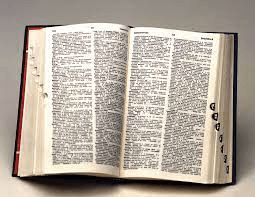
I subscribe to several “word of the day” emails, and I am always writing down new words in the Field Notes pocket notebooks I carry around with me. One of the largest and nicest gifts my wife has given me is a Random House Webster’s Unabridged Dictionary. It is huge and weighs about 8 pounds. I use it to look up words because when I open it to a page, there are other words I may discover. That doesn’t happen with Dictionary.com.

Recently I was at Barnes and Noble and saw in their discounted book table a volume titled “1,200 Words You Should Know to Sound Smarter” by Robert W. Bly. It was only $3, so it now lives at home with me. It is basically an abridged dictionary with words, definitions, and quotes with the word in it. I read a page each day. Some of the words are ones I have known for years, but occasionally I run into a new one. For instance, I am now in the I section, and the page contains the following words: iconoclast, ideologue, ignominious, imbroglio (I knew all of those), immure (a new one!), immutable, and impalpable (knew those, too). Since you’re reading this online, I’ll not take up the time with the definition of immure.

This is not purely an academic love of language. I am an avid Scrabble and Words With Friends player. I have several ongoing games online with a couple of good friends. We all play for blood. I’ve lost a few pints, but I occasionally win, and the thrill of victory is….well…..victorious.

Bly claims that these words will make you sound smarter. I do not want to sound smarter. I want to be smarter. And those are two very different things.

Like many people today, I listen to a variety of podcasts. I’ve found that they generally fall into two categories. The first is where one person, usually considered by himself or herself to be an expert in some area, talks about their area of interest. This kind of podcast is usually done by preachers, politicians, political pundits, and sometimes comedians. As I listen to most of those, I do not find the people to be that smart. They usually are just saying the same thing repeatedly. There is no conversation. No discussion with those of differing views. Basically, no new information.

By the way, you do not need to point out the irony to me that a blog post is essentially the same thing. I’m trying to figure out how to do better.

Then there are the ones where there is a host and a guest, where a conversation takes place. And it is on these where I hear people who not only sound smarter but are smarter. One is Carey Nieuwhof’s Leadership Podcast. I have been listening for several years and there is one phrase that I hear in every podcast, usually several times. It comes not from Nieuwhof, but from his guests. That phrase is “That’s a good question.” Nieuwhof is smart not because he has a lot of good information (which he does) but because he has learned the art of asking good questions. Not questions with predetermined answers, like the ones in the Hillsdale College “polls” that pop up on social media. They are designed to get the answer that the College is looking for. They are like most salespeople, who ask you questions to guide you to their predetermined goal. Nieuwhof, on the other hand, asks questions that can lead to new understandings, not only by us but by him. Smart.

And I love to listen to The Hidden Brain podcast with host Shankar Vedantam. There is a phrase I hear several times on each of his podcasts. This time it comes from him, the host. It is “Tell me more. Help me to understand.” He is looking for something new.

(I highly recommend both podcasts.)

And maybe that’s the key to actually being smarter, rather than just sounding smarter. You continue to learn new things, to grow, to expand.

Years ago, an angry church member told me she didn’t come to church to learn anything new. (We had prayed the Lord’s Prayer in Spanish that Sunday. We had a large group of Spanish-speaking people with us that day and we wanted to do what we could to make them feel welcome.) So many people have decided that they already know everything they want to know. So they stop growing.

And this world is so big, and so wonderful, and filled with so many glorious things, that doesn’t sound very smart to me.

Like What?

The couple sat on the sidewalk of The Manna House and looked at me as I approached. I had a Bible in my hand, so they asked “Are you a preacher?” Yes. “Can you help us?” They were a rough-looking couple. Life had not been easy or good for them, and they showed it. All their worldly possessions were in a grocery cart next to them. They were waiting for lunch to be served.

(Photo is a stock photo. Not the couple.)

I looked at them and said, “I’m sorry. I can’t.” I walked on by and into the mission site.

A friend asked me to come to The Manna House to bring a devotion. I knew of its ministry and had supported it through the church I served prior to my retirement. But I had never been there.

As I walked into the building and was given a tour of the facility, it all came flooding back to me. Forty-four years ago. Tuesday, September 4, 1979. My first day of a year-long internship as a chaplain at Spartanburg Regional Medical Center.

I was one of seven chaplain interns for the year at the large hospital. It was part of my seminary training. The senior chaplain had given us some general rules about the hospital, and then led us on a tour. We each were assigned a medical wing where we would serve for the entire year, and we would rotate through the various specialty units (Neuro, Psych, ICU, ER, etc.). After lunch, he suggested that each of us go to our wings, introduce ourselves to the nurses (they were expecting us), and check on the patients. My medical wing was L-shaped, with an elevator at each end of the L, the nurse’s station in the crook, and rooms on each side of the hall.

I stepped out of the elevator and through the open door of the first patient room. The patient, a middle-aged woman was still in her street clothes but had checked in. The requisite wristbands were on her arm. She was standing by the window, looking out at the parking lot and woods across the street.

I walked up to her and stood there for a second. She glanced at me, saw the white lab coat I was wearing, and started talking to me about her upcoming surgery. She did not see the chaplain emblem or my name. Thinking I might have been a doctor or medical intern, she started asking me some questions. I said, “Excuse me, ma’am. You may be a little confused. I am not a doctor. I’m a chaplain.”

“A chaplain!” she said. “I’m not going to die, am I?”

“Oh, no ma’am,” I said. “At least not any sooner than most of us. But we chaplains do things other than visit people who are dying.”

“Oh yeah,” she said. “Like what?”

I didn’t know. She was my first patient on my first day. What was I supposed to do? What could I do?

Those feelings came back as I was given the tour of The Manna House by the director. The Manna House feeds people in a very low-income and homeless area of town. The director told me they feed over 7,000 meals per month. Breakfast and lunch every weekday. That’s about 320 meals a day. Breakfast is served at 8 and lunch begins at 10:30. Because of the COVID virus being rampant in this underserved population, the meals are currently being served through a serving window to the outside in to-go boxes. She hopes to soon be able to have folks indoors, especially as the weather gets colder.

People were already beginning to gather in the parking lot. I asked her what she would like me to do. She said, “Anything you like. Read scripture, have a prayer, tell a devotion. Whatever you want.” I asked what they had been doing before, and she told me that they had not had anyone do anything like this for the last year and a half. Whatever I wanted to do would be fine.

I thought about the couple on the sidewalk. I knew I could not give them money. Not only did I not have any, but it would not be good for The Manna House, and maybe not for the couple. I did not have the time, knowledge, or wherewithal to help them with whatever their problems were- a hard life, accidents, bad choices, addictions, or whatever had brought them to this place. I wished I had the power of Peter and John from the story in Acts 3, where they told the lame beggar to rise up and walk. But, alas, that was beyond me, too.

I kept hearing that woman from almost half a century ago. “Like what?” I didn’t know.

I walked outside and back to the sidewalk where they were sitting and waiting. “I’m sorry,” I told them. “I really don’t have any money to spare, since I’m retired. And there’s not much else I can do. But can I pray for you?” They looked at each other and said yes. I asked their names, knelt beside them, put a hand on each one’s back, and prayed for them by name. I asked God to provide for them, to give them hope and a new life, to release them from the past, and to help them during their hard times to see the beauty of the day. When I was through, they thanked me, and then asked if I knew anyone who could get them a motel room. I said I was sorry, but I didn’t know that, either.

“Like what?”

And that’s what I did. I walked around the parking lot, asking those standing and waiting if I could pray for them. Most said yes and told me their names. Some of them would then ask for more help. Which I did not have to give.

I knew that thanks to The Manna House and all who support it, they would have a meal for the day. And maybe that’s all we can do.

But as I drove off, I kept hearing that voice.

“Like what?”

The Harder Way

Like most of the world, I’ve been thinking a lot about war lately. Ukraine and Russia. Israel and Gaza. There are probably a few dozen others going on at the moment that aren’t getting much press. And it seems to be one of the rare moments in history that our country is not directly involved in one somewhere. (Give us time.)

And I’ve been thinking about peace. Peace is not the opposite of war. War is one way of life, peace is another. Just as vegetarianism is not the opposite of the paleo diet, they are two different ways. A.J. Muste wrote “There is no way to peace. Peace is the way. We cannot have peace if we are only concerned with peace. War is not an accident. It is the logical outcome of a certain way of life.”

Peace is not an easy path. War, though horrific as it is, is the easier path. You simply figure out how to beat the other into submission. Or you get beaten into it. Formerly whoever had the largest army had the advantage. That is no longer true. Because war is a method or way of life, it never ends completely. World War I was called “the war to end all wars.” Where’s my sarcasm emoji? Simon Sinek would call it an “infinite game.” Although I doubt it will happen, Israel may destroy Hamas or Hamas may destroy Israel, but the clash will continue. In World War II, the one that followed the war to end all wars, the Allied countries beat the Axis countries. But Nazism is still alive and well in Virginia, Michigan, and at Kanye “Ye” West’s home. To quote an old song, “And the beat goes on.”

The movie War Games ends when the military computer that is planning on winning a “game” of war by launching nuclear missiles, stops. Leaves the game. WOPR, the computer program, says (prophetically, I think) “the only winning move is not to play.”

Which, according to Sinek, is the only way to end an infinite game. (By the way, his excellent book is not about war. It just happens to fit in it.)

Jesus was confronted by crowds and soldiers in the Garden of Gethsemane, to be carried off to be crucified. His disciples were ready to fight, pulling out what few weapons they had. Jesus tells them to put them away. Instead of fighting, he said he could have called on God and God would have sent more than 12 leagues of angels to fight for him. (Matthew 26)

Those early hearers of this story knew Jewish history. They knew that King David had 12 divisions of soldiers to protect him. Each division was 24,000 men. That’s 288,000 soldiers. It still did not stop them from having war. It was so commonplace that 2 Samuel 11 casually starts the story about David’s seduction of Bathsheba with “In the spring, at the time when kings go off to war…” It was just what they did.

It seems to be the same for us today.

Jesus chose a different path. Rather than calling for the angelic army, and really only one angel would have been enough, he chose to go to the cross. It was the harder way.

For my friends who say that this is why Jesus was sent, and it was his mission and his alone, I gently remind you of what Jesus himself said. “If anyone will follow me, let them deny themselves, take up their cross, and follow me.”

G.K. Chesterton once said, “The Christian ideal has not been tried and found wanting. It has been found difficult, and left untried.”

Peace is the way. But it is the harder way.

First-Person Singular?

First-Person Singular?

(Warning: I am probably going to get into trouble for this one.)

Several years ago, I went to a conference to discuss the issues going on in my church denomination. We were given name-tags and encouraged to put our name and our preferred

pronouns. I had never heard of that before, much less considered what my pronouns might be. But I reckoned if that would make people feel more comfortable, then it was an act of welcome and hospitality. I admit I struggle with some of it, especially using a plural pronoun for a singular person. “I ran into Mike the other day at the grocery store. They was (were?) buying groceries for the week.” But I should not be thrown off too much. After all, I’m from the south, where “y’all” is singular and “all y’all” is plural.

I was telling Cathy about it as we talked on the phone that evening. She asked what pronouns I had put on my name-tag. In my usual smart-ass way I said, “I. Me. Mine.” Cathy responded, “Yep. It’s all about Mikey!” She has said that many times before. “It’s all about Mikey. And the sooner everyone knows that, the better it will be for everyone.” Sometimes she jokes. Other times, I’m not sure.

For some reason I was thinking about pronouns as I prayed the Lord’s Prayer. It dawned on me that there are no first-person singular pronouns in the prayer. Not one. This prayer is important. Of all the things the followers of Jesus could have asked him to teach them- how to feed multitudes, heal the sick, raise the dead, cast out demons, walk on water, calm the storms, speak truth to power, etc.- the only thing they asked Jesus to teach them was how to pray. And for one of the few times in the gospels, Jesus gives a direct answer. (Most of the time he either asked a question or told a parable, making you think and work out things yourself.) He said, “When you pray, say ‘Our Father….’”

I learned that prayer when I was a child, and I have prayed it daily for most of my life. We pray it together in the churches I serve every Sunday. Some other churches, preachers, denominations do not use it literally. They say it is a “model for prayer” and not meant to be prayed literally by Jesus’ followers today. Oddly enough, most of those same people claim to follow the Scriptures literally. And Jesus did not say, “Pray like this. He said, “When you pray, say…” So we do.

I find that saying it together regularly, over time, makes me ponder the prayer and all its implications. I often compare it to the other prayers we hear, see, and use in worship or in our private times. What strikes me is that so many of our prayers are in the first-person singular. “Lord, thank you for your grace to me. Help me to find ways I can serve others. Bless my family, my friends, my country. Turn me away from the things that harm others. Guide me in your truth. In Jesus’ name I pray. Amen.” Not a bad prayer. But it centers on I, Me Mine. Jesus didn’t teach us that.

We have personalized our faith so much that many people either do not know or have forgotten that it is more corporate than individual. People often ask me “Have you accepted Jesus as your personal savior?” Though I usually do not tell them this (I don’t want to spend the next several hours in a theological discussion that will probably not change anyone’s mind), I want to respond, “Actually, I have accepted him as savior of the world.” John, one of Jesus’ closest friends and followers, put it this way- “He is the atoning sacrifice for our sins, and not only for ours but also for the sins of the whole world” (1 John 2:1-2) Even the Hebrew Scriptures tell us that “The earth is the Lord’s and all that is in it, the world, and those who live in it,” (Psalm 24:1)

This is not easy for me. Following Jesus makes me include people I do not want to include. There are some in the Christian tribe who spread falsehoods about me and others in the hope of harming, even destroying, our part of the family. Yet, they are part of the Our in the Lord’s Prayer. There are some who exclude me from the ranks of the believers and followers, but they are part of the family that Christ includes. There are some who want to act in ways that hurt others who do not believe as we do, who want to destroy their humanity, if not their very lives. Some who have given themselves over to believing a lie as if it were the truth. And Jesus tells me that they are as much as part of his family as I am.

So, I guess pronouns do matter. And maybe I, Me, Mine are not the most important. It’s just that living in the Our is hard to do.