Happy St. John’s (the Baptist) Eve!

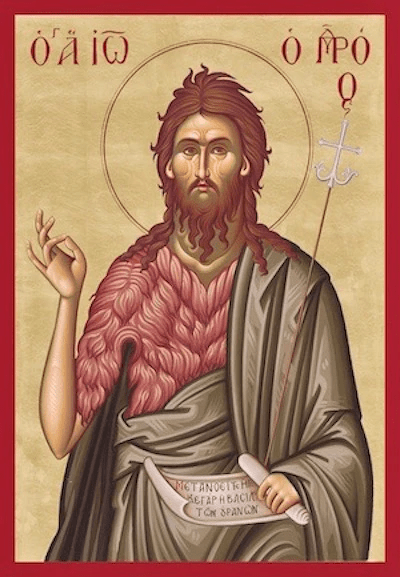
A little-recognized holiday in the US is St. John’s Day, which begins at sunset on June 23 and goes through June 24. It celebrates the birth of John the Baptist. According to the gospel story, Elizabeth, John’s older mother, was about six months ahead of her cousin Mary, who was pregnant with Jesus. Of course, we do not know the exact date of Jesus’ birth, but we celebrate it on December 24-25, six months from now. Hence, the date. This is one of two saints’ days that celebrate the saint’s birth, rather than their death. (The other is Mary, September 8.)

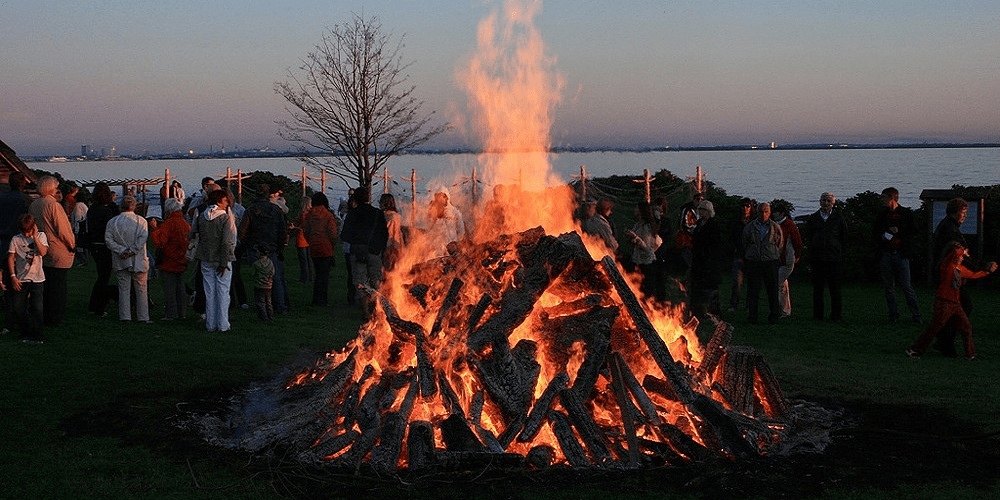
In places where it is celebrated, people build fires or carry torches, symbols of John proclaiming the light coming into the world. Often, baptisms are held on this day.
John was most known in the Gospels for his ministry of calling people to a new life, and his baptisms as a sign of that. Most notably, his baptism of Jesus. He was known for speaking out for the poor and oppressed and against the ruling government. Some scholars think that John did not baptize anyone after Jesus. Jesus introduced a new message and kingdom, and John’s ministry in that area was over. Yet others believe he continued, because the stories indicate that he continued his ministry. Still, that ministry could have been preaching against the corrupt government. For which he lost his head.

Mussorgsky’s Night on Bald Mountain was originally titled St. John’s Night on the Bare Mountain. It was based on Gogol’s story “St. John’s Eve”. The “scary” music is brought to a peaceful end with the sounding of church bells. Perhaps Mussorgsky was trying to illustrate the movement from a judgmental theology (John) to a theology of peace (Jesus). Though it is not precisely like Mussorgsky, Disney’s scene from the music in Fantasia, moving from the terror of the night to Ave Maria, conveys the same thing.

In the movie The Greatest Story Ever Told, John is played by Charlton Heston. There are some great scenes of him. When the soldiers come to arrest him at the Jordan River, he starts trying to baptize them, pushing them into the water and yelling, “Repent!” When Herod confronts him and says, “I am your king!” he responds, “I have no king but God!” And when Herod sends him off to die, you hear him yelling “Repent!” until you hear the thump of the executioner’s ax. Here’s a montage of the scenes.

How will I celebrate this day? I will listen to Mussorgsky. Maybe watch The Greatest Story Ever Told. I’ll shine a light for a coming kingdom, speak up for the oppressed, and speak against the corruption we see today. I hope to be more like John’s cousin, Jesus, but something of the passion in John appeals to me. I hope I don’t lose my life over it, but as John said to Herod (in the movie) when Herod said he was going to kill him, “No. You are going to set me free.”

A blessed St. John’s Day to you!
The Camino de Florence

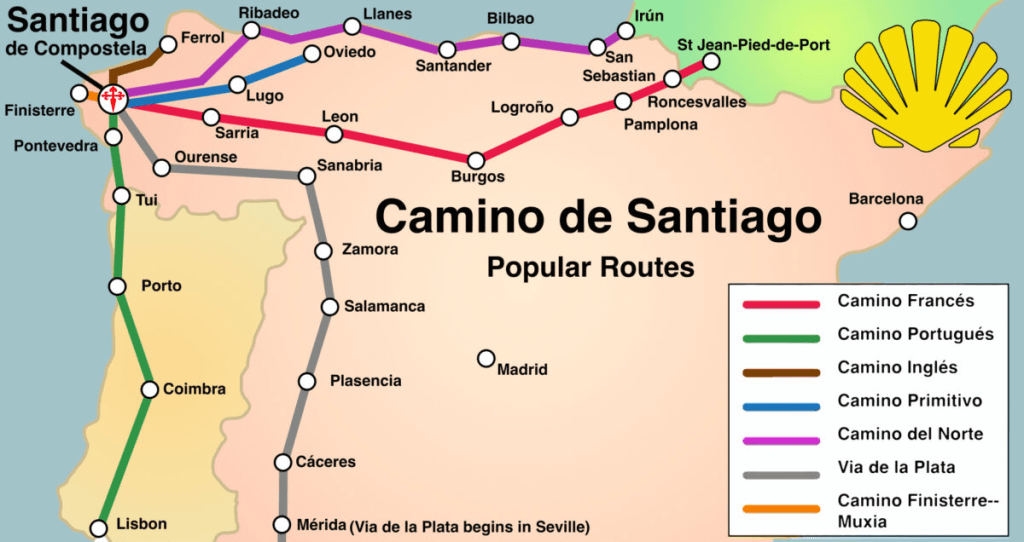
I have thought about walking the Camino de Santiago (The Way of Saint James) for many years. It is a path from the Pyrenees in France through Spain, ending at the Cathedral of Santiago de Compostela in northwestern Spain. There are several trails, so you can choose which to walk, though they eventually merge into one. Pilgrims have been walking this trail, which stretches about 500 miles, for 1400 years.

Several of my friends have walked parts of it. Some have done the last 100 miles, others have done the last 100 kilometers (62 miles), and a few have done the 500-mile trek. Most do it for spiritual reasons, hoping to find some connection with the divine. It is not an easy thing to walk. The trail is long, sometimes hot, often lonely. People stay in rustic hostels, sleep on the floors of small chapels, and may go for a long time before finding a place to eat. Yet all those who have walked the Camino have said it was positively life-changing.

Now that I am old enough to have the time to walk it (and it would take me a long time!) and have the financial freedom to do it, I do not think my body could take it. My energy level has dropped because of my age and the medicines I take for my cancer. And I have become used to the comforts of my bed, and, dare I say it, my bathroom.

Still, I have the desire to do something like it. So I have decided to walk the equivalent distance, 500 miles, I hope, here in Florence.

Several years ago, while hiking in the Brecon Beacons in Wales (a place I highly recommend), I saw a book, Everest England by Peter Owen Jones. Jones, a local outdoor enthusiast, decided to hike the equivalent of Mount Everest in England, ascending 29,000 feet on 20 hill climbs. He wrote in incredible detail about each trail, the people he met, and the things he learned. It made me decide to try the same thing with a Camino in Florence.

I will take much longer than most people walking the Camino in Spain. And I may not walk every day. But I will attempt to walk 500 miles on the streets of this “land between the rivers.” I have already walked a few days, just a little over a mile each time. I know it will not be the same as walking the “real” one in Spain. I will have my bed and bath waiting for me each evening. I will not have to try to carry food. I will not have the occasional companionship of other pilgrims. And I will not have all the little chapels to stop by along the way.

But I hope to see something new every day. I pray as I step off my porch each day and ask God to give me eyes to see things I have not seen before. And to help me see this world as God sees it.

In Tolkien’s The Lord of the Rings, Bilbo tells his nephew, “It’s a dangerous business, Frodo, going out your door. You step onto the road, and if you don’t keep your feet, there’s no knowing where you might be swept off to.” Who knows if I will make it? Who knows what I will see? Who knows what I will learn? I know this- if I don’t step outside the door and start walking, I will never find out.

See you out on the Camino.

A Summer Solstice Meditation

Today, June 20, 2025, is the longest day of the year for those of us in the northern hemisphere. (I now have lots of friends in South Africa, Zimbabwe, Zambia, and other countries on the other side of the equator, so I am constantly reminded that my “northern” view is not the only one. Thanks to them for helping me with that.) The sun rose at 6:07 this morning, and will set at 8:33 this evening- making 14 hours and 26 minutes of direct sunlight, and an extra half hour on each side of indirect. It’s a long day.

In my festering childhood days, I loved the summer! You could spend almost all of the time outdoors. As a matter of fact, parents would push us out the door if we stayed in. Shoes were optional. Even in the stores. If you didn’t get hot and sweaty and then cool yourself off with a spray from the garden hose, the day was not quite right. When the sun would go down and finally get dark, we would watch the fireflies- lightning bugs called them- blinking through the night. Kids in Inman would search through the night for the mythical lightning bug hive, a place that would glow all night because of the number of fireflies there.

We slept with windows open and maybe a fan in the window to cool things off, or we took blankets out in the backyard and “camped out” behind the house. Ancient communities used to dance around the fire at this time of the year, believing this special day to be one when the wall between heaven and earth became very thin. In the late-night cool air, we could somehow feel the breath of God blowing on us.

This year, we need God’s breath to blow on us again—to cool our fevered brows, reawaken our joy in everyday life, remove the heat, and let us enjoy the light. I see the light of God in the people working for justice for all God’s children. I feel the breath of God in the prayers offered by so many. I see the fire of God in those who call out for us to stand against the symbols of hate and division in our land.

But I see heat without light in so many, too. Those who blame the victims. Those who want to further divide people. Those who wish to use violence as a way to end violence. Even Jesus did not do that, though he could (see Matthew 26:47-53).

As the day is brighter, I pray for more light in my soul, for more fire in my heart, and for the breath of God to blow through me.

Today I found myself singing several songs. John Mellencamp wrote a moving song about the brevity of life. He had recently experienced a heart attack. He wrote a great song, Longest Days, with this haunting lyric, “Life is short, even in its longest days.” Take a listen.

I recalled that we kids used to sing while lying on blankets at night. We would sing the only three songs we knew—starting with Elvis Presley’s “You Ain’t Nothing But A Hound Dog ” and ending with Sheb Wooley’s “One-Eyed, One-Horned Flying Purple People Eater.” Between the two, we would sing “Beneath the Cross of Jesus.” 

O God, today we need a place to rest from the burning of the noon-tide heat, and the burden of the day.

My “Jaws” Story

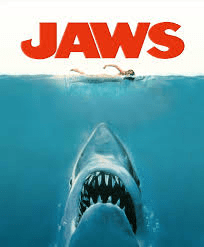
Today, June 20, 2025, is the fiftieth anniversary of the release of the movie Jaws. The film not only shot Steven Spielberg into stardom as a director, and moved John Williams into fame as a composer and director, it brought about things such as the terrible knockoff Orca, Saturday Night Live’s long running skit Landshark, a bad guy in a couple of James Bond films called Jaws, the Sharknado enterprise of six movies, and Shark Week on the Discovery Channel. People who were not alive fifty years ago recognize the ominous sound of “duuuuh duh….duuuh duh…..duh duh..duh duh..duh duh” and look for something to attack them.

The book came out in February 1974. A freelance journalist, Peter Benchley, wrote the novel based on his idea from the exploits of shark fisherman Frank Mundus. I read the book when it came out and was captivated and appalled from the beginning. I have a vivid imagination, and could see all the attacks in my head better than anything that could appear on screen.

The shark is not seen until an hour and twenty-one minutes into the film, which lasted two hours and ten minutes. But the presence of the leviathan is felt almost from the opening credits. When the shark appears, Matt Hooper (Richard Dreyfus), Quint (Robert Shaw), and Sheriff Martin Brody (Roy Scheider) are out chumming for the shark. Brody is complaining about having to do the dirty work of tossing the bloody fish guts over the back of the boat when the shark breaks the surface, mouth wide open. Sheriff Brody utters the famous line “You’re  gonna need a bigger boat.” That line was not in the book or the script for the movie. Scheider ad-libbed it—one of the most iconic lines in movie history.

When the shark came out (whose name was Bruce, after Spielberg’s lawyer Bruce Ramer), everyone in the theatre in Spartanburg screamed, including my date. Everyone except me. I was expecting it.

For a while in the movie, I was kidding my date. Whenever we would hear the music, or when the scene would get a little tense, I would nudge her and say something like “Watch out! He’s coming for you!” (Is it any wonder that I did not have a lot of dates in those days?) Near the end of the movie, Hooper is in a “shark cage,” which, in reality, is a human cage. The person is in the cage; hopefully, the sharks can’t get in. But this one is different. It has destroyed boats, docks, and several people. Hooper looks off into the murky water for any sign of the shark. You begin to hear “duuuh…..duh…” and you know the shark is coming. It is coming up from behind, not in the direction Hooper is looking. And it is coming to attack. The music gets louder and faster. The shark gets closer. Hooper still doesn’t see it. Its huge mouth is open and about to bite down on the cage. Everyone in the theatre, including me, was on the edge of their seat.

That’s when my date leaned over and bit me in the shoulder.

Everyone in the theatre missed the scene. They were all looking for the person who had jumped up and screamed like a banshee.

Sometimes you bite the big one. And sometimes…the big one bites you.

The Seed Catalog

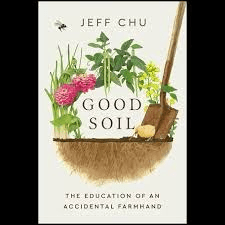
“If I loved anything more than the spreadsheet (for the plans for next year’s garden), it was the seed catalogs. They were my porn- temptation on every single page, photograph after photograph of plump turnips and fat carrots, juicy fruits and glistening tomatoes. Some of the cannier seed dealers went not with photos but with line drawings. These were even more powerful. I filled the white space in my imagination with not only vibrant produce but also my fantasies of being an old-time gentleman farmer. Every listing burst with promise, every seed packet shouted with hope. Nothing had failed yet. All was still possible.” (Jeff Chu, Good Soil: The Education of an Accidental Farmhand)

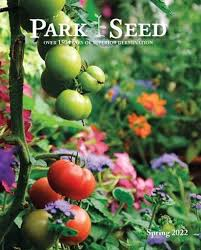
Nothing is much better than a seed catalog to get your mind and heart set on a positive future. Burpee’s and Park Seed (from my home state of South Carolina) have filled my mind with desires untold since I was a youth. Though I had no experience growing anything other than the sea-monkeys I ordered from the back of my comic books, I knew I could bring in tomatoes for sandwiches all summer if I had the chance. Is there a way you can grow Duke’s Mayonnaise?

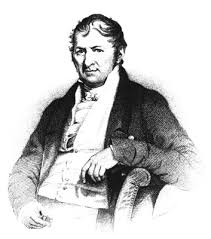
But it’s not just seed catalogs with their promise of abundant gardens. I was captured by the stories of early inventors from the books I checked out of the Inman Library. Blessed by my mother to be a reader from before elementary school, books became my escape from making up beds, picking up yard trash, and drying dishes. It moved me from trying to learn sports I would never excel at- football, baseball, basketball (we were too poor for tennis and nobody played golf)- to seeing a universe where I could make a difference. My heroes were Samuel F.B. Morse, Henry Ford, Eli Whitney, Thomas Edison, and Ben Franklin. So were Marie Curie and George Washington Carver, though I never thought I could be that smart.

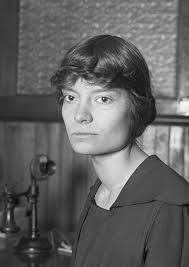
Later, stories of people who worked to improve life for all filled my evening hours. Florence Nightingale, Dunant and Moynier, Sojourner Truth, Frederick Douglass, Abraham Lincoln all gave me a vision of what life could be like. And, of course, in my teen years, I read of John Wesley, Francis of Assisi, George Müller, Dorothy Day, Teresa of Avila, who worked to make the world better for all because, as Wesley put it, “the love of God was shed abroad in their hearts.”

Later, fiction, mostly science fiction, gave me scenes of the world as it could be and not as it is. Ray Bradbury, Isaac Asimov, Arthur C. Clarke, Ursula K. LeGuin, and Madeleine L’Engle described societies where people were more concerned for the general welfare than their riches. As time has marched on, as our technology has advanced, it seems like those worlds are farther away than before. I guess that’s why it’s called fiction.

Today, it seems that our “heroes” are those who stress gain at any cost, including human rights. Worlds where people are put into classes, and never given the chance to advance. George Müller was once condemned for helping people experiencing poverty to “rise above their station.” (I hope to be blamed for something like that.) We have become a zero-sum game world, where if one person succeeds, another has to lose.

Something in me screams that is not how we are meant to be. We can all move ahead. We can all get better. Another person, nation, or race does not have to lose for the rest to get better. I don’t have to lose so that you can win. Something in me wants something more, something better, for us all.

I need a new seed catalog.

Daikon- Roots and Leaves

In the book Good Soil: The Education of an Accidental Farmer, Jeff Chu writes about growing daikon, a type of radish more popular in Chinese cooking than in American. He planted some and worried when the leaves (what we Southerners call greens) were growing abnormally fast. They were taking over the garden space. He knew that if the leaves and stems were growing above ground, not much was growing below, which is where the tuber was. The above-ground part of the plant was using energy needed for the below-ground part. Later, when he pulled up the plants for a harvest, he found that he was correct. Instead of a healthy radish, it was just strings.

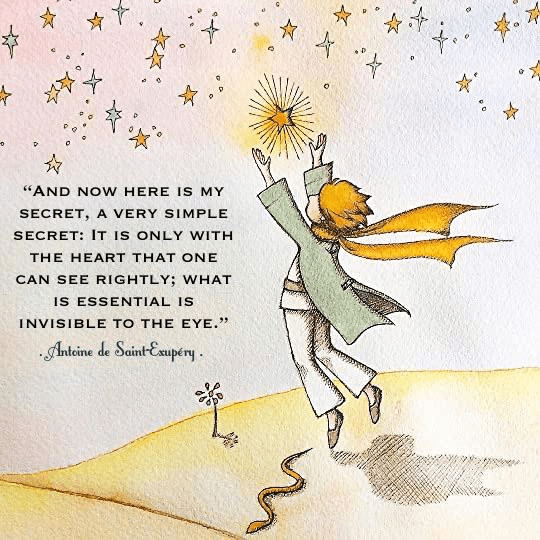
I have been thinking about that this morning. How much energy do I put into the things that I can see, that others can see? And how much do I ignore what is beneath? In his excellent book The Little Prince, Antoine de Saint-Exupery says, “It is only with the heart that one can see rightly; what is essential is invisible to the eye.”

It is in doing away with some of the externals that we provide time and energy for the place of real growth. However, we do not need to get rid of all things. The leaves are essential to the plant. Jesus did not talk about tubers, at least, not that I know of. But he did talk about grapes and grapevines. He said you must cut away the dead branches and prune the ones that produce, so that the ones left can be more fruitful. It is the same principle, except that you can see the grapes. You do not see what is underground.

This is somewhat of a problem. We do not know if that root, that tuber, is growing underground until harvest time, which takes some trust.

What must I do to help that part of my life grow? I need silence, meditation, time for reading and thinking, and even rest. And what do I need to trim, remove, or prune from my life? I am still working on that because I love those greens. And greens, while often tasty and nutritious if cooked well, will not sustain my life.

Author, banker, vicar, and researcher George Lings writes about seven “sacred spaces” that are avenues to a deeper spiritual life. They are cell, chapel, chapter, cloister, garden, refectory, and scriptorium. Of all of them, cell (being alone with God) is the hardest for most of us. Our world today is not designed for silence, introspection, or deeper growth in unseen ways.

But it is the most essential part of life. If I spend that time in my cell (my study at home), turning off the phone, closing the door, lighting a candle, and listening to the inner voice of the Spirit, I come out more at peace.

If I do not do this regularly, I will find that my roots are no longer roots. They are just strings in the dirt.

Ode To Joy

The date was June 3, 1997. Nineteen months earlier, my life had fallen apart (that’s a story for another time). I was now living in the rural community of Oswego, SC, serving a church and healing up. As I rode from the parsonage on Red Apple Lane to the church on the corner of Lodebar and Leonard Brown Roads, I saw a couple of my church members out in their farm fields, taking care of the land. On my left was Billy McCoy, on a tractor, doing something to keep the crops growing. Across the street was his brother, Sam, baling hay. Billy and his wife Stella were leaders in the church and were very supportive and helpful to me. If you rode by their home and saw the front door open, you were invited to stop by. A glass of water or tea awaited you, maybe a snack, but most of all a listening ear, an open heart, and a wise mind if you needed any of them.

When I saw Billy and Sam working, an idea hit me. I called Billy. He answered. “Billy, do you know what day it is?” “Not really,” he replied. “It’s not your birthday, is it?” “Nope. What’s the date?” He thought and said, “It’s the third of June…” and I broke into my best Bobbie Gentry, singing “another sleepy, dusty, delta day…” I slid into those notes like I was sneaking into my house when I was a teenager. “It’s Billy McCoy Day!” I shouted, then resumed singing, “I was out chopping cotton and my brother was baling hay.” Although it was not cotton season yet in Oswego, or down in Mississippi, Billy got it immediately.

Since then, I have called Billy every June 3 and sung part of that song to him. Usually, I get him early in the morning while he is out on the porch with his break-of-day coffee. We catch up with each other, share news of our families, always laugh about things, and promise to keep each other in our prayers.

Today, June 3, 2025, is the 28th time I have called and sung to him. Twenty-eight years of love and support, friendship, and laughter. After I hung up the phone, I realized I was smiling.

Music often expresses the joy we feel. The words may say something meaningful, but the tune frequently speaks in more profound ways. One of Ludwig van Beethoven’s final works was Symphony Number 9, which concludes with his powerful “Ode to Joy.” We often sing that tune in church, saying, “Joyful, joyful, we adore Thee…”

People have different songs to express joy in their lives. Some sing hymns, like “Amazing Grace” or “This is My Father’s World.” For some, it may be an old pop song, like James Taylor’s “Country Roads” or “It’s a Beautiful Morning” by The Rascals. Chris Stapleton’s “Joy of My Life,” Beach Boys’ “Good Vibrations,” and Bobby McFerrin’s “Don’t Worry, Be Happy” all come to mind. For me, today, it’s “Ode to Billie Joe.”

The song itself is not that joyful. It’s rather tragic. Billy Joe MacAllister commits suicide. Something…or someone…was thrown into the Yazoo River. Brother gets married and moves away, Papa dies, Momma doesn’t want to do much of anything, and the singer spends her days dropping flowers off the Tallahatchie Bridge. Have a nice day.

But the song brings back memories of people who loved me, helped me heal, laughed, and cried with me, and a community where I found my wife. Oddly enough, “Ode to Billie Joe” has become my Ode to Joy.