

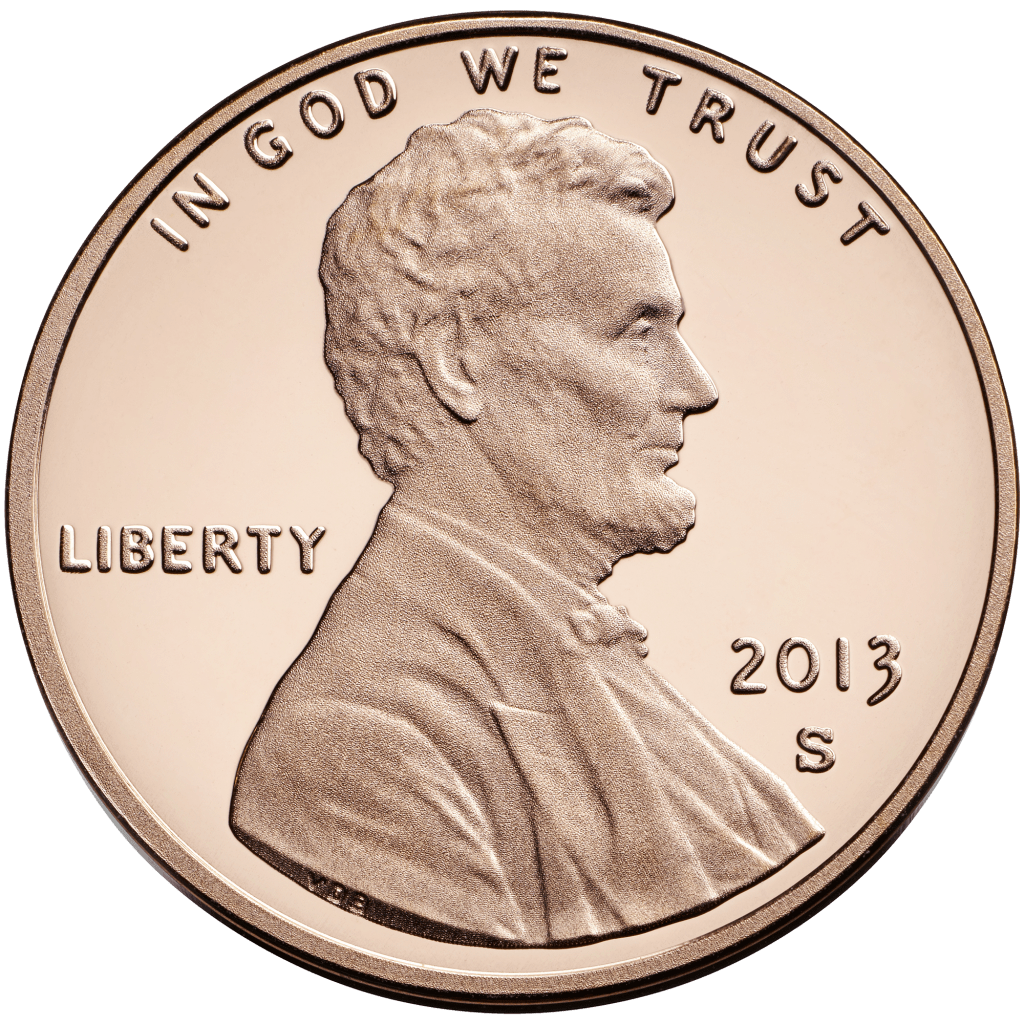
The cost of thoughts is about to go up. The US Treasury Department has announced that after the latest order of blanks for the penny is used up, they will not be producing them anymore. The expected time to stop minting them is in early 2026.

The reason is that it costs 3.69 cents to produce one. A nickel costs 13.78 cents to produce. While not the 269% increase that a penny costs, it is still 176% of the worth, so it may be on the chopping block soon. A dime costs 5.2 cents and a quarter 14.68 cents. The seldom-used half-dollar coin costs n even 34 cents, and the rarely used dollar coin 12.43 cents (probably the best deal, but we don’t seem to want to carry them). The US Mint produces other coins, too, but they are more for collecting and investing, rather than circulation. If you were walking around with one each in your pocket, it would cost 83.78 cents to make the $1.91.
Although Mr. Trump sent out a directive to stop the production of the penny, he was not the first president to attempt to do so. President Obama expressed support for eliminating the penny, as did the late John McCain.
As pennies become more and more rare, businesses will begin rounding off to the nearest nickel. My suspicion is that they will always round up, rather than lose the fractions of dollars that rounding down would cause. In addition to the slight but significant loss that consumers will experience over time, our language will also change.
Some of you are old enough to remember pay phones. There used to be a saying, “Here’s a nickel. Call someone who cares.” (Over time, it became a dime, then a quarter.) When the phone companies decided to start charging 35 cents for a call, you couldn’t easily say, “Here’s a quarter and a dime. Call someone who cares.” It did not roll off the tongue as easily. Now, it seems, a penny for your thoughts, putting your two-cents worth in, a penny saved is a penny earned, penny wise and pound foolish, penny-pincher, a bad penny always turns up, and worth every penny will go away from the common idioms.
Most people in the US make everyday purchases using credit or debit cards, though cash apps are on the rise. Cash is being used less frequently. Even though most businesses now charge between 3 and 4 percent of the bill to cover the cost of using a card, people still use them. As one friend said, “I get cash back on my card.” When I asked how much, he said, “Two percent.” Do the math. I prefer to pay with cash because…well….I am a troglodyte.
I will miss the penny when it is gone. I am old enough to remember when there was penny candy, penny ante poker, and a few nails at the hardware store could be bought for one cent. Picking up the pennies on the ground for good luck (if it was face down, be sure to turn it over three times before putting it in your pocket), wrapping enough of them to get a half-dollar, and putting one under a table leg to keep it from wobbling. All gone. I’ll miss it all.
And that’s my $.02 (now rounded up to a nickel).





 , which is often used to mean “door.” I told the few people who saw it that it was the door to my heart. What I have come to understand over the last few years is that it was a way of my heart being open to God’s heart. There are many doors to God’s heart, I believe. But for some of us, we must listen for the heartbeat to find it.
 Michael Henderson