

As you know, I am a bibliophile. Blame it on my mother. I remember sitting by her on the couch when I was young, as she read books to me, pointing out the words as she read them, sometimes pointing to the pictures that went along with them. I became fascinated by the worlds they contained. Of course, the early Dick and Jane readers helped me to get started, but Mom quickly moved on to Winnie the Pooh. I could see the Hundred Acre Wood, smell the trees, flowers, and grass, and walk along with Christopher Robin, Pooh, Piglet, Owl, and Eyeore. It was not long before Mom helped me get a library card for the Inman library, which was in a side room in the fire station in the small town. It was within easy walking distance for me, even as a young boy, and I would visit there several times a week to trade in my old books and get some new ones. There was always a stack to be read somewhere in the house on Littlefield Street.
As I grew, I became a voracious reader, consuming almost everything I could find. Biographies of people who invented things- Morse, Edison, Carver- made me curious about how things work. Pioneers in compassionate living- Barton, Nightingale, Wilkerson- prompted me to be kinder. Classic literature showed me the power of words. The only book I refused to read when I was in school was Silas Marner. This was at the beginning of my rebellious teens. (Years later my sister gave me a copy and I read it. Sorry I waited so long.)
I not only like to read, I like the physical books themselves. I like to feel the heft of them in my hands, be able to easily flip back and forth between pages and chapters. I like the way they smell. I have tried using e-readers, Kindle, Nook, and others. I understand why some people prefer them. You can carry whole libraries in your pocket. But I prefer something that takes up space on my shelves.
I also prefer buying used books. Not only is it better for the environment (since it does not use up any more resources than it already has), there’s something of history in them. Knowing people have read them, thought about them, argued with them makes them more alive to me. Of course, the authors that are still living do not make any residuals from them, and that bothers me, because I want them to keep writing. Still, I prefer used.
I like them for another reason, too. I write in my books. I underline, write in the margins, put notes on the flyleaves, and generally mark them up pretty good. (Librarians hate me!) And I love to see where other people have done that. You can see what they thought was important, mistaken, or worth remembering. Years ago, a retiring minister friend of mine gave me a set of Clarke’s commentaries on the Bible. First editions, they had been owned by a series of Methodist ministers in South Carolina since they were printed in the early 1800s. There were notes from sermons that were preached during the Civil War, newspaper clippings from the turn of the century, and a treasure trove of other information that had accumulated in them. I kept them for years and then passed them on to a younger clergy.
Good used-bookstores are hard to find these days. Which is a shame. I would walk into one with the idea of finding a copy of Walden, and come out with it, plus Browning’s Sonnets from the Portuguese, Watson’s The Double Helix, and (just for fun) Waterson’s The Days Are Just Packed. You would find things you didn’t know you needed.
Now, most used-bookstores are online. Alibris, Better World, Thrift, and others have extensive collections. You can almost always find what you are looking for, but you don’t find much else. There’s not a lot of browsing available. But that’s where I have to get most of my books now.
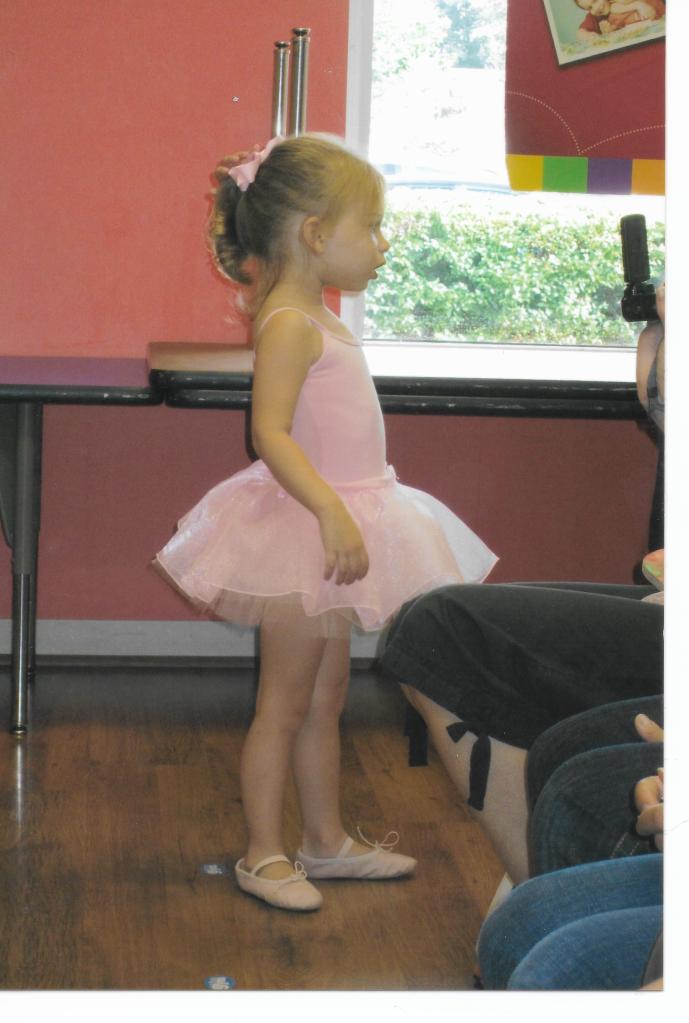
We have a new bishop coming to the South Carolina Conference of the United Methodist Church, Leonard Fairley. I read that he published a book of poems, Who Shall Hear My Voice? I ordered a used copy online. Poetry may be the best way to get to know a person when you can’t meet them face to face. The book was in good shape, and it (unfortunately) did not have a lot of markings in it. (It does now.) But there was something that struck my attention. Between two poems was a photograph of a young girl in a pink tutu. There was no writing on it to indicate who she was or where it was taken. The back of the photo has some identification of the company that developed the photo, including the year 2011. The book was published in 2009. Someone was using this photo as a bookmark. It was between two poems, one titled Phoenix Rising and the other Flower Unknown. Those two titles seem appropriate for the placement of this little girl. I wonder who she is. Did she continue her dancing? It’s thirteen years later now, so is she in college? Was she the child of a Methodist clergy up in North Carolina (where Fairley was serving at the time of the publication)? What is her story?
Maybe I’ll make up one about her. Who knows, it may end up on a shelf in a used-bookstore one day.
 Michael Henderson