Old Knife/New Knife (April 13, 2013)

Note: In looking back over my writings and blogs over the years, I realize I have had several different blogs. To get all my writing in one place, I am porting them over to this one. The date in the title is the original date of publication.

I served a small mill-village church in the 1980’s in Glendale, a dying mill-village just outside of Spartanburg, SC. Worship was at 10, with Sunday school following (I had another church nearby with worship at 11). I would always arrive at the church around 9 a.m., cup of coffee in hand, and sit on the steps to greet the “old guys” who got there about 9:15. These were five older men in the church, the youngest being around 68 and the oldest in his late 80s. They had been life-long friends, and I loved to sit, listen to their stories, and throw in some of my own. For around 30 minutes we would stand or sit outside on the steps and tell tall tales, actual events, parables, and lies. Sometimes it was hard to tell which was which, but it didn’t really matter.

I remember one time talking about things we had in our homes that we remembered for the first time. “I remember getting our first tv set,” one of the guys said. “It was huge, weighed about 500 pounds, and had a tiny black and white screen that took forever to warm up.” “I remember when we got our first radio,” another chimed in. “Used to listen to Arthur Godfrey on that thing.” “I remember when my coffee-maker didn’t automatically grind the beans for me,” I said. “I used to have to grind them myself in my electric grinder the night before and put the grounds into the coffee-maker so it could automatically brew the coffee and have it ready for me in the morning when I woke up. Finally got one that grinds the beans and brews the coffee for me,” I said. “Yep, them was the hard ol’ days.” One of the old guys looked at me and said, “How do you live with yourself?”

One Sunday morning one of my friends pulled out a pocket knife, a single-blade one, and started cleaning and trimming his fingernails the way all of us older guys do it- the point carefully scraping along the underneath side, back by the skin, getting all the dirt and grease out from the previous week, then the blade being dragged up underneath the nail causing little bits of fingernail to splay out from the edge, then carefully cutting all that off.

“Let me see your knife,” I asked my friend, in that telling-yet-asking way we old guys have. He folded the knife closed and handed it to me. I reopened it and looked at it. It was a nice knife- shiny sharp blade, wooden handle with carvings on each side, and the requisite metal cap over each end. On the blade near the handle joint was stamped the name of the manufacturer, and there was the little fingernail indention along the blunt edge of the blade to help you open it. “Nice knife,” I said. “Yep,” he replied. “Actually belonged to my grandfather who bought it in the 1880’s. He gave it to his son, my father, who gave it to me, and one day soon I plan to give it to my son, who will give it to my grandson. It will have been in our family for five generations then. Imagine that. Same knife, five generations.”

I looked again at the knife. “This knife is over a hundred years old,” I said. “It’s in great shape!” “Yep,” he said. “I keep it oiled and sharpened so that it will last. Of course, over the years it’s had a few new handles and a few new blades, but it’s still the same knife.”

A few new handles, a few new blades. I wondered if his grandfather would recognize the knife his grandson held. 

I told this story to a friend of mine, and he said, “It’s the spirit of the knife that counts, I guess.” I said that I thought it was because the knife still did the same things.

I thought about this early this morning as I thought about the Church. It has been handed down for 200 generations now, and we do not look like the church that met in the home of Philemon (Philemon 1:2….well, since it only has one chapter, I guess I could say Philemon 2),  but yet it is the same church. Like that knife, we still do the same things- worship and praise God, pass the faith on to others and teach the next generation, serve those in need, care for each other, stand for justice and mercy (always two things hard to combine). But we do it differently than the previous generations, and the next ones will do it differently from us.

Like my friend’s knife probably did not start out with a stainless steel blade with the thumbnail indention, or the handle with a stamped wood carving on it, it still cut string and rope and cleaned fingernails for generations.

I think about that as I think about how the church is changing today. It is not the church I grew up in as a child, teen, and young adult. And it is not the church I started serving almost 34 years ago. I don’t recognize a lot of the music, I struggle to master the technology, and I have a harder time texting when I really like to talk face-to-face. And the world around has changed, too. Growing up for me, summer was the slowest time of the year for families, and the busiest time of the year for churches. Churches used to hire “summer youth workers” to do nothing but lead the youth in the summertime because the kids had nothing to do. Now most churches shut down their youth ministry in the summer because kids are so busy. But people, much more creative than me, are constantly finding new handles and new blades, so that we worship and praise and care and teach and invite and love and serve and proclaim.

I just pray to the Lord above all time that, like my friend’s knife, he will keep me sharp.

Chimes in the Night (April 12, 2013)

Note: In looking back over my writings and blogs over the years, I realize I have had several different blogs. To get all my writing in one place, I am porting them over to this one. The date in the title is the original date of publication.

Cathy and I have several sets of hanging chimes outside our house, most in the back. We have some of the very cheap “tinkle-tinkle-ding-dong” kind, some that are works of art tuned to various kinds of music scales, and some that are the large kind that remind you of church bells in ancient cathedrals. We have been collecting them for some time, and a few of them are gifts from friends. We love the way they sound.

Last night (Thursday, April 11 – Friday April 12) I could not sleep so I went into the study to read. In the early morning hours a large storm came through, and the wind blew tremendously. I sat in my study and listened to the chimes ringing.

I could hear all of them, sounding in the night. (I hope they do not bother my good neighbors- they have not yet complained!) It occurred to me that I do not often hear those large “church bell” chimes. It takes a lot of wind to make the clapper hit the tubes. Sometimes I relax by lying in the hammock and when a gentle breeze blows, I hear the cheaper lighter “tinkle” chimes. When the wind blows more, I hear the heavier ones. And during the storm I hear the heaviest of all.

I think our faith is like that. We are all a combination of the various kinds of chimes. When things are going well, people hear us “tinkle” about how good God is. When harder winds blow, people hear the more tuneful parts of our faith (“Yes, things are hard, but God is with us”). And when the storms are raging in our life, they hear from us the deep, resounding sounds of faith (“Though he slay me, yet will I trust in him”- Job 13:15).

Into everyone’s life storms will come and winds will blow. And we are God’s chimes for others to hear in the midst of storms. It is important that we are anchored. All our chimes are securely anchored to the carport, to trellises, to trees. The wind is not going to detach them. Blow though it might, all it will do is make them make more noise, more music.

And when we are anchored to Christ, securely anchored there, the storms will come, but they just cause us to sound out beautiful music. Even in the night.

The Joy of Normalcy (March 23, 2013)

Note: In looking back over my writings and blogs over the years, I realize I have had several different blogs. To get all my writing in one place, I am porting them over to this one. The date in the title is the original date of publication.

“The good thing about being sick,” Cathy told me on Monday when I was begging her to find a shotgun and kill me, “is that when you start feeling better, you feel SO MUCH better!” As always, she’s right.

I’ve been laid up with the flu this past week, it suddenly coming on me last Sunday afternoon. Thanks to the medical ministrations of Dr. Don, the praying ministrations of the people at the church (especially the Tuesday morning prayer group), the caring ministrations of so many folks in our church family and in the staff and friends around the world, and the constant ministrations to soul and body of my wife Cathy (I have felt like one of her cats this week- all I have done is find places to sleep around the house and wait for her to come home to feed me!), I am much better. God uses all kinds of ways to heal us. As a matter of fact, I started feeling better about an hour ago (it is now 1:40 a.m. on Friday, March 22), when my headache that I have had since Sunday afternoon went away. I woke up from a fitful sleep because my head stopped hurting. Then I noticed the aches in the rest of my body were gone. I still have a terrible cough, but that will go away. Soon, I hope.

The point is, I woke up feeling how good it is to feel normal again.

Which is odd. Most of us don’t want normal days. We think of them as boring, uninspiring, dull. Sometimes even lifeless. We are so used to being entertained and excited, that everyday life seems almost pointless unless we can say “Wow!” all the time.

I read an article recently in which a respected teacher talked about the difference between fireworks and a candle. Fireworks, he said, make us look at the dark and say “Wow!” but only for a little while. On the other hand, even a small candle on a dark night can draw a family together or lead a ship in from stormy seas. 

We need the fireworks occasionally, but it is the candle that keeps us together. The joy of ordinary, normal, days. Maybe that’s what days of hardship and pain do for us; remind us of how nice it is to have normal days.

I do not wish for any of you days of pain or grief (though they will come to each of us). But I do wish for you to see the joy of normal, ordinary days.

Complaining Preachers – Complaining Church Members (November 23, 2012)

Note: In looking back over my writings and blogs over the years, I realize I have had several different blogs. To get all my writing in one place, I am porting them over to this one. The date in the title is the original date of publication.

I finally finished reading Joyce Meyer’s Battlefield of the Mind (which I highly recommend) and have started reading Dietrich Bonhoeffer’s Life Together as part of my morning devotions and prayer time. I read this little book years ago, but had forgotten how powerful it was. Below is something that just jumped out at me….no, rather it screamed at me…..and I want to share it here in hopes of getting some feedback and reaction. The section is a little long, but worth reading. Especially reading it slowly, so that what this saint is telling us can sink in.

   “Only he who gives thanks for little things receives the big things. We prevent God from giving us the great spiritual gifts He has in store for us, because we do not give thanks for daily gifts. We think we dare not be satisfied with the small measure of spiritual knowledge, experience, and love that has been given to us, and that we must constantly be looking forward eagerly for the highest good. Then we deplore the fact that we lack the deep certainty, the strong faith, and the rich experience that God has given to others, and we consider this lament to be pious. We pray for the big things and forget to give thanks for the ordinary, small (and yet really not small) gifts. How can God entrust great things to one who will not thankfully receive from Him the little things? If we do not give thanks daily for the Christian fellowship in which we have been placed, even when there is no great experience, no discoverable riches, but much weakness, small faith, and difficulty; if on the contrary, we only keep complaining to God that everything is so paltry and petty, so far from what we expected, then we hinder God from letting our  fellowship grow according to the measure and riches which are there for us all in Jesus Christ . 

This applies in a special way to the complaints often heard from pastors and zealous members about their congregations. A pastor should never complain about his congregation, certainly never to other people, but also not to God. A congregation has not been entrusted to him in order that he should become its accuser before God and men. When a person becomes alienated from a Christian community in which he has been placed and begins to raise complaints about it, he had better examine himself first to see whether the trouble is not due to his wish dream that should be shattered by God; and if this be the case, let him thank God for leading him in to this predicament. But if not, let him nevertheless guard against ever becoming an accuser of the congregation before God. Let him rather accuse himself for his unbelief. Let him pray to God for an understanding of his own failure and his particular sin, and pray that he may not wrong his brethren. Let him, in the consciousness of his own guilt, make intercession for his brethren. Let him do what he is committed to do, and thank God.

Christian community is like the Christian’s sanctification. It is a gift of God which we cannot claim. Only God knows the real state of our fellowship, of our sanctification. What may appear weak and trifling to us may be great and glorious to God. Just as the Christian should not be constantly feeling his spiritual pulse, so, too, the Christian community has not been given to us by God for us to be constantly taking its temperature. The more thankfully we daily receive what is given to us, the more surely and steadily will fellowship increase and grow from day to day as God pleases. 

   Christian brotherhood is not an ideal which we must realize; it is rather a reality created by God in Christ in which we may participate. The more clearly we learn to recognize that the ground and strength and promise of all our fellowship is in Jesus Christ alone, the more serenely shall we think of our fellowship and pray and hope for it.”

Bonhoeffer said earlier in his book that some love their idea of Christian community more than the community itself, and that when this happens, that person begins to destroy the community. It reminds me of the old Peanuts cartoon where Linus says “I love mankind. It’s people I cannot stand!” Until we learn to love people first, as Christ loves us, then we will always be complaining. Whether we are preachers, congregation members, or folks who have given up on the church.

Here’s my prayer today- O God, let me love the people, not my idea of what they should be. And thank you for loving me so much, that while I was yet a sinner, you sent Christ for me. Amen.”

Let those with ears to hear, listen- A Meditation on Starbucks and Listening to God (November 12, 2012)

Note: In looking back over my writings and blogs over the years, I realize I have had several different blogs. To get all my writing in one place, I am porting them over to this one. The date in the title is the original date of publication.

For several years Joel, a friend of mine, and I met each other at 5:30 each morning in downtown Columbia. We would walk for an hour and a half, talking as we walked. The first hour we would settle all the problems of the world, which, like the mercies of God, are new every morning. The last half hour we would figure out where to eat breakfast.

We would usually stop by one of two coffee shops in the Five Points area- Drip, a locally owned one, and Starbucks. We got to know the baristas at both places really well. One of the ones at Starbucks, a muscular, jolly man with dreadlocks was our favorite. Since we were there before many of the early birds, knew us fairly well. One morning he offered us his favorite drink- a large iced coffee with an extra shot of espresso, sugar-free vanilla, and cream. Not half-and-half, not milk, but cream. It was great, and quickly became one of my favorites.

The problem is, when I go to any other Starbucks and ask for that, they cannot hear me. For example, this week I stopped by the local store and the woman behind the counter asked what I wanted. “Large iced coffee, extra shot of espresso, sugar-free vanilla, real cream,” I said. She said back to me, “Large iced coffee with half-and-half.” “No, ma’am,” I said, then repeated my order. “Oh,” she said, “large iced coffee, extra shot, sugar-free vanilla, and milk.” “No, ma’am,” I said again, then repeated my order. She looked at me as if I had spoken Vulcan or some unknown language. “I don’t understand,” she said. “You want a large iced coffee, an extra shot, sugar-free vanilla, and milk.” “Almost,” I said. “Instead of milk, this is what I want,” and I walked over to the prep area, leaned across the counter, pointed my finger at a container that had the word “CREAM” in big black letters on it. I wasn’t getting mad, and I didn’t raise my voice, and I certainly did not want to be rude. But I did not know how else to put it. She punched something into the register, a slip came out, stuck it to a cup, and handed it to the woman preparing the coffee. She looked at it, started preparing the drink, and said, “2% milk, right?” “Nope,” I said and told her my order. She mixed a lot of things in the cup, handed it to me, and said, “Is this right?” “Close, but no cigar.” I did not ask her to redo the drink. This has happened to me several times, and each time I ask them to “make it right” (as their sign says) it still doesn’t come out right. 

So I took the drink and walked back down the road to home.

I thought about this as I walked. The folks at Starbucks don’t want to give me something other than what I ask for, they don’t intentionally screw up my order. They are nice people. But they are used to hearing certain things and answering questions in certain ways. They already know what the answer from me should be.

And I wonder, how often is that true for me? How often does God speak to me, and I hear something different? How often do I read the Bible, already knowing what it’s going to say (at least in my mind), and don’t hear what it really says? How often do people tell me something, or ask me a question, and I just don’t hear? Does God ever (figuratively) lean over the counter and point to someone, something, some Scripture,  and say “There. That one. That’s what I’m talking about.” And I wonder if I do something and God says “Close, but no cigar.”

Jesus often ended his parables with these words, “Let those with ears to hear, hear.” God, let that be true with me.

DYLANN ROOF AND THE DEATH PENALTY (December 17, 2016)

Note: In looking back over my writings and blogs over the years, I realize I have had several different blogs. In order to get all my writing in one place, I am porting them over to this one. The date in the title is the original date of publication.

Dylann Roof has been convicted of all 33 counts against him, including the murder of the nine people in the Bible study group at Emmanuel AME Church in Charleston. This is not surprising since he pretty much said, “Yep, I did it.” He hoped to start a race war. So far, he has been unsuccessful. Now it moves to the sentencing phase. He plans to represent himself there. He did that for a while in the first part of his trial. I suspect he will once again call for the lawyers. The big question is, will he receive the death penalty for his heinous crimes?

Many of my friends who will read this will immediately say that he deserves to be put to death. I agree. He does. But I am not so sure it is the best thing. I usually oppose the death penalty. I say “usually” because there have been some instances where I have thought otherwise.

In Roof’s case, I think it would be a less wise decision for many reasons. But I must say from the start, I have no feeling of pity for him. Nor do I harbor hatred, as strange as it may seem. To hate another person gives them power over your life, and he will have none over mine. I read of a Jewish rabbi who survived the concentration camps of Germany. After he was freed, he immigrated to the US. He said in an interview years later that before he left Germany, he had to forgive Adolph Hitler. He said he wanted nothing of that man coming with him to this new country. So he had to let it go. I want none of Roof in me.

Here’s what I think the death penalty would and would not do.

First, it would make Roof into a martyr for the white-supremacy cause he espoused. We have had these race based hate groups with us since….well, forever. They were very evident up through the 1970’s, then went into hiding for a while. They are coming out from hiding now. Some have had victory marches since the election. (This is not a statement about our president-elect, but it is about some of the groups who support him.) Roof’s death by the state would elevate him in their hearts and minds. It would give a face to their cause that they could rally around. I do not want him to become a martyr. I know some will say that by putting him in prison for life, with no chance of parole, would do the same. And while it is possible that it would elevate him in their minds, it would not be as great.

Roof’s death would not ease the pain of those who lost loved ones, or the three survivors who were terrorized by it. In cases of the death penalty before, family members of victims rarely, if ever, feel good about the death of the perpetrator. Some have expressed relief when interviewed immediately following the execution, but years later still find their lives haunted by grief. As one said, “It wasn’t enough.” It never will be.

Nor would it ease the pain and anguish of the African-American community, though if he is not executed we can expect to hear a lot of “if he had been black, he would have been dead by now….” kind of argument. There is much to do in our continuing journey towards unity and reconciliation. Another death will not move us forward.

His execution, while satisfying “the state”, would not deter further acts of this kind. When averaged together, states without the death penalty have had a lower amount of murder than those with the death penalty for the past twenty-five years. And the difference is increasing. The difference in the murder rate between states with the death penalty and those without in 1990 was 4%. In 2016 the difference was 25%. If the death penalty had any effect on murder rates, we would see that. It does not. Years ago I heard one very popular radio preacher, in speaking about this subject and of the impending execution of a convicted murderer, say “Well, it will stop him from ever doing it again.” True. But the chances of him murdering someone in prison are extremely low. Almost nil.

Now, what do I hope in this case?

The dark, evil, vengeful side of me hopes that he’ll be put into prison for life, with no chance of parole, never seeing any more of the outside world than he can see through the bars in his window. The reason is this- (unfortunately, but it is true) most of the people in the prisons in South Carolina are African-American. The very ones he wanted to start a war with, and the ones who he killed. I can’t imagine the terror he would have to live with day and night forever. I lick my lips with vengeance on my mind, and laugh evilly with the thought of it. Which, in some strange way, makes me just like him as he held his gun in front of those people studying the Bible. I have to admit it in order to get it out of my system. I do not want him or anyone making me into a person I abhor.

I know there are some people who say the Bible supports the death penalty, and argue forcefully for it. They are right. The Old Testament has the death penalty for the following (there are more, these just stand out):

Here’s a list of where the New Testament specifically endorses the death penalty:

·         

Some will contort New Testament writings, and even the teachings of Jesus, for the death penalty. But that’s what it is. A contortion.

The better angels in me, though, have another hope. What would it be like if he was converted, became a Christian? I’m not talking about “jailhouse religion.” I’ve seen enough “conversions” there to question most. (But, who other than God, knows the human heart? Sometimes conversions among those not in prison make me question.) But, what if he truly was converted, saw the damage that he had done, the hurt and the pain not only to the families and victims, but to our society as well? What if he began, from his own cell, to do the things for bringing people together? What if Jesus actually changed his life, and he began to live it out? There have been other folks who deserved the death penalty whom God used. The apostle Paul comes to mind.  Perhaps God would use him from the chains of prison to speak to others, and lead them into new life. This may or may not happen, but if he is executed, it definitely will not.

During all these months since the massacre I have prayed for the families, prayed for the survivors, prayed for our state and country, and prayed for Dylann Roof. Like me, they are all part of this world whom God loves, and for whom Jesus bore the death penalty on our behalf.

Whoa, oh Listen to the Music

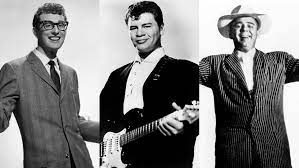
If February 3, 1959, was the day the music died, then February 9, 1964, is the day it was reborn.

That first date is the day when rising rock stars Buddy Holly, Richie Valens, and J.P. Richardson (The Big Bopper), along with their pilot, were killed in a plane crash near Clear Lake, Iowa. Buddy Holly was the most well-known, having written many hits and covered songs by others. Every Day, Maybe Baby, and It’s So Easy are three that get covered today by popular singers. Valens, known for La Bamba and Donna, was considered the founder of Chicano rock. The Big Bopper is most remembered for Chantilly Lace, but wrote songs that became hits for others (White Lightning and Treasure of Love were two for George Jones.)

I was not quite six when their small plane went down, and do not remember it. The most I learned about it was from Don McClean’s American Pie, which came out in 1971. But I did learn some of the music when I was a young teen in Milledgeville, Georgia. WMVG is an AM station located in that central Georgia town. Back in the mid 1960’s they had an hour of rock music, from 4 until 5 in the afternoon, called Teen Time, and they would allow young teens to come in and cue up and introduce the 45 rpm records in their library. It was mostly whatever was the latest hits that could be heard (or seen) on American Bandstand, but they also had some of the classics of Buddy Holly, The Big Bopper, Richie Valens, Bill Haley and the Comets, and others. My best friend from those days, Ray James, and I would occasionally get to be in that booth and introduce the songs. The music may have died in 1959, but it had since been reborn and was growing up fast.

I got to watch it being born (at least in the USA) and grow up as I grew up.

February 9, 1964, was a Sunday. I was living in Tallahassee, FL, where my father was a graduate student at FSU (Go Seminoles!). I was in the fifth grade at Carolyn Brevard Elementary School. Television had become the nation’s medium for just about everything. I remember sitting in silence in my classroom just a few months earlier when the television was rolled in, and we watched the shocking reports of the assassination of President Kennedy. It seems odd now to bring that kind of news before fifth graders, but our teachers knew this would be a defining moment in our lives. As we watched the news on TV, we also watched the tears coming from our teacher’s eyes.

Entertainment and story-telling was also shown by this electronic box in our living rooms. Bonanza, I Love Lucy, The Twilight Zone, and Gunsmoke kept us glued to our seats.

The crowning show, though, was the variety show The Ed Sullivan Show. Ed was the host of a show that featured famous opera singers, plate spinners, ballets, comedians, and a mouse called Topo Gigio. We always hurried home from the evening church service to catch Ed Sullivan.

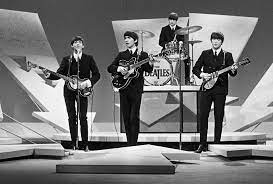
And on February 9, 1964, five years and six days after it died, the music was reborn with these words- “And now, ladies and gentlemen The Beatles!” Most news reports the next day were about the crowds. There was constant screaming from the teenagers in the audience. And there were some comments about their “puddin’ basin” haircuts, later called a Beatle haircut. (I always thought it looked a little more stylish Moe of the Three Stooges hair style.) What I remember most was the music.

They started with All My Loving, then Til There Was You, and ended the short set with She Loves You (Yeah, Yeah, Yeah). They returned in the second half of the show and played I Saw Her Standing There and I Want to Hold Your Hand.

The British Invasion began and the American response to it. I got to see a lot of it live. The Rolling Stones, Gerry and the Pacemakers, The Kinks, Led Zeppelin from across the pond. The Beach Boys, The Byrds, Buffalo Springfield, Credence Clearwater Revival, Jefferson Airplane, and The Grateful Dead from our side.

We cannot forget Elvis, who preceded the Beatles in fame and notoriety, but he never really pushed the boundaries. The Beatles did.

I read an article that said the music that was popular when we were fourteen is the music that defined us. Mine began a few years earlier.

Recently I was riding down the road listening to Sirius XM radio and realized I hardly ever listened to anything but music from that era in my life. So, I asked two younger friends to make me a list of twenty-five albums they thought were essential for someone to hear if they wanted to know about their generation’s music. One friend is 45, 25 years younger than me. The other is 20 years younger than him. I am working my way through my 45-year-old’s music, and it is amazing how good it is. I cannot wait to start on 25-year-old’s list.

In 1697 William Cosgrove, a playwright, wrote “Music hath charms to soothe the savage breast.” It also has the power to ignite the imagination, make the feet dance, the eyes cry, and hands reach out in compassion.

To quote The Doobie Brothers:

Don’t you feel it growing, day by day
People getting ready for the news
Some are happy, some are sad
Whoa, gotta let the music play

What the people need is a way to make ’em smile
It ain’t so hard to do if you know how
Gotta get a message, get it on through
Oh, now momma don’t you ask me why

Whoa, oh listen to the music
All the time.

All the time.

Holey, Holey, Holey

The artwork of the Alutiiq and Yup’ik tribes rarely contains hands. But when they do, most of the hands have holes in them.

The Alutiiq and Yup’ik are Alaskan native tribes in the Kenai area. They have lived in that area for several thousand years, and, for the most part, have been self-sufficient. They live off the land, farming, fishing, and catching game for their food and clothing. Like many ancient peoples, their artwork not only tells their history, but it reveals some of their understanding of nature and the cosmos.

So, why no hands?

Part of the reason is that hands indicate a way of controlling the world. We use our hands to grasp, bend, subdue, mold, and shape the world around us. They think of themselves as being in the flow of nature, not in charge. So, they attempt to live in harmony with the world, and do as little to manipulate it for their use as possible. Compare that to those who see a vast wilderness and begin planning on how to exploit it for commercial gain.

Native peoples of North America have many proverbs and sayings about our being a part of the world. “Walk softly upon the earth and she will bless you with her grace,” is one that comes to mind. Famed naturalist and the father of our national park system, John Muir said, “Indians walk softly and hurt the landscape hardly more than the birds and squirrels, and their brush and bark huts last hardly longer than those of wood rats”.

I remember a conversation from when I was a young child with an incredibly old Cherokee woman in the mountains of North Carolina. She told me, “When you gather with your family and friends to pray, I notice you like to hold hands to show that you are connected to each other. When our family prays, we do not do that. We know that we are already connected by the earth we stand upon.”

Back to hands.

So, when they do depict hands, why the holes? And why do so many of the Alutiiq and Yup’ik have holes tattooed on their hands?

According to those who have asked the tribes, there are three main reasons.

First is so that part of the things they harvest for their use- plants, fish, animals, returns directly back to the earth, honor the creature by reconnecting it to the place of its creation.

The second is for sharing. They do not believe that anything belongs exclusively to an individual, but all is given for the good of the community. Holes in your hands keep you from grasping anything for yourself.

And third is that the holes are a type of portal to the other dimensions of the universe. That through those holes pass the wisdom from the past and the hope for the future. And that world is to be viewed through that. It is a very sacramental part of their understanding of the world.

Dali’s painting of the Last Supper reflects some of that. The world, past present, and future, is viewed through the sacrificial body of Christ.

I like to think of this when I receive the sacrament of Communion, that I am receiving it from hands with holes in them. And when I offer it to others, I pray that my hands will be the same.

We could all use more holey hands.

The Lonely Highway

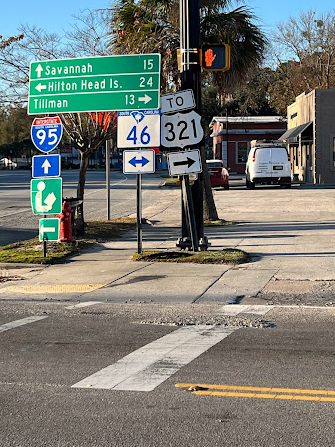
It starts in Hardeeville, just off the South Carolina-Georgia border, and runs 271 miles up to Bowling Green on the North Carolina border. I read an article on the “loneliest highway” in each state in America and decided to see what the one in my home state was like.

“Loneliest highway” is not just a subjective term. There is a measure- AADT- the average annual daily traffic. The lower the number, the fewer cars. The article gave details on the five loneliest, then just listed the rest of the states.

I asked my friend Joel to ride the road with me. Being a United Methodist minister, and the son of a United Methodist minister he had lived in many of the areas we were going to pass through. So we headed down to Hardeeville to spend the night before making the drive the next day.

Though Hardeeville is the southern terminus of this road, it is by no means a lonely place. After checking in to our motel we went to eat down the road at the Okatie Ale House. The highway was packed as was the restaurant. Good food! We recommend it.

The next morning, after a light breakfast, we headed out. The first few miles had quite a bit of traffic, and there was road construction going on. The highway was being widened. Seemed odd for a highway deemed low AADT, but we realized that the area down there was booming with new people, mostly retirees from up north. The cost of living is much less, the climate is mild, and the people are friendly. Who can resist?

But soon 321 began to live up to it’s reputation. We rarely passed another car in either direction. After going through the crossroads community of Tillman, we were on our own until we got just outside of Columbia.

The road was actually quite pretty. And remarkably clean. Years ago when Lou Holtz came to USC he noticed how much litter was on the highways in SC and started a campaign to clean up our roads. I do not know if it was because of him, but it seems our highways are much better these days.

As we drove through the small towns, Joel told stories. “Over in that direction was where I lived in high school….See that old building? It used to be a general store where I went to get Cokes and peanuts….The lady who lived in that house was the gossip of the church. I never had to worry about getting information out to people. I just told her….” There was a lot of love and respect coming from him, even for the people who had given him or his father a hard time.

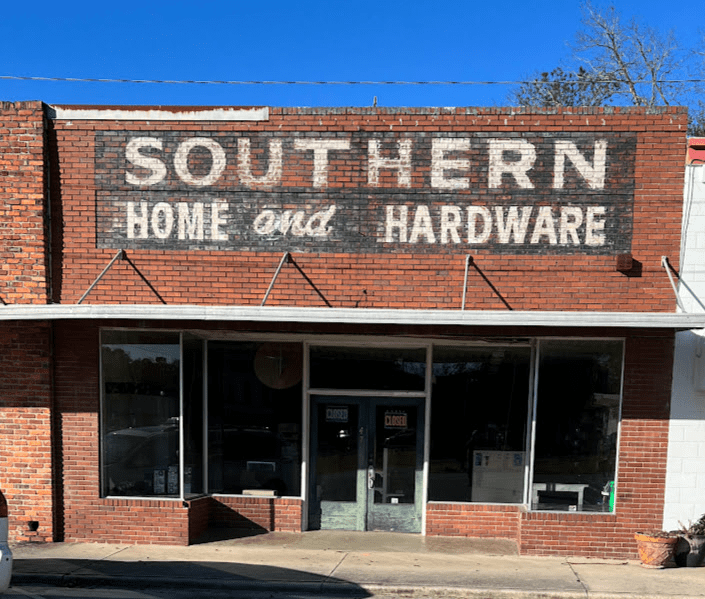
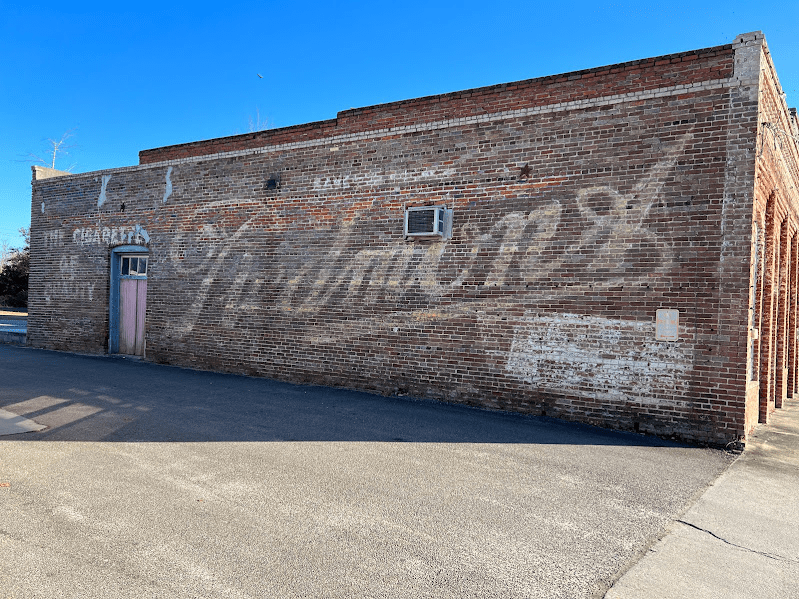
For several years I have been collecting photos of “ghost signs,” that is, advertising signs that were painted on the sides of old buildings years before and have faded, but you can still read and see them. I picked up several along this trip, and some in good shape.

Traffic picked up at Swansea and stayed that way until we got through Columbia, then it back to the lonely highway again.

On the north side of Columbia we picked up Neil, another clergy who had lots of connections up around Winnsboro. So we got another set of stories. “This is where we used to come for family reunions….Over here is where I learned to fish….My ancestors settled this land…”

We stopped in the community of Blackstock. Blackstock was the home of Bull Durham, the baseball player, for a while after he retired from baseball and silent movies. While taking photos around one of the old buildings a local man stopped by. Turns out he was the barber in the area, so we got to hear a few stories from him.

The day-long trip ended mid-afternoon at Bowling Green.

A few lessons learned-

  • Lonely highways can be beautiful, even in South Carolina.
  • There’s a lot more to the state than most people realize. You just have to slow down to see it.
  • And most importantly, it’s always best to travel with a friend or two. You never know what you might learn.

See you out on the road!

The Case Against Discernment.

Discernment and discern are words that have been thrown around a lot in United Methodist Churches for the past few years. I keep hearing it and each time I want to quote  Inigo Montoya from The Princess Bride- “You keep using that word. I do not think it means what you think it means.”

Years ago we used it to talk about understanding or figuring out something we were supposed to do. Maybe a vocation, a move, a new direction in life for individuals. Or for a church, it was for a new ministry, or a change in staff, or a change in worship times and styles. Either way, it was done with lots of prayer, study, thought, and commitment. It was never to be hurried.

Our friends in the Quaker Church (Society of Friends) have been doing this for years. They describe the process this way:

Quaker decision-making is grounded in the belief that when several people come together to labor in the Spirit they can discern a truth that exceeds the reach of any one individual. In making decisions Friends do not simply vote to determine the majority view, but rather they seek unity about the wisest course of action. Over time Friends have developed ways to conduct meetings that nurture and support this corporate discernment process.

To be effective, Quaker process requires that everyone come ready to participate fully by sharing their experiences and knowledge, by listening respectfully to the experiences and knowledge brought by others, and by remaining open to new insights and ideas. This powerful combination of grounded experience and spiritual openness, rationality and faith, allows a deeper truth to emerge. When everyone present is able to recognize the same truth, the meeting has reached unity. The clerk’s job is to sense emerging truth and labor with those present to put that truth into words.

(from the American Friends Service Committee)

The United Methodist discernment process at the moment is more akin to the workings (or lack thereof) of the US House of Representatives. Rather than seeking unity, we seek victory. Which means there is always a winner and a loser.

In this form, ultimately everybody loses.

Many of our churches have gone through a “discernment process” about staying in the UMC or leaving the denomination. It centers around the ordination and marriage of LGBTQ individuals. (Currently, the UMC Discipline prohibits both, but some Conferences enforce this rule and others do not. South Carolina does.) Pastors who have already left the denomination with their churches have been calling former parishioners and friends in their former churches, telling them the things they need to do to get their church to disaffiliate. Meetings are held to discuss plans on how to get one side to win. And when one does, and the other has lost, the losers are often invited to join a different church, one that is aligned with their vote.

We often use the word discern with the term “will of God.” Which is odd for a few reasons. Often the will of God is not something that is figured out but revealed. It often goes against popular belief and understanding. And it was never something to be voted on. That term most often ends up being used to justify the status quo and our own prejudices. It seems to be the way of the church most times.

And we use it to try to understand the will of the Church. Which is what the Quakers do. But they place unity over victory. Even if it means a loss for them. To borrow a term from another book, the choice was between the way of the Dragon and the way of the Lamb.

This really isn’t a screed against discernment. It’s just asking us to choose the way of the Lamb.