Smarter

Okay, I admit it. I am a logophile. I love words. I use them all the time. Maybe you do, too. Without them, I couldn’t tell you how I felt about them.

Enough of that. One of Steve Martin’s early jokes was him standing in front of people and saying, “Some people have a way with words and other people…..(long pause)….oh, not have way.” Every Saturday I listen to an NPR radio show, A Way With Words. The hosts answer the phone with “Hello. You have A Way With Words.” I love that!
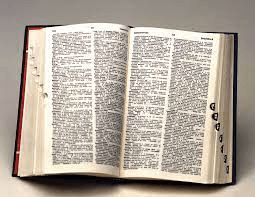
I subscribe to several “word of the day” emails, and I am always writing down new words in the Field Notes pocket notebooks I carry around with me. One of the largest and nicest gifts my wife has given me is a Random House Webster’s Unabridged Dictionary. It is huge and weighs about 8 pounds. I use it to look up words because when I open it to a page, there are other words I may discover. That doesn’t happen with Dictionary.com.

Recently I was at Barnes and Noble and saw in their discounted book table a volume titled “1,200 Words You Should Know to Sound Smarter” by Robert W. Bly. It was only $3, so it now lives at home with me. It is basically an abridged dictionary with words, definitions, and quotes with the word in it. I read a page each day. Some of the words are ones I have known for years, but occasionally I run into a new one. For instance, I am now in the I section, and the page contains the following words: iconoclast, ideologue, ignominious, imbroglio (I knew all of those), immure (a new one!), immutable, and impalpable (knew those, too). Since you’re reading this online, I’ll not take up the time with the definition of immure.

This is not purely an academic love of language. I am an avid Scrabble and Words With Friends player. I have several ongoing games online with a couple of good friends. We all play for blood. I’ve lost a few pints, but I occasionally win, and the thrill of victory is….well…..victorious.

Bly claims that these words will make you sound smarter. I do not want to sound smarter. I want to be smarter. And those are two very different things.

Like many people today, I listen to a variety of podcasts. I’ve found that they generally fall into two categories. The first is where one person, usually considered by himself or herself to be an expert in some area, talks about their area of interest. This kind of podcast is usually done by preachers, politicians, political pundits, and sometimes comedians. As I listen to most of those, I do not find the people to be that smart. They usually are just saying the same thing repeatedly. There is no conversation. No discussion with those of differing views. Basically, no new information.

By the way, you do not need to point out the irony to me that a blog post is essentially the same thing. I’m trying to figure out how to do better.

Then there are the ones where there is a host and a guest, where a conversation takes place. And it is on these where I hear people who not only sound smarter but are smarter. One is Carey Nieuwhof’s Leadership Podcast. I have been listening for several years and there is one phrase that I hear in every podcast, usually several times. It comes not from Nieuwhof, but from his guests. That phrase is “That’s a good question.” Nieuwhof is smart not because he has a lot of good information (which he does) but because he has learned the art of asking good questions. Not questions with predetermined answers, like the ones in the Hillsdale College “polls” that pop up on social media. They are designed to get the answer that the College is looking for. They are like most salespeople, who ask you questions to guide you to their predetermined goal. Nieuwhof, on the other hand, asks questions that can lead to new understandings, not only by us but by him. Smart.

And I love to listen to The Hidden Brain podcast with host Shankar Vedantam. There is a phrase I hear several times on each of his podcasts. This time it comes from him, the host. It is “Tell me more. Help me to understand.” He is looking for something new.

(I highly recommend both podcasts.)

And maybe that’s the key to actually being smarter, rather than just sounding smarter. You continue to learn new things, to grow, to expand.

Years ago, an angry church member told me she didn’t come to church to learn anything new. (We had prayed the Lord’s Prayer in Spanish that Sunday. We had a large group of Spanish-speaking people with us that day and we wanted to do what we could to make them feel welcome.) So many people have decided that they already know everything they want to know. So they stop growing.

And this world is so big, and so wonderful, and filled with so many glorious things, that doesn’t sound very smart to me.


Like What?

The couple sat on the sidewalk of The Manna House and looked at me as I approached. I had a Bible in my hand, so they asked “Are you a preacher?” Yes. “Can you help us?” They were a rough-looking couple. Life had not been easy or good for them, and they showed it. All their worldly possessions were in a grocery cart next to them. They were waiting for lunch to be served.

(Photo is a stock photo. Not the couple.)

I looked at them and said, “I’m sorry. I can’t.” I walked on by and into the mission site.

A friend asked me to come to The Manna House to bring a devotion. I knew of its ministry and had supported it through the church I served prior to my retirement. But I had never been there.

As I walked into the building and was given a tour of the facility, it all came flooding back to me. Forty-four years ago. Tuesday, September 4, 1979. My first day of a year-long internship as a chaplain at Spartanburg Regional Medical Center.

I was one of seven chaplain interns for the year at the large hospital. It was part of my seminary training. The senior chaplain had given us some general rules about the hospital, and then led us on a tour. We each were assigned a medical wing where we would serve for the entire year, and we would rotate through the various specialty units (Neuro, Psych, ICU, ER, etc.). After lunch, he suggested that each of us go to our wings, introduce ourselves to the nurses (they were expecting us), and check on the patients. My medical wing was L-shaped, with an elevator at each end of the L, the nurse’s station in the crook, and rooms on each side of the hall.

I stepped out of the elevator and through the open door of the first patient room. The patient, a middle-aged woman was still in her street clothes but had checked in. The requisite wristbands were on her arm. She was standing by the window, looking out at the parking lot and woods across the street.

I walked up to her and stood there for a second. She glanced at me, saw the white lab coat I was wearing, and started talking to me about her upcoming surgery. She did not see the chaplain emblem or my name. Thinking I might have been a doctor or medical intern, she started asking me some questions. I said, “Excuse me, ma’am. You may be a little confused. I am not a doctor. I’m a chaplain.”

“A chaplain!” she said. “I’m not going to die, am I?”

“Oh, no ma’am,” I said. “At least not any sooner than most of us. But we chaplains do things other than visit people who are dying.”

“Oh yeah,” she said. “Like what?”

I didn’t know. She was my first patient on my first day. What was I supposed to do? What could I do?

Those feelings came back as I was given the tour of The Manna House by the director. The Manna House feeds people in a very low-income and homeless area of town. The director told me they feed over 7,000 meals per month. Breakfast and lunch every weekday. That’s about 320 meals a day. Breakfast is served at 8 and lunch begins at 10:30. Because of the COVID virus being rampant in this underserved population, the meals are currently being served through a serving window to the outside in to-go boxes. She hopes to soon be able to have folks indoors, especially as the weather gets colder.

People were already beginning to gather in the parking lot. I asked her what she would like me to do. She said, “Anything you like. Read scripture, have a prayer, tell a devotion. Whatever you want.” I asked what they had been doing before, and she told me that they had not had anyone do anything like this for the last year and a half. Whatever I wanted to do would be fine.

I thought about the couple on the sidewalk. I knew I could not give them money. Not only did I not have any, but it would not be good for The Manna House, and maybe not for the couple. I did not have the time, knowledge, or wherewithal to help them with whatever their problems were- a hard life, accidents, bad choices, addictions, or whatever had brought them to this place. I wished I had the power of Peter and John from the story in Acts 3, where they told the lame beggar to rise up and walk. But, alas, that was beyond me, too.

I kept hearing that woman from almost half a century ago. “Like what?” I didn’t know.

I walked outside and back to the sidewalk where they were sitting and waiting. “I’m sorry,” I told them. “I really don’t have any money to spare, since I’m retired. And there’s not much else I can do. But can I pray for you?” They looked at each other and said yes. I asked their names, knelt beside them, put a hand on each one’s back, and prayed for them by name. I asked God to provide for them, to give them hope and a new life, to release them from the past, and to help them during their hard times to see the beauty of the day. When I was through, they thanked me, and then asked if I knew anyone who could get them a motel room. I said I was sorry, but I didn’t know that, either.

“Like what?”

And that’s what I did. I walked around the parking lot, asking those standing and waiting if I could pray for them. Most said yes and told me their names. Some of them would then ask for more help. Which I did not have to give.

I knew that thanks to The Manna House and all who support it, they would have a meal for the day. And maybe that’s all we can do.

But as I drove off, I kept hearing that voice.

“Like what?”

The Harder Way

Like most of the world, I’ve been thinking a lot about war lately. Ukraine and Russia. Israel and Gaza. There are probably a few dozen others going on at the moment that aren’t getting much press. And it seems to be one of the rare moments in history that our country is not directly involved in one somewhere. (Give us time.)

And I’ve been thinking about peace. Peace is not the opposite of war. War is one way of life, peace is another. Just as vegetarianism is not the opposite of the paleo diet, they are two different ways. A.J. Muste wrote “There is no way to peace. Peace is the way. We cannot have peace if we are only concerned with peace. War is not an accident. It is the logical outcome of a certain way of life.”

Peace is not an easy path. War, though horrific as it is, is the easier path. You simply figure out how to beat the other into submission. Or you get beaten into it. Formerly whoever had the largest army had the advantage. That is no longer true. Because war is a method or way of life, it never ends completely. World War I was called “the war to end all wars.” Where’s my sarcasm emoji? Simon Sinek would call it an “infinite game.” Although I doubt it will happen, Israel may destroy Hamas or Hamas may destroy Israel, but the clash will continue. In World War II, the one that followed the war to end all wars, the Allied countries beat the Axis countries. But Nazism is still alive and well in Virginia, Michigan, and at Kanye “Ye” West’s home. To quote an old song, “And the beat goes on.”

The movie War Games ends when the military computer that is planning on winning a “game” of war by launching nuclear missiles, stops. Leaves the game. WOPR, the computer program, says (prophetically, I think) “the only winning move is not to play.”

Which, according to Sinek, is the only way to end an infinite game. (By the way, his excellent book is not about war. It just happens to fit in it.)

Jesus was confronted by crowds and soldiers in the Garden of Gethsemane, to be carried off to be crucified. His disciples were ready to fight, pulling out what few weapons they had. Jesus tells them to put them away. Instead of fighting, he said he could have called on God and God would have sent more than 12 leagues of angels to fight for him. (Matthew 26)

Those early hearers of this story knew Jewish history. They knew that King David had 12 divisions of soldiers to protect him. Each division was 24,000 men. That’s 288,000 soldiers. It still did not stop them from having war. It was so commonplace that 2 Samuel 11 casually starts the story about David’s seduction of Bathsheba with “In the spring, at the time when kings go off to war…” It was just what they did.

It seems to be the same for us today.

Jesus chose a different path. Rather than calling for the angelic army, and really only one angel would have been enough, he chose to go to the cross. It was the harder way.

For my friends who say that this is why Jesus was sent, and it was his mission and his alone, I gently remind you of what Jesus himself said. “If anyone will follow me, let them deny themselves, take up their cross, and follow me.”

G.K. Chesterton once said, “The Christian ideal has not been tried and found wanting. It has been found difficult, and left untried.”

Peace is the way. But it is the harder way.

First-Person Singular?

First-Person Singular?

(Warning: I am probably going to get into trouble for this one.)

Several years ago, I went to a conference to discuss the issues going on in my church denomination. We were given name-tags and encouraged to put our name and our preferred

pronouns. I had never heard of that before, much less considered what my pronouns might be. But I reckoned if that would make people feel more comfortable, then it was an act of welcome and hospitality. I admit I struggle with some of it, especially using a plural pronoun for a singular person. “I ran into Mike the other day at the grocery store. They was (were?) buying groceries for the week.” But I should not be thrown off too much. After all, I’m from the south, where “y’all” is singular and “all y’all” is plural.

I was telling Cathy about it as we talked on the phone that evening. She asked what pronouns I had put on my name-tag. In my usual smart-ass way I said, “I. Me. Mine.” Cathy responded, “Yep. It’s all about Mikey!” She has said that many times before. “It’s all about Mikey. And the sooner everyone knows that, the better it will be for everyone.” Sometimes she jokes. Other times, I’m not sure.

For some reason I was thinking about pronouns as I prayed the Lord’s Prayer. It dawned on me that there are no first-person singular pronouns in the prayer. Not one. This prayer is important. Of all the things the followers of Jesus could have asked him to teach them- how to feed multitudes, heal the sick, raise the dead, cast out demons, walk on water, calm the storms, speak truth to power, etc.- the only thing they asked Jesus to teach them was how to pray. And for one of the few times in the gospels, Jesus gives a direct answer. (Most of the time he either asked a question or told a parable, making you think and work out things yourself.) He said, “When you pray, say ‘Our Father….’”

I learned that prayer when I was a child, and I have prayed it daily for most of my life. We pray it together in the churches I serve every Sunday. Some other churches, preachers, denominations do not use it literally. They say it is a “model for prayer” and not meant to be prayed literally by Jesus’ followers today. Oddly enough, most of those same people claim to follow the Scriptures literally. And Jesus did not say, “Pray like this. He said, “When you pray, say…” So we do.

I find that saying it together regularly, over time, makes me ponder the prayer and all its implications. I often compare it to the other prayers we hear, see, and use in worship or in our private times. What strikes me is that so many of our prayers are in the first-person singular. “Lord, thank you for your grace to me. Help me to find ways I can serve others. Bless my family, my friends, my country. Turn me away from the things that harm others. Guide me in your truth. In Jesus’ name I pray. Amen.” Not a bad prayer. But it centers on I, Me Mine. Jesus didn’t teach us that.

We have personalized our faith so much that many people either do not know or have forgotten that it is more corporate than individual. People often ask me “Have you accepted Jesus as your personal savior?” Though I usually do not tell them this (I don’t want to spend the next several hours in a theological discussion that will probably not change anyone’s mind), I want to respond, “Actually, I have accepted him as savior of the world.” John, one of Jesus’ closest friends and followers, put it this way- “He is the atoning sacrifice for our sins, and not only for ours but also for the sins of the whole world” (1 John 2:1-2) Even the Hebrew Scriptures tell us that “The earth is the Lord’s and all that is in it, the world, and those who live in it,” (Psalm 24:1)

This is not easy for me. Following Jesus makes me include people I do not want to include. There are some in the Christian tribe who spread falsehoods about me and others in the hope of harming, even destroying, our part of the family. Yet, they are part of the Our in the Lord’s Prayer. There are some who exclude me from the ranks of the believers and followers, but they are part of the family that Christ includes. There are some who want to act in ways that hurt others who do not believe as we do, who want to destroy their humanity, if not their very lives. Some who have given themselves over to believing a lie as if it were the truth. And Jesus tells me that they are as much as part of his family as I am.

So, I guess pronouns do matter. And maybe I, Me, Mine are not the most important. It’s just that living in the Our is hard to do.

The Death of Edith Bunker

My morning devotions and meditations took me through Numbers 20 the other day. It starts off with the words “The Israelites, the whole congregation, came into the wilderness of Zin in the first month, and the people stayed in Kadesh. Miriam died there and was buried there.”

Miriam died there and was buried there.

That’s it. No mention of mourning. No sorrow from her brothers Moses and Aaron. No family gathering to remember her. No national day of prayer. Nothing.

Miriam, in case you don’t remember, was the older sister of Moses. It was she who watched over the infant Moses in the basket hidden in the bullrushes in the Nile. It was she who convinced the daughter of Pharoah to take Moses’ mother to be a nurse to the “orphaned” baby, thus assuring his survival and his ongoing connectedness to the Jewish people. It was Miriam who danced and sang after the Jewish refugees were safely across the Red Sea, and her song is still sung at Passover celebrations around the world. Her song was a model for Mary’s song, which she sang when told that she would bear Christ.

And while there was one incident recorded where Miriam, along with Aaron, turned against Moses, for the most part when the heroes of the Exodus are mentioned in the Bible, it is always “Moses, Aaron, and Miriam.”

But when she died, there is hardly a mention of it.

When Sarah, the wife of Abraham, died, Abraham mourned and wept for her. He spent lots of time, money, and influence in securing a resting place for her remains. There’s a whole chapter about it in Genesis.

But for most of the women in both the Hebrew and Christian scriptures, there is little said about them when they die. Admittedly, there is not any reference to any of the women saints of the New Testament dying. And other than a few martyrs, there’s not much about the men. But it seems to me that these women need to be reclaimed- their life as well as their death.

I was thinking about all of this when I remembered the death of Edith Bunker. Edith, you recall, was the wife of Archie Bunker on the cutting-edge sitcom, All In The Family. She was also in one season of the spinoff, Archie Bunker’s Place. Edith, played wonderfully by Jean Stapleton, was the one who loved Archie, her daughter Gloria and son-in-law Michael. She cared for them, tried to keep them at peace with one another, took all of Archie’s verbal abuse and seemed to turn it around by her gentle spirit. She basically held the family together. When the character died at the beginning of the second season of Archie Bunker’s Place, there were a few references to her. Archie refused to accept the death benefit from her life insurance policy, and finally broke down and cried upon finding one of her shoes. But other than that, she was gone. Out of the show, out of the picture.

I’ve been thinking about the women who have made such an impact on us. Perhaps it is because this is the month of my mother’s birthday. Maybe the deaths of some dear female friends over the past year have sunk in. Whatever it is, I know this- we need to pay attention. None of them…none of us…last forever.

The Song Is Wrong

Music shapes and reflects most of my life. On great days, when the sun is shining and it’s a warm spring day, you’ll hear me singing “What a day for a daydream….” (For those of you born after 1980, that was a song by The Lovin’ Spoonful.) On hard days, sad days, you’ll hear me singing “Listen to the rhythm of the falling rain…” (Again for you folks still in the first half of life, that was a song by The Cascades. A later version was a hit by Dan Fogelberg.)

I grew up listening to hymns on Sunday morning TV as we got ready to go to church and sing some of the same hymns. The Blue Ridge Quartet, with the great bass singer J. Elmo Fagg (and we all loved to say his name) was located in Spartanburg, and showed up on WSPA every Sunday morning, starting the day with “This is my story, this is my song…”

As a teen I was into folk and rock music, but somewhere in my soul, there was a deep place for Appalachian music. And the song/hymn Jesus Walked This Lonesome Valley, a conflation of Appalachian folk and American Negro Spiritual lives in there. It has an almost mournful tune, and the words speak of having to face the trials and struggles of life alone.

Jesus walked this lonesome valley;
he had to walk it by himself.
Oh, nobody else could walk it for him;
he had to walk it by himself.

A later verse personalizes it.

You got to  walk this lonesome valley;
you got to walk it by yourself.
Oh, nobody else can walk it for you;
you have to walk it by yourself.

It is the perfect American tune, with American lyrics, expressing American values. Life is a struggle and we have to face it individually. Nobody else can do it for us.

There’s enough truth in here to make it work. We face things that no one else faces. Our struggles are ours, and each one is different from the other. A popular saying going around right now says, “Be kind to everyone you meet. They have some struggle going on that you do not know about.”

But, while we must walk this lonesome valley, we do not have to walk it by ourselves. We are not meant to walk it alone. Even Jesus did not do that. On the darkest night of his life, as he faced his impending execution at the hands of the state, Jesus asked his three closest friends to stay with him as he prayed. They kept falling asleep as he did so (it had already been a long day and night for all of them), and he was disappointed and hurt because they couldn’t be with him as he struggled with what was about to come. He did not want to be alone. A while later, after being beaten and tortured by the state, he was made to carry his cross. But he couldn’t do that alone. He needed the help of someone else, Simon of Cyrene, to carry it for him. And from the cross, he looked for his friends. He found his mother, John, his aunt, and a couple of other Marys. (John 19:25)

Jesus wanted and needed someone to be with him. So do we. Even the idea of God as a Trinity tells us that we are not made to go through this life alone. The song is wrong.

I’ll probably still sing it from time to time. It is in one of the United Methodist songbooks, The Faith We Sing. I love the tune, and even the sentiment.

But I don’t want to walk this valley alone.

Taking A Break From The How

Sometimes I get so caught up in understanding the how of things that I lose the beauty of them. As Wordsworth says in his poem The Tables Turned, “We murder to dissect.”

In the classic rock and roll song, aptly titled Rock and Roll Music, Chuck Berry laments people trying to change the music, to make it better, to make it something other than what it is. To control it rather than to sing it, dance to it, just enjoy it.

Maybe I do that too much with life.

Lest you think this is a rant against science, knowledge, linguistics, etc., be assured that I have all the curiosity about the world that most people have. Maybe even a little more, seeing as how I tend to question most things. And I appreciate what others have done to make this world a better place.

But there comes a time to just enjoy what is around us, and I am really trying to do just that. To take in the sights, sounds, tastes, sensations, smells of this world. The old saying (and song by Mac Davis) says “You’ve got to stop and smell the roses.” Unfortunately, it turns out, most roses today don’t have the sweet smell, or any odor, they used to have. In order to make them more durable, we ended up genetically removing the things that made them put out that well-known aroma. Try stopping by the flower section in your local supermarket or flower shop and sniff those beauties. Might as well sniff a package of frozen corn kernels. People today would not understand Shakespeare’s Juliet opining “A rose by any other name would smell as sweet.” As sweet as what? A plastic plant from Walmart?

Gary Larson’s take on this was “Cow Philosophy”- “You’ve got to stop and eat the roses.” Wonder if they still taste the same?

The point of it is, every now and then we need to walk in the woods and just enjoy the experience. “Forest bathing” is what the Japanese call it. We need to hear music and let it move us rather than analyze it. We need to slow down and taste food that does not taste like the cardboard container it came out of. We need to jump in the puddle just because it’s there.

As Wordsworth wrote:

One impulse from a vernal wood

May teach you more of man,

Of moral evil and of good,

Than all the sages can.

Excuse me now. I think I’ll go take a walk through Lucas Park.